
Microsoft is significantly ramping up its training programmes in digital and artificial intelligence skills across Nigeria to help the nation meet the demands of the fast-evolving digital economy. The leading technology company said its expanded initiative has already reached hundreds of thousands of Nigerians with practical knowledge in tech fields that are quickly becoming essential for success in global job markets.
Speaking at a media roundtable in Lagos, Nonye Ujam, Microsoft’s Director for Government Affairs for West Africa, highlighted that the growth in participation reflects Nigeria’s determination to equip its citizens with future-ready skills. Ujam explained that while millions have already benefited from the company’s programmes, the next phase is designed to widen that reach even further.
She noted that over 350,000 Nigerians have been part of specialised AI and digital skills programmes under Microsoft’s AI National Skills Initiative, bringing the total number of Nigerians trained across various digital literacy efforts to millions since the company launched its first major projects in the region.
Microsoft Collaboration with Government and Local Partners to Build Tomorrow’s Workforce
Microsoft’s expanded training drive does not operate in isolation. The company works closely with the Federal Government of Nigeria, Data Science Nigeria, and Lagos Business School to deliver comprehensive tech education that targets different segments of the workforce.
This collaboration aims to bridge gaps between academic knowledge and industry requirements, offering training that prepares Nigerians to compete in fields such as data analytics, machine learning, AI applications, and advanced computing skills. Participants range from students and developers to public sector workers seeking to enhance their digital competencies.
The training also supports key government initiatives such as Developers in Government and the Three Million Technical Talent (3MTT) programme, which seeks to grow Nigeria’s base of skilled technology professionals.
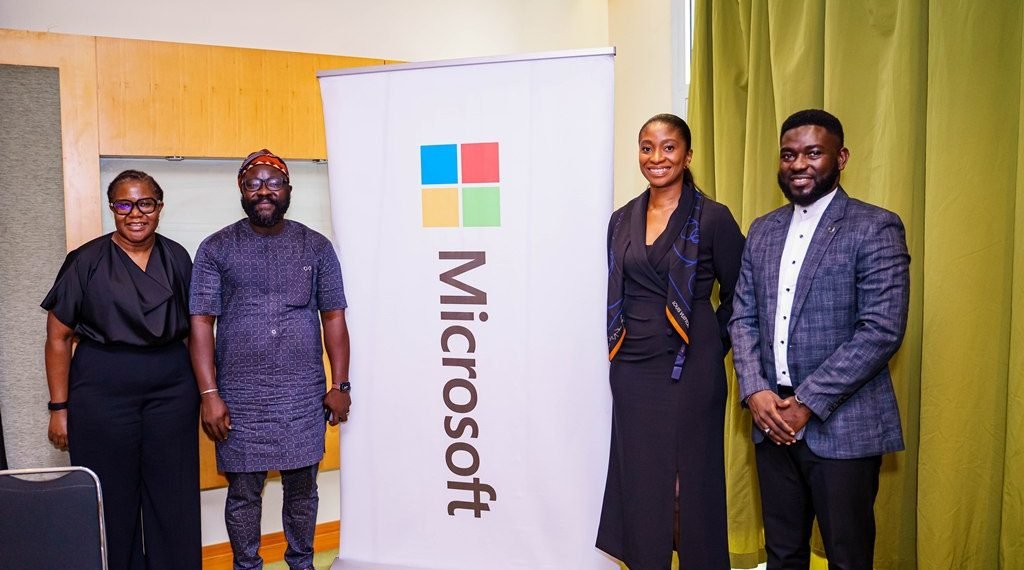
At the event in Lagos, the country’s General Manager for Microsoft Nigeria and Ghana, Abideen Yusuf, emphasised that AI is reshaping industries everywhere and that Nigeria must move quickly to equip its workforce. He warned that countries slow to build digital and AI skills risk falling behind in global economic competition.
Human Stories Behind the Numbers
Among the many Nigerians taking advantage of the initiative are students, young professionals, and government officials. For some, the training has provided new opportunities to pursue careers in tech, while for others it has enhanced their capabilities in their current roles.
Take the case of Chioma, a final-year computer science student in Lagos. She told local media that participating in the AI National Skills Initiative helped her gain confidence working with machine learning tools that were previously intimidating. “Before this training, AI felt like a distant idea that only big tech companies understood. Now I have hands-on experience and certificates that I can show employers,” she said.
Similarly, Ahmed, a civil servant in Abuja, explained that specialised sessions on digital tools and AI helped him streamline workflows in his department. Ahmed said the practical nature of the training made it easier to apply what he learned immediately at work. These personal stories echo a broader trend of Nigerians discovering how digital skills can unlock new opportunities in careers and business.

Preparing Nigeria for a Digital Future
Microsoft’s initiative speaks to a broader national imperative. Nigeria’s youthful population presents both an opportunity and a challenge in the face of rapid technological change. With a median age under 20, the country has one of the youngest workforces in the world. Yet many young people lack access to quality digital training that can prepare them for tomorrow’s jobs.
By focusing on accessible training, Microsoft and its partners aim to widen participation in the digital economy while fostering inclusive growth. Programmes target not only future tech professionals but also everyday workers seeking to improve productivity and competitiveness in a technology-driven environment.
Ujam pointed out that a strong pipeline of developers, data scientists, and tech leaders will be essential for Nigeria’s ambitions to grow its digital economy and attract global investment. She added that increasing AI fluency will support innovation across sectors, including agriculture, health care, finance, and government services.
In support of this vision, Microsoft’s partners at Lagos Business School have led specialised leadership training sessions for public sector officials. These courses emphasise not only technical skills, but also governance, ethical use of technology, and strategic decision-making in the age of AI.
Dr Bayo Adekanmbi of Data Science Nigeria said the initiative is about more than just teaching code or data science. It is about empowering communities and fostering a culture of innovation across Nigeria’s diverse regions. Adekanmbi noted that partner organisations throughout the country have been equipped with the tools and infrastructure necessary to deliver training at local levels, ensuring broader access and sustained engagement.

Looking Ahead: Scaling Skills for Millions
With the first phase of expanded training already showing strong results, Microsoft and its partners are setting ambitious goals for the future. The next plans include reaching even more Nigerians with advanced digital and AI skills training.
Yusuf highlighted that aside from technical training, efforts will continue to ensure Nigerians at all levels of the workforce are prepared to adopt and adapt AI technologies in ways that benefit society and the economy. This includes encouraging ethical AI practices, creative problem-solving, and innovation in both the private and public sectors.
As Nigeria positions itself to capture a larger share of the opportunities presented by digital transformation, initiatives like this are becoming vital building blocks. By equipping citizens with market-relevant skills, the country can strengthen its competitive edge in an AI-driven world and create a future where more young Nigerians are ready to contribute meaningfully to economic growth.
In a landscape where technology changes daily, and global demand for digital expertise grows, Nigeria’s expanding partnership with Microsoft is emerging as a powerful force for skills development and workforce readiness.
Join Our Social Media Channels:
WhatsApp: NaijaEyes
Facebook: NaijaEyes
Twitter: NaijaEyes
Instagram: NaijaEyes
TikTok: NaijaEyes