

In a historic development for Nigeria’s tertiary education sector, the Federal Government and the Academic Staff Union of Universities (ASUU) have finalised a new agreement that includes a substantial salary increase for lecturers and other key reforms. The pact, formally presented in Abuja, comes after years of negotiation, bringing renewed hope for stability across federal universities nationwide.

A Breakthrough in Long-Standing Negotiations Between the Government and ASUU
After more than a decade and a half of discussions and periodic tensions, the government and ASUU have signed a Memorandum of Understanding that promises to reshape the working conditions of academic staff. Central to the deal is a 40 per cent increase in salaries for academic staff in federal tertiary institutions, as approved by the National Salaries, Incomes and Wages Commission. The revised pay structure takes effect from January 1, 2026.
This agreement is widely seen as a major step towards ending recurrent disruptions to academic calendars that have frustrated students, parents and educators alike. By addressing core issues of remuneration and welfare, both sides are hopeful that a new era of industrial harmony has begun.
What the New Salary Structure Means for ASUU and Academics
The core highlight of the agreement is the upward review of emoluments for university lecturers and other academic personnel. The salary review is largely implemented through the creation and enhancement of the Consolidated Academic Tools Allowance (CATA), which forms a significant portion of the new pay package. This allowance is tailored to the unique needs of academic work, covering essential academic activities such as journal publications, conference attendance, internet services, learned society membership and book acquisitions.
Under the new framework, academic remuneration consists of two main components. The first is the Consolidated University Academic Staff Salary (CONUASS), and the second is the Consolidated Academic Tools Allowance (CATA). It is this combination that delivers the full 40 per cent pay increase, designed not only to improve earnings but also to equip lecturers with the tools required for quality teaching, research and global competitiveness.
In addition to the general salary increase, the government has introduced a Professorial Cadre Allowance for full-time professors and readers in Nigerian universities. Professors will receive an additional N1.74 million annually, or about N140,000 monthly, while readers will receive N840,000 per year, or roughly N70,000 every month. This extra allowance recognises the additional scholarly, administrative and research responsibilities that come with senior academic positions.
A Strategy to Curb Brain Drain and Boost Productivity
Officials say the overhaul of the remuneration package is aimed at improving morale, enhancing service delivery and making Nigerian universities more globally competitive. For years, academia in Nigeria has grappled with the loss of talented lecturers to opportunities abroad, a challenge that stakeholders hope this new arrangement will help to reverse.
The agreement also tackles how additional academic allowances, previously earned sporadically, are administered. Nine distinct categories of earned academic allowances are now clearly structured and directly linked to specific duties. These include responsibilities such as postgraduate supervision, fieldwork, clinical duties, examination moderation and academic leadership roles. Tying allowances to clearly defined tasks is expected to promote productivity, fairness and accountability across institutions.
While the pay increase and allowances are among the most talked-about elements, the deal also contains provisions aimed at broader systemic reforms. Among these are proposals to strengthen university autonomy, improve pension benefits for senior academic staff, and unlock increased funding for research, libraries and laboratory facilities. Some reports indicate that a National Research Council could be established to ensure dedicated financing for academic research initiatives supported by a commitment to allocate at least one per cent of Nigeria’s Gross Domestic Product to research funding.
Leadership Speaks on the Significance of the Deal
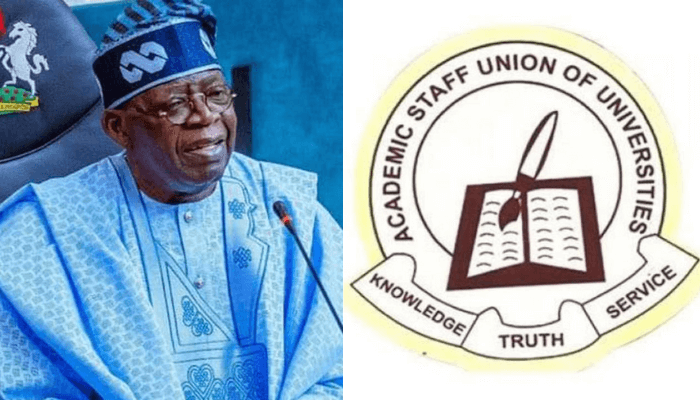
At the formal presentation of the agreement in Abuja, Nigeria’s Minister of Education, Dr Maruf Tunji Alausa, described the pact as a turning point for the nation’s university system. He emphasised that the deal reflects the government’s commitment to prioritising quality education and dialogue in resolving long-standing disputes. Alausa credited President Bola Ahmed Tinubu’s leadership for driving the process to a successful conclusion, noting that the administration opted for dialogue over discord and resolution over delay.
Professor Suwaiba Ahmad, the Minister of State for Education, highlighted the trust-building dimension of the agreement. She explained that the pact not only seeks to improve academic staff welfare but also aims to restore confidence among parents and students that academic calendars will run without prolonged disruptions. This marks a shift from a history of industrial action towards more predictable academic planning.
ASUU President Professor Chris Pinuwa acknowledged the long journey that brought both sides to this moment. He noted that the process began with renegotiating the 2009 agreement, which was due for review in 2012 but faced years of delay. According to Pinuwa, the current deal is the product of persistent discussions and a renegotiation process that started in 2017 and gained momentum under the present administration.

What This Means for Students and the University Sector
For many students, weary of semester after semester disrupted by ASUU strikes and unresolved disputes, this development brings a sense of anticipation for a more stable academic experience. Parents and guardians, too, have welcomed the news, expressing hope that the new agreement will ensure more predictable academic calendars and reduce the uncertainty that has plagued tertiary education for years.
Observers say that improved funding and clear structures for academic allowances have the potential to enhance the quality of research output and teaching standards across Nigerian universities. By making academic careers more financially rewarding, the government and ASUU are betting on retaining talent within the country rather than losing personnel to universities abroad.
This agreement is also expected to have broader implications for the Nigerian economy and society. A better-resourced and motivated university system could contribute to innovation, strengthen Nigeria’s intellectual capital and support sustainable development goals by producing well-trained graduates ready to contribute to critical sectors.
The recent agreement between the Federal Government and ASUU represents a landmark shift towards lasting industrial peace in Nigeria’s university system. With a 40 per cent increase in academic salaries, enhanced allowances, and systemic reforms, both parties have signalled a new chapter in the pursuit of quality, accessible and uninterrupted higher education.
Join Our Social Media Channels:
WhatsApp: NaijaEyes
Facebook: NaijaEyes
Twitter: NaijaEyes
Instagram: NaijaEyes
TikTok: NaijaEyes