Artificial intelligence investment is no longer a niche topic whispered among tech circles. In 2026, global spending on AI is expected to reach about $2.5 trillion, a figure that overshadows almost every major project in human history and reshapes how we think about technology, infrastructure and global priorities. This dramatic growth has sparked intense debate in business, government and civil society about the scale, direction and implications of AI funding, as reported by Gartner.
In this detailed report, we unpack how and why AI funding has exploded, compare it with some of history’s largest endeavours, and explore what this means for countries, industries and the average citizen. The story of AI spending is a story about ambition, disruption, and a future that is rapidly unfolding before our eyes.
A Staggering Surge in AI Spending and Investment
To put the figures in context, consider this simple fact: in slightly over ten years, global corporate investment in AI spending has reached approximately $1.6 trillion. That alone dwarfs iconic historical projects such as the Manhattan Project, the Apollo moon landing programme, and even the massive US interstate highway system when adjusting for inflation.
The current and projected levels of AI spending are almost unimaginable. Forecasts from research and advisory firm Gartner suggest that by the end of 2026, total global AI expenditure could hit around $2.5 trillion. That represents a near doubling from where the market stood just a couple of years ago and a steep rise compared with spending totals seen in 2025.
Importantly, these figures aren’t coming from a single government or military budget. Instead, they reflect investments flowing through private capital markets, corporations, venture capital funds and global investors. This broad and decentralised funding structure makes the AI investment wave one of the largest privately financed economic efforts in modern history.
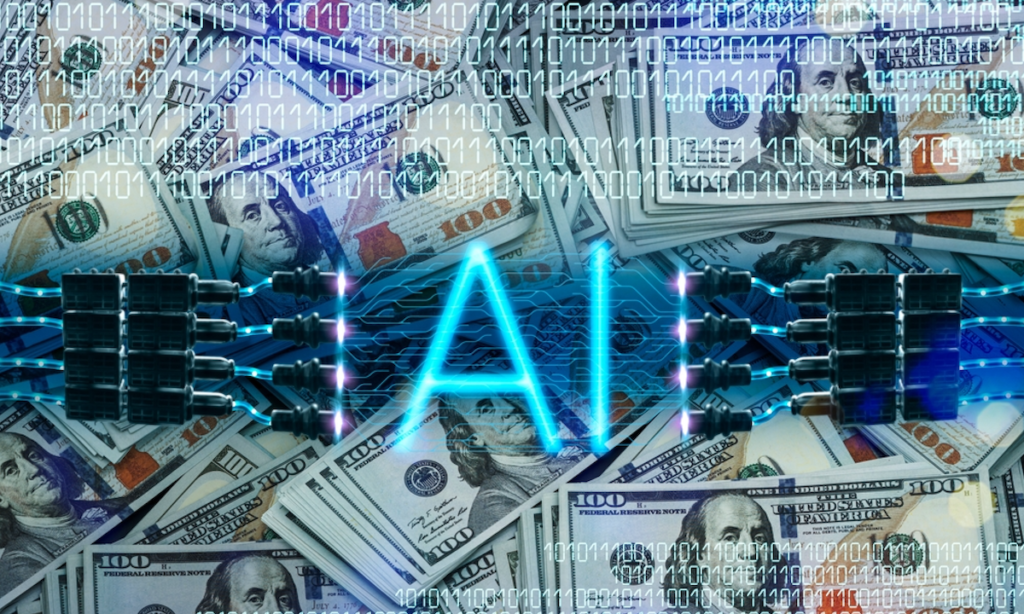
Understanding these numbers can be challenging, but one way to visualise sums like a trillion dollars is to think about what smaller amounts look like, stacking physical cash. For instance, a billion dollars in $100 bills would form a stack 5.2 metres high. Multiply that by thousands, and you begin to grasp how much capital is moving into AI.
AI Spending Compared with History’s Mega Projects
Humanity has tackled some extraordinary undertakings over the years. The Manhattan Project, which developed the first atomic bomb during World War II, cost around $36 billion in today’s dollars. The Apollo moon programme was approximately $250 billion. The Interstate Highway System, one of the largest peacetime infrastructure projects in US history, cost around $620 billion. All of these now fit into what AI investment has surpassed within a fraction of the time.
This comparison helps to make the scale of AI investment more tangible. Projects like the construction of stadiums, museums, or even entire transportation networks once dominated economic headlines because of the sheer scale of their budgets and societal impact. Today, AI funding eclipses these legacy projects — and it’s happening in a fraction of the time.
Crucially, unlike these landmark undertakings, AI development isn’t driven by a single purpose or mission. While space exploration or defence research had clear defining goals, AI investment spans a wide array of uses — from tools that power business automation and health care diagnosis to technologies that may one day transform transportation, education and entertainment.

The Geography of AI Spending
AI funding is not spread evenly around the world. Instead, a handful of countries dominate the landscape, attracting the bulk of private investment and building ecosystems where innovation flourishes. The United States leads by a significant margin, accounting for around 62 percent of global private AI funding since the beginning of the decade. Chinese firms follow, albeit at a much smaller level of investment, with the United Kingdom, Canada, Israel, and a handful of other nations trailing behind.
This regional breakdown reflects broader economic and technological dynamics. The United States’ dominance is supported by large technology corporations, deep venture capital markets, and a culture that rewards rapid innovation and scaling. China’s investment growth is propelled by its large domestic market, aggressively expanding technology sector, and strategic prioritisation of AI across government and industry.
Other countries, including the UK, Canada and parts of Europe and Asia, contribute meaningfully to the AI ecosystem, fuelling startups, specialised research hubs and niche applications. But when it comes to sheer capital flow and market influence, the US and China remain at the summit.
The Economic Ecosystem Behind the Numbers
The money flowing into AI doesn’t sit idle. It circulates through a broad economy of data centres, software firms, specialised hardware makers, cloud infrastructure providers and services firms. Analysts project that a significant portion of total AI spending goes toward infrastructure, particularly data centres that house the massive computing resources required to run AI models on a global scale.
In 2026 alone, over a trillion dollars is expected to be spent on AI infrastructure — money directed into new facilities, high-performance computing hardware, cooling systems, network expansion and all the physical and energy systems that support large-scale AI operations. This build-out represents one of the largest capital investment waves in corporate history.
Another chunk of spending goes into services, cybersecurity, software platforms and specialised tools that allow organisations to build, deploy and secure AI applications. The sheer breadth of this economic ecosystem means that AI investment has ripple effects across sectors, creating jobs, attracting talent and reshaping industries.
What It Means for Society and Jobs
With huge sums on the line, governments and policymakers around the world are watching closely. AI promises enormous economic benefits — from automating routine work to improving decision-making in healthcare and public services. But it also brings uncertainty. Questions about job displacement, skills gaps, governance, privacy and equity are now central to the global conversation.
At the same time, millions of people around the world are entering the workforce during a period of unprecedented technological change. Schools and universities are adapting curricula; companies are rethinking hiring strategies; public and private sector partnerships are forming to prepare citizens for new kinds of work. The challenge is not just technological, but societal.
Looking Ahead
Economists and industry analysts expect AI spending to continue rising beyond 2026, potentially reaching over $3 trillion by 2027 as investments in hardware, software and services expand. Whether this trajectory will lead to balanced global growth, or deepen economic divides remains a subject of ongoing debate.
What is clear is that AI isn’t a fleeting trend. The massive inflows of capital, rapid build-outs of computing infrastructure, and broad adoption across sectors suggest we are witnessing a profound transformation in the world’s economic and technological foundations.
As Nigeria and other African economies explore how to benefit from this wave, the focus will likely be on building local innovation ecosystems, developing talent pipelines and crafting policies that attract investment while safeguarding public interests.
In the coming years, AI spending will continue to be a defining measure of how nations compete, collaborate and chart paths toward sustainable economic futures.
Join Our Social Media Channels:
WhatsApp: NaijaEyes
Facebook: NaijaEyes
Twitter: NaijaEyes
Instagram: NaijaEyes
TikTok: NaijaEyes