In a significant development for African agriculture, a bold collaboration between The Alternative Bank (commonly known as AltBank), Egypt’s Tulima Farms, Agri-Processing LLC, and the Federal University of Agriculture, Abeokuta (FUNAAB) is laying the foundation for a fresh model of agribusiness in Nigeria and across the continent. At a time when digital innovation is reshaping industries worldwide, this partnership aims to bring high-tech agricultural production to the heart of Nigeria’s food supply chain.
This initiative has attracted attention not just for its ambition but because it seeks to redefine how commercial farming works in Africa — with smarter technology, financing that meets the needs of producers, and a strategy built for scaling. This is more than a pilot project; it is a blueprint for tomorrow’s agricultural economy.
Setting the Stage for a Smart Farming Revolution
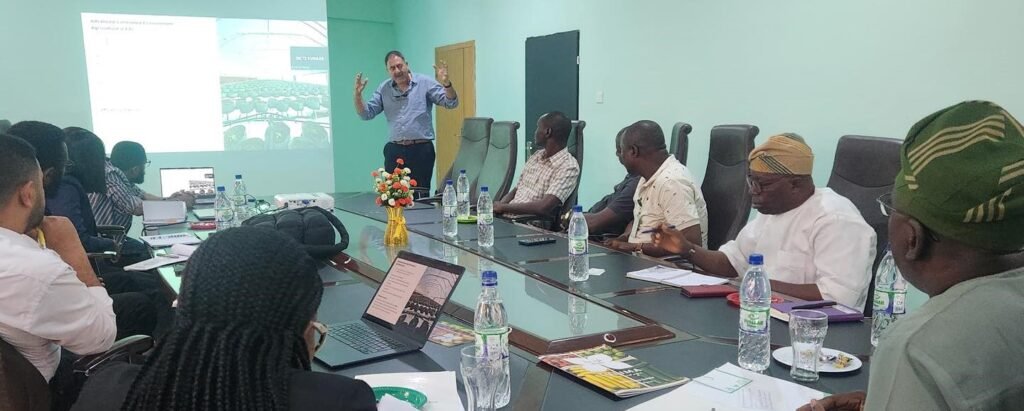
The gathering that signalled the start of this partnership brought together stakeholders with deep expertise in finance, agricultural research, and high-tech crop production. Representatives from AltBank discussed the financial architecture that will underpin the project and shared how bank-led innovation can serve as a catalyst for agricultural transformation.
For many in Nigeria’s farming sector, agriculture remains rooted in tradition, tending land with decades-old practices that cannot easily compete with imported produce. That is changing as innovators show how precision farming techniques, especially those powered by technology such as hydroponics, can produce vegetables and leafy greens at scale, irrespective of rainfall or soil quality.
Hydroponics is a method of growing plants without soil, using nutrient-rich water solutions in controlled environments. When combined with artificial intelligence (AI), it becomes a way to manage plant growth with extraordinary precision, enhancing yield while reducing waste. This partnership sees hydroponic innovation at its core and aims to make it a commercial success story in West Africa — serving urban markets and redefining Nigeria’s food import landscape.
Abeokuta’s appeal as the launch site came from FUNAAB’s long legacy in agricultural science and its access to research expertise and infrastructure. The university will serve as an anchor for testing, refining, and documenting best practices that can be replicated in other regions. With these attributes, the campus is positioned to become a hub for agricultural transformation driven by research and innovation.
According to key voices in the collaboration, the goal isn’t simply to grow crops more efficiently. It is to raise agricultural productivity in a way that is climate-resilient, economically viable, and replicable, offering a model that can attract investment, create jobs and support small and medium-scale farmers to participate in sophisticated value chains.
The Promise of AI-Enabled Farming and Modern Agribusiness
The use of AI in agriculture promises more than automated operations — it can analyse real-time data on plant health, temperature, humidity, nutrient levels, and other critical variables. With AI systems analysing these data streams, adjustments to the farm environment can be made instantly to enhance production efficiency. The result is reduced reliance on unpredictable weather patterns, improved crop quality, and streamlined resource use.
When applied to hydroponics, AI also opens the door to year-round production cycles that can dramatically shorten waiting times between plantings and harvests. In a country with a rapidly growing population and heavy food import bills, achieving consistent local production could have far-reaching impacts.
AltBank’s involvement focuses heavily on providing structured financing that supports investment in technology and operations, rather than simply extending traditional credit. In doing so, the bank is attempting to bridge a long-standing gap in agricultural finance that researchers have highlighted in numerous studies: access to capital is vital for improved food security and broader agribusiness performance.
By taking on risk-sharing models and working with partners that bring technical and research strengths to the table, AltBank hopes to nurture an ecosystem where agribusinesses can flourish and attract additional investment. The bank’s strategy reflects a global shift where financial institutions are beginning to see agriculture, especially tech-enabled agriculture, as a viable, long-term investment class rather than a high-risk sector to be avoided.
FUNAAB’s leadership has underlined the role of universities not just as centres of learning, but as engines of innovation that can drive economic growth. By collaborating closely with the industry and finance sectors, they aim to ensure that research breaks out of academic journals and directly benefits society through commercial application.

Changing Narratives Around Food Imports and Local Production
Nigeria has long struggled with reliance on imported vegetables and other high-value crops. Imported produce often arrives at high cost and lower freshness, which limits affordability and undermines local production competitiveness. This project’s ambition is to shift that narrative by manufacturing fresh produce locally, using technology to match or exceed the quality of imported goods.
Import substitution — reducing reliance on foreign agricultural products by producing them domestically — sits at the heart of many national economic strategies. By enabling local production of vegetables that once depended on supply chains from Europe or Asia, this partnership signals a new era of food value chain development that aligns with Nigeria’s broader goals of boosting domestic output and creating export-ready agricultural goods.
The local employment potential of this model is significant. Modern agribusiness requires skills in technology operation, data analytics, farm management, supply logistics and quality control. Training and employing young Nigerians in these fields will not only provide jobs but also build a workforce equipped for the future of agriculture — where smart systems and digital expertise are central.
There is also a ripple effect expected beyond farming. As local production rises, downstream industries like food processing, cold chain logistics, retail distribution and export services should benefit. This broader value chain growth will help reduce economic leakages and strengthen Nigeria’s food sector resilience.
Looking Ahead: Replication, Scaling and African Agritech Leadership
Perhaps the most exciting part of this development is that it could serve as a template for other African countries looking to modernise their agricultural sectors. In recent years, technology has increasingly become part of agricultural strategy across the continent, from climate-smart farming in Northern Nigeria to AI-enabled systems in East African horticulture and cooperatives in southern Africa adopting digital farm management.
What sets this partnership apart is its combination of financial innovation, academic research, and global technical expertise. When these three elements work together, it creates a powerful synergy that can overcome barriers that have held back agribusiness innovation for decades, especially access to capital, risk management, and scalability.

The next phase involves moving from planning to execution, establishing the hydroponic sites, training staff, organising supply chains, and ensuring the system operates effectively in real-world conditions. If successful, this initiative could significantly reduce the volume of vegetable imports into Nigeria and build a new crop of commercially viable agricultural enterprises geared for local, regional, and international markets.
Agriculture remains the backbone of many African economies and a key source of employment and food security. With technology investments and strategic partnerships such as this, the continent is demonstrating how agriculture can evolve into a sophisticated, data-driven sector that attracts capital, drives economic growth, and nurtures innovation.
In time, this model could help position Nigeria not just as a producer of food for domestic consumption but as a regional leader in tech-enabled agribusiness in Africa.
Join Our Social Media Channels:
WhatsApp: NaijaEyes
Facebook: NaijaEyes
Twitter: NaijaEyes
Instagram: NaijaEyes
TikTok: NaijaEyes