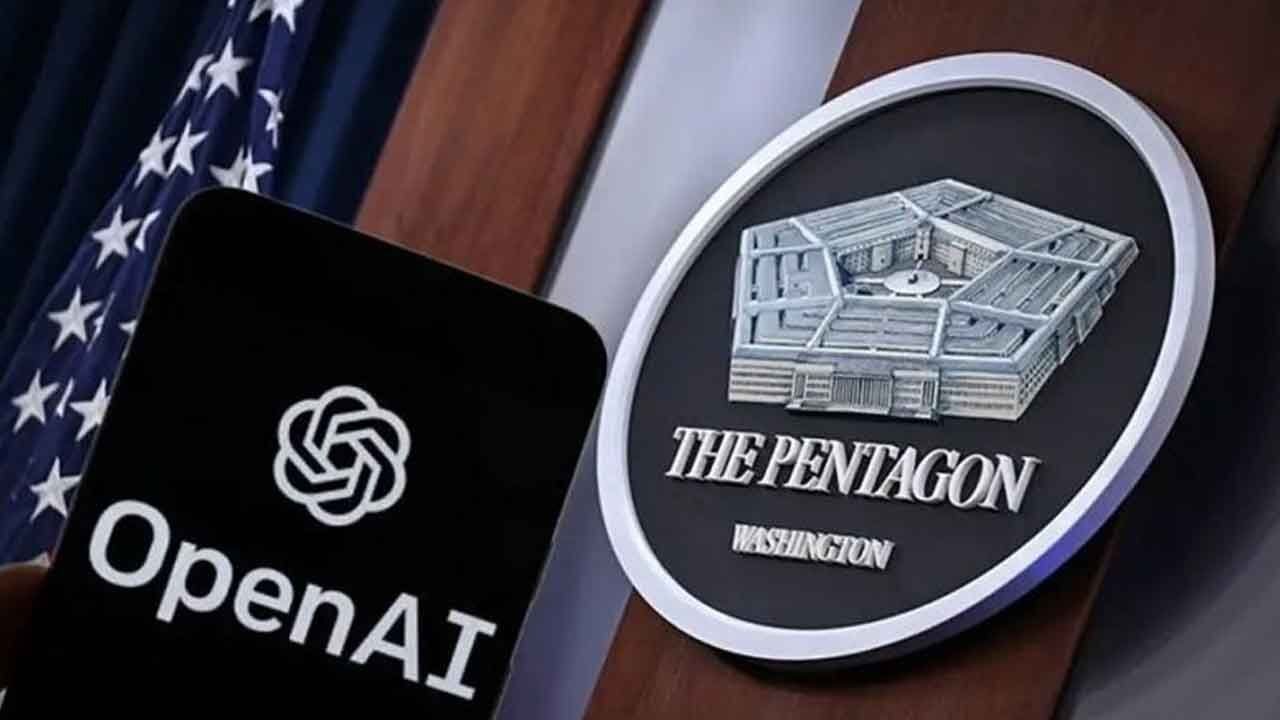

Artificial intelligence is rapidly becoming a strategic technology shaping global power, and the United States is moving quickly to integrate it into national security operations. In a move that has generated intense debate across the technology sector, OpenAI recently agreed to deploy its advanced AI models within the United States Pentagon’s classified systems. The agreement marks a significant shift in how commercial AI companies collaborate with military institutions and highlights the growing intersection between Silicon Valley innovation and global defence strategy.
For many observers, the development raises difficult questions about ethics, governance, and the future role of artificial intelligence in warfare. At the same time, supporters argue that carefully controlled collaboration between AI firms and governments is essential to maintain technological advantage and national security.

The Pentagon’s Growing Dependence on Artificial Intelligence
Artificial intelligence is already transforming how modern militaries operate. Today’s armed forces rely on enormous volumes of data collected from satellites, drones, intelligence reports, and surveillance systems. Processing such information manually would be slow and inefficient. AI systems can analyse these data streams in seconds, helping military planners make faster and more informed decisions.
This need for rapid analysis is one of the main reasons the Pentagon is pushing aggressively to integrate AI tools into its infrastructure. AI models can assist with tasks such as intelligence analysis, simulation of military scenarios, cyber defence, and operational planning. By identifying patterns in massive datasets, AI can help commanders anticipate threats and coordinate responses more efficiently.
The U.S. Department of Defense has been experimenting with AI for several years through initiatives designed to modernise military operations. In particular, large language models and advanced analytics tools are increasingly being explored for planning missions, analysing battlefield information, and supporting logistics management.
The Pentagon’s decision to work with OpenAI reflects a broader global race for technological dominance. Governments around the world see artificial intelligence as a decisive strategic asset. The country that successfully integrates AI into defence systems could gain a significant advantage in intelligence, surveillance, and battlefield coordination.
For the United States, maintaining leadership in artificial intelligence development has become a matter of national security. As a result, partnerships between government agencies and private technology firms are becoming more common.
Why OpenAI Accepted the Pentagon Agreement
OpenAI’s agreement with the Pentagon represents a notable shift in the company’s approach to military collaboration. For years, many technology firms maintained strict policies limiting the use of their technologies in warfare or surveillance. However, the rapid growth of AI capabilities has forced companies to reconsider how their tools might be used responsibly in national security contexts.
The agreement allows OpenAI’s AI models to be deployed within classified cloud networks used by the U.S. Department of Defense. These networks handle sensitive information related to military operations and intelligence. According to reports, the AI systems will help analyse data, assist with modelling and simulations, and support decision making across defence operations.
One of the major reasons for the deal was the sudden breakdown of the Pentagon’s relationship with another AI company, Anthropic. Anthropic had previously supplied AI systems used by defence agencies, but disagreements over safeguards and policy restrictions created tension between the company and the U.S. government.
When Anthropic refused to remove certain safeguards that limited how its AI models could be used, the Pentagon reportedly moved to replace the technology with alternatives. This created an opportunity for OpenAI to step in as a supplier of advanced AI tools.
OpenAI leadership has argued that collaboration with governments is sometimes necessary to ensure responsible deployment of powerful technologies. Rather than leaving national security agencies to develop AI independently without oversight, the company believes working directly with them can introduce stronger safety frameworks and accountability measures.
However, the decision has not been without controversy. Critics argue that once AI technology enters military systems, it becomes difficult to fully control how it will be used in real-world operations.
The Safety Guardrails Built Into the Agreement
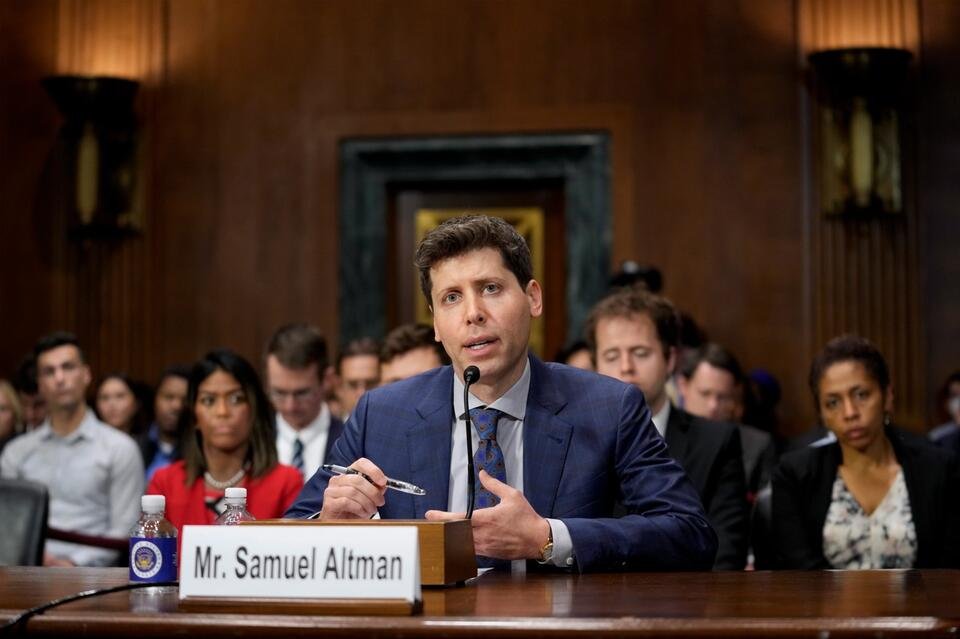
To address ethical concerns, OpenAI has emphasised that the agreement includes strict safeguards governing how its AI technology can be used within military systems. The company has introduced what it calls three core “red lines” designed to limit the potential misuse of its models.
First, the company says its AI cannot be used for mass domestic surveillance of citizens. This restriction aims to prevent military or intelligence agencies from using the technology to monitor populations on a large scale.
Second, the agreement prohibits the use of OpenAI models to directly control autonomous weapons systems. Autonomous weapons refer to machines that can select and attack targets without human intervention. Many AI researchers consider such weapons highly dangerous and ethically problematic.
Third, OpenAI states that its AI should not be used to make high-stakes automated decisions without human oversight. This means humans must remain responsible for critical decisions involving security or military action.
These safeguards are designed to reassure both policymakers and the public that the technology will not be deployed in ways that undermine civil liberties or escalate autonomous warfare.
The company also insists that its deployment will operate within existing U.S. laws governing intelligence and military activities. For example, surveillance activities must comply with legal frameworks such as constitutional protections and national security regulations.
Despite these assurances, critics argue that once AI systems become embedded in military infrastructure, the line between support tools and operational decision systems may gradually blur.
Ethical Debates and the Future of Military AI
The OpenAI Pentagon deal has triggered intense debate across the global technology community. Many researchers and engineers worry that expanding the role of AI in military operations could accelerate the development of automated warfare systems.
Some OpenAI employees themselves reportedly expressed concerns internally about the partnership. Critics fear that collaborations between AI companies and defence agencies may normalise the use of advanced machine learning in military conflict.
Others argue that refusing to work with governments is unrealistic. Artificial intelligence is becoming too powerful to ignore, and national governments will inevitably seek to integrate it into defence strategies. In this view, responsible collaboration between companies and governments may be safer than allowing unregulated development.
Another challenge is the difficulty of controlling how governments ultimately use AI tools. Even when companies include contractual safeguards, military institutions often have operational independence once technology is deployed. OpenAI’s leadership has acknowledged that the company does not directly control military decision making after the systems are delivered.
The broader debate reflects a deeper global tension surrounding artificial intelligence. On one side are those who believe AI must be tightly restricted to avoid dangerous applications. On the other side are policymakers who believe technological leadership is essential for national security.
This tension is likely to intensify as AI systems become more powerful. Governments will increasingly rely on artificial intelligence for intelligence analysis, cybersecurity, and battlefield coordination.
At the same time, international discussions about regulating military AI are growing. Some experts have called for global treaties that would limit the development of autonomous weapons and establish ethical guidelines for AI use in warfare.
Whether such agreements will materialise remains uncertain. What is clear is that the integration of artificial intelligence into defence systems is accelerating rapidly.
The OpenAI Pentagon partnership therefore represents more than just a technology contract. It symbolises the beginning of a new era in which artificial intelligence becomes deeply embedded in national security infrastructures.
For the technology industry, the deal signals that the relationship between AI companies and governments is evolving. For policymakers, it highlights the urgent need to balance innovation, security, and ethical responsibility.
As AI continues to advance, decisions like this one will shape not only the future of warfare but also the broader role of artificial intelligence in society.
Join Our Social Media Channels:
WhatsApp: NaijaEyes
Facebook: NaijaEyes
Twitter: NaijaEyes
Instagram: NaijaEyes
TikTok: NaijaEyes