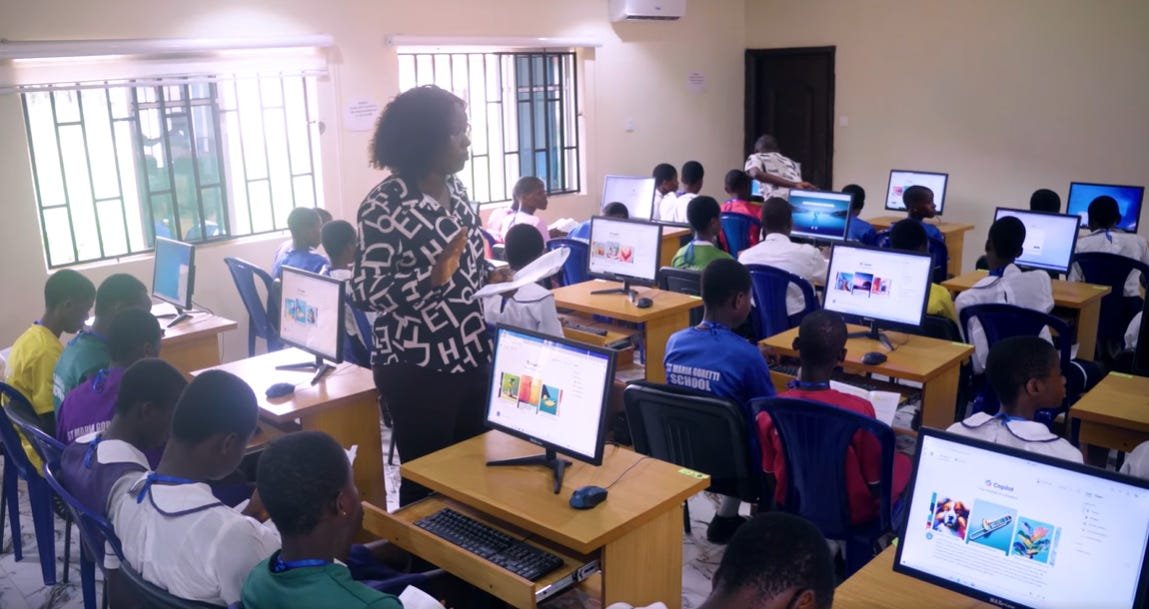

Across Nigeria, a quiet shift is unfolding in classrooms, hostels, and late-night study sessions. Students are no longer relying solely on traditional private tutors. Instead, many are turning to artificial intelligence tools that can explain complex topics, solve problems instantly, and adapt to individual learning styles.
What began as casual experimentation has quickly grown into a full-blown movement. From secondary school students preparing for WAEC to undergraduates handling demanding coursework, AI is increasingly stepping into roles once reserved for paid home tutors. The change is subtle, often happening behind screens and away from formal school systems, but its impact is becoming impossible to ignore.
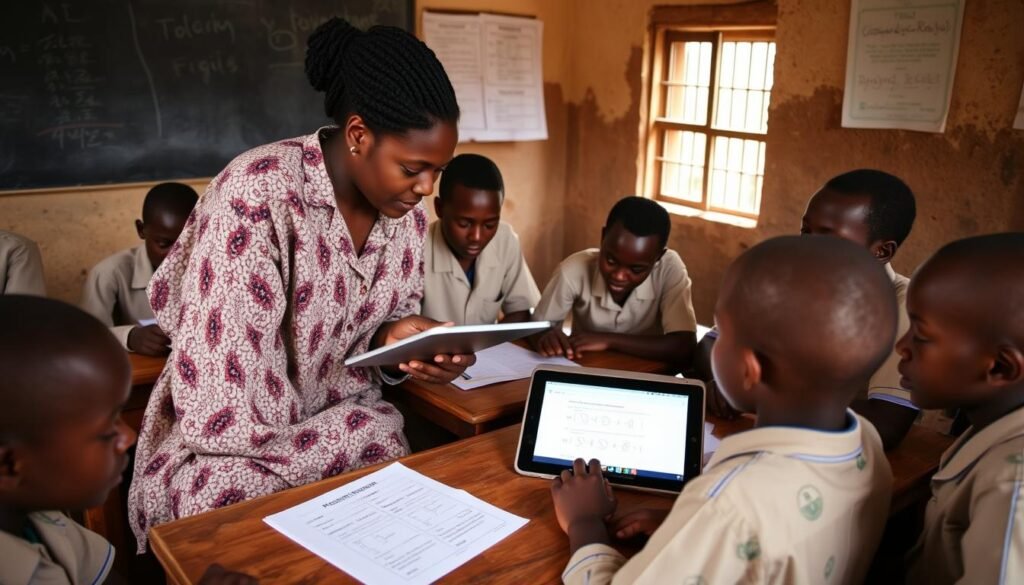
The Rise of AI as a Personal Tutor for Nigerian Students
Artificial intelligence is no longer a distant concept in Nigeria’s education sector. It is now a practical tool students use daily to understand subjects ranging from mathematics to English and even coding.
Recent data shows a dramatic surge in interest. Searches related to “AI and studying” have risen by more than 200 per cent among Nigerian students, reflecting how deeply these tools are being integrated into learning habits.
What makes AI particularly appealing is its ability to function like a personalised tutor. Unlike traditional classroom settings where one teacher attends to dozens of students, AI tools provide one-on-one guidance. Students can ask questions repeatedly without fear of embarrassment, receive instant feedback, and move at their own pace.
In structured trials conducted in Nigeria, students who used AI tools in guided learning environments recorded significant academic improvement. In one study involving public secondary schools, learners who interacted with AI systems showed measurable gains in English and overall academic performance.
For many students, this is the closest thing to having a private tutor available at any time of the day, without the financial burden.
Why Students Are Quietly Replacing Human Tutors
The shift away from traditional private tutoring is not accidental. It is driven by a combination of economic realities, accessibility, and changing attitudes towards learning.
Private tutoring in Nigeria has long been seen as a luxury. Platforms like Tuteria have helped connect students with tutors, but cost remains a barrier for many families. AI, on the other hand, offers a cheaper or even free alternative.
Students are also drawn to the convenience. With AI tools, there is no need to schedule sessions, commute, or depend on a tutor’s availability. Learning becomes flexible and on-demand.
Another major factor is personalisation. AI systems can adjust explanations based on a student’s level of understanding. They can simplify concepts, provide examples, and even rephrase answers until the student grasps the idea. This level of responsiveness is difficult to achieve consistently with human tutors, especially in large or busy households.
There is also a psychological advantage. Many students feel more comfortable asking “basic” or repeated questions to a machine than to a human tutor. This reduces anxiety and encourages deeper engagement with learning materials.

The Benefits and Hidden Risks of AI-Driven Learning
There is no doubt that AI is transforming how students learn. It is making education more accessible, interactive, and tailored to individual needs.
Experts note that AI can significantly enhance learning when used correctly. It supports independent thinking, helps students practise consistently, and exposes them to a wide range of resources. In some cases, it has even accelerated learning progress beyond traditional expectations.
However, the growing reliance on AI is not without concerns.
One of the biggest issues is overdependence. Educators worry that some students are using AI to bypass thinking rather than develop it. There are increasing reports of students relying on AI to complete assignments, raising questions about originality and critical thinking.
There are also concerns about academic integrity. AI tools can generate essays, solve problems, and even create references, which may tempt students to submit work that is not entirely their own. This has sparked debates about plagiarism and the future of assessment in Nigerian schools.
Experts consistently emphasise that AI should complement learning, not replace effort. When used responsibly, it can act as a powerful support system. When misused, it risks weakening the very skills education is meant to build.
What This Means for the Future of Education in Nigeria
The growing use of AI as a substitute for private tutors signals a deeper transformation in Nigeria’s education system. It is not just about technology, but about access, equity, and the evolving role of teachers.
Edtech platforms like uLesson have already shown how digital tools can scale learning across the country. AI takes this a step further by offering real-time, personalised support that was previously unavailable to most students.
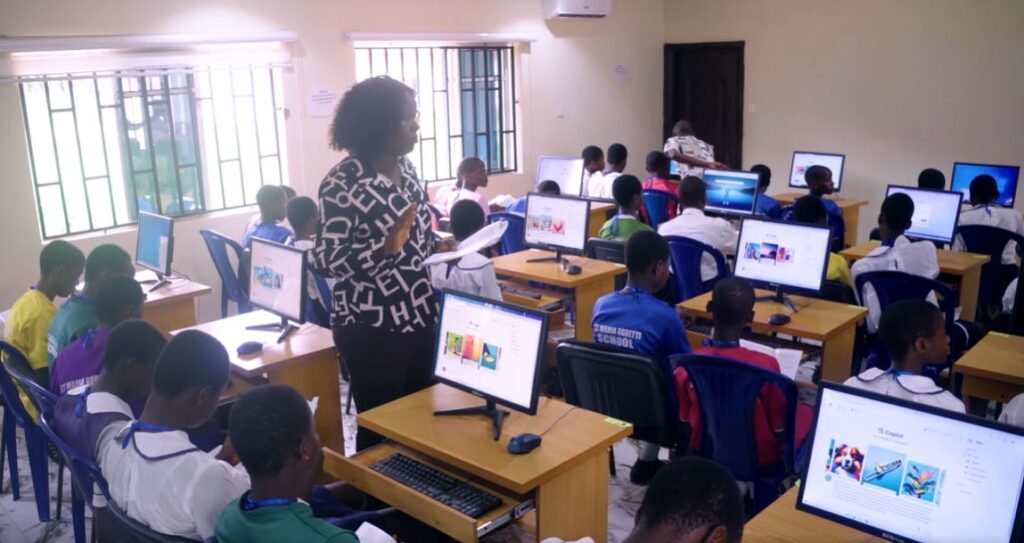
Looking ahead, the role of teachers may shift rather than disappear. Instead of being the sole source of knowledge, educators may become facilitators who guide students on how to use AI effectively. Evidence from Nigerian studies suggests that the best outcomes occur when AI is combined with teacher supervision and structured learning methods.
There is also a growing need for policies and frameworks that address ethical use. Schools, universities, and education authorities will need to rethink how learning is assessed in an era where answers are just a prompt away.
For students, the message is clear. AI is a powerful tool, but it is not a shortcut to success. Those who learn to use it wisely will gain an advantage, while those who rely on it blindly may struggle in the long run.
Join Our Social Media Channels:
WhatsApp: NaijaEyes
Facebook: NaijaEyes
Twitter: NaijaEyes
Instagram: NaijaEyes
TikTok: NaijaEyes