
Why Nigerian Startups Should Build More Apps for Special Needs Learners
Nigeria’s education technology space is growing at a steady pace, with platforms like uLesson and newer AI-driven tools reshaping how students learn. Yet, one critical segment remains largely underserved: learners with special needs.
Across the country, millions of children living with disabilities face structural barriers to education, from limited specialised schools to inadequate teaching support. Research indicate that inclusive education in Nigeria is still underdeveloped, with access going beyond physical classrooms to include personalised and culturally relevant learning systems.
For many families, the challenge is not just access but suitability. Traditional classrooms are often overcrowded, under-resourced, and not designed for learners who require tailored instruction. This gap presents a powerful opportunity for Nigerian startups to rethink education through inclusive digital solutions.
Globally, assistive and adaptive learning technologies are helping students learn at their own pace. In Nigeria, however, adoption remains fragmented, leaving a significant portion of learners behind in a rapidly digitising world.
Why Special Needs Learners Require Dedicated Digital Solutions
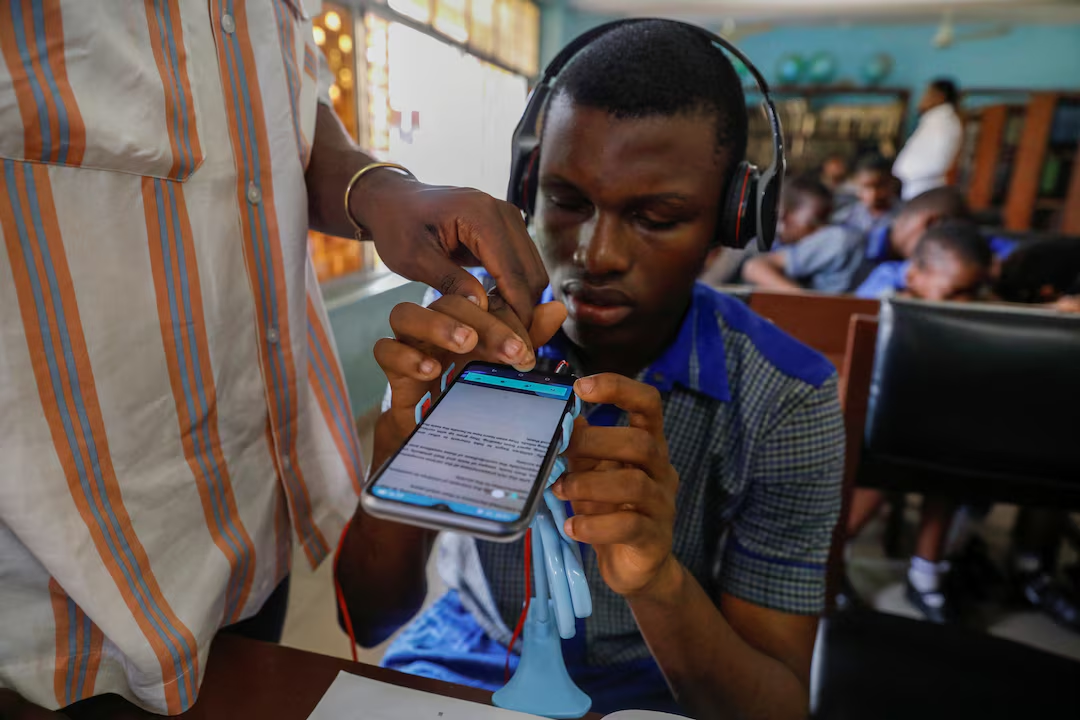
Special needs education is not a one-size-fits-all system. Learners may have visual, hearing, cognitive, or motor impairments, each requiring different tools and teaching approaches. This is where well-designed apps can make a real difference.
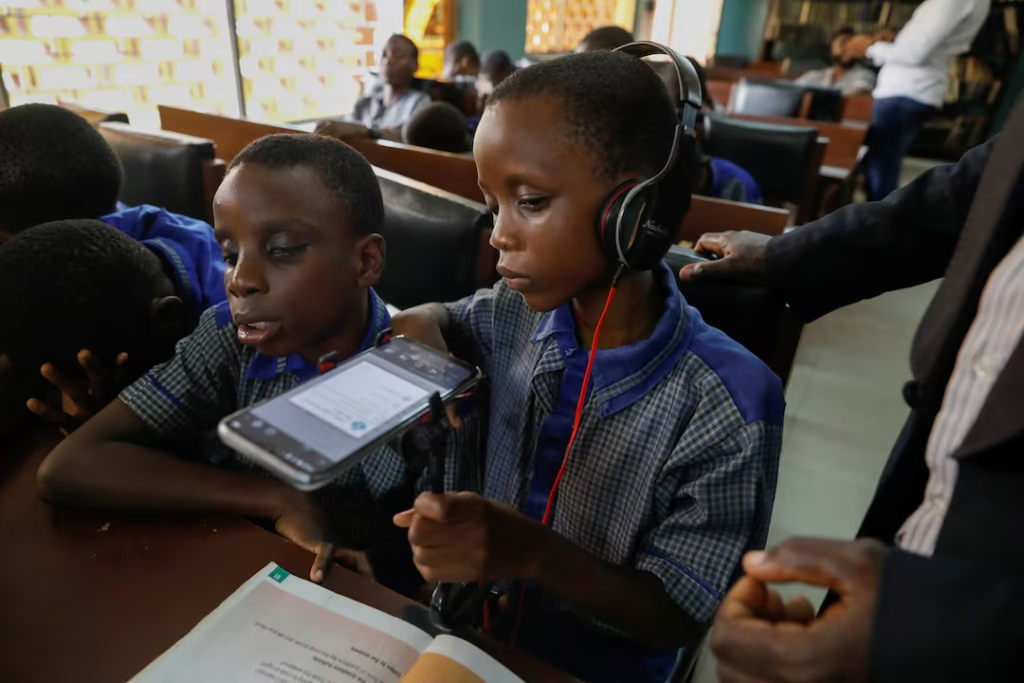
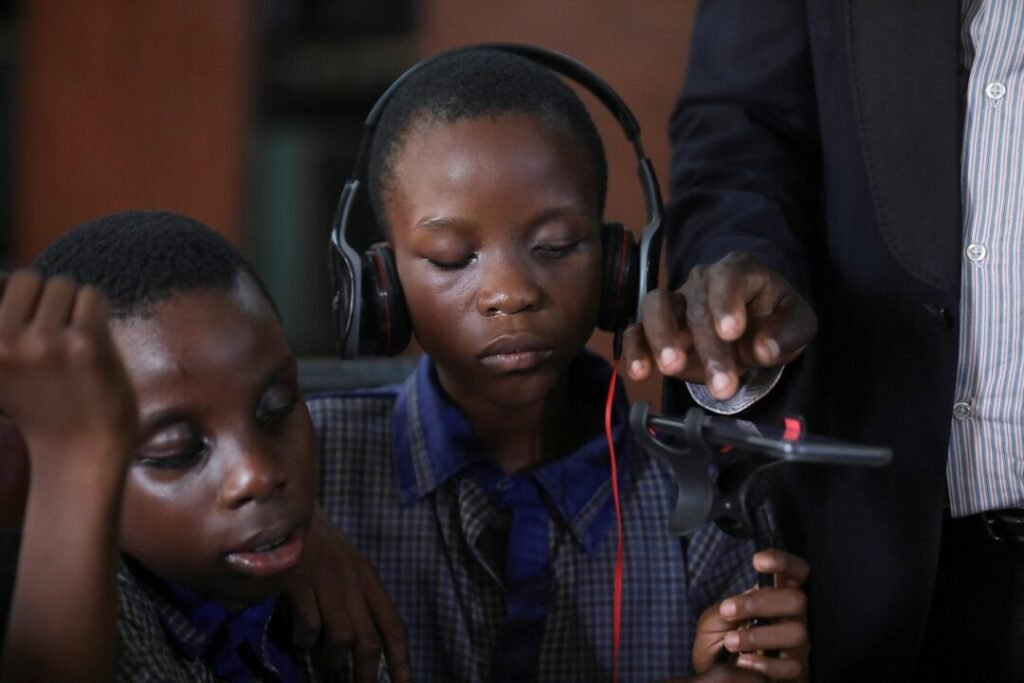
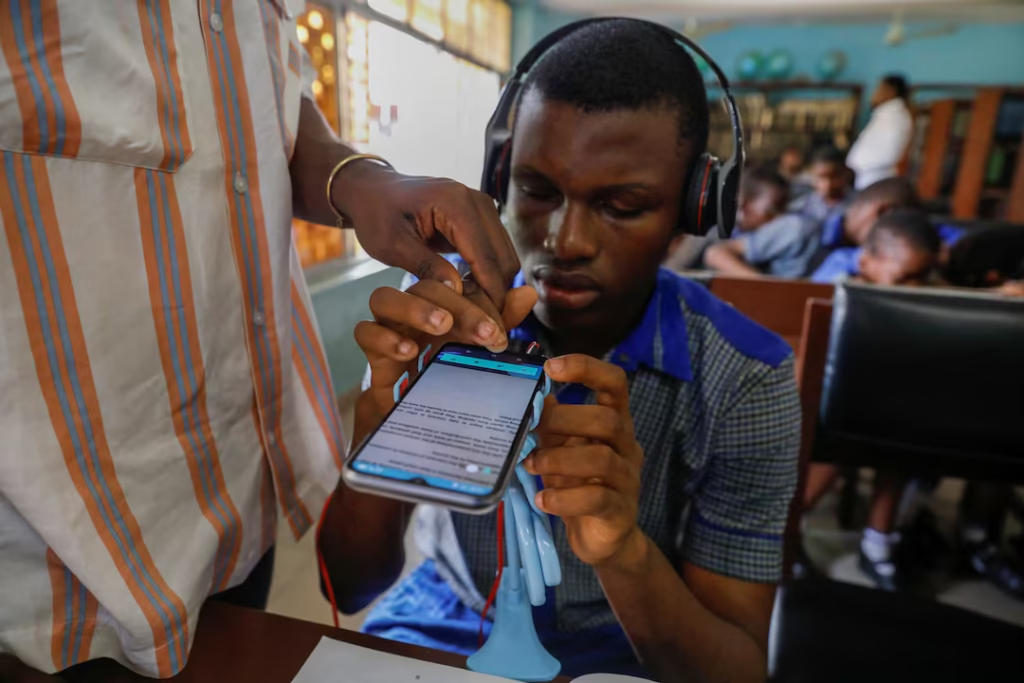
Digital platforms can integrate features like text-to-speech, voice commands, captioned videos, and interactive simulations. These tools enable personalised learning experiences that traditional systems struggle to provide. Research shows that adaptive software and gamified learning can significantly improve engagement among learners with diverse needs.
In Nigeria, the need is even more urgent due to teacher shortages and limited specialist training. Apps can serve as supportive tools, helping bridge the gap between what educators can provide and what learners actually need.
A practical example is the rise of AI-powered tutoring platforms that offer step-by-step guidance and personalised feedback. Such systems reduce dependence on one-on-one teaching, which is often unavailable or expensive.
For learners with special needs, this level of support is not just helpful, it is essential. It can mean the difference between exclusion and meaningful participation in education.
The Business Case for Nigerian Startups
Building for inclusivity is not only a social responsibility, it is also a strong business opportunity. Nigeria has a large and youthful population, with increasing smartphone penetration and growing demand for digital learning tools.
Mobile-based learning has already proven effective in improving access to education, especially in underserved areas. With mobile penetration exceeding 90 percent, apps can reach learners far beyond urban centres.
For startups, focusing on special needs learners opens up an underserved market with high demand and low competition. It also aligns with global funding trends, as investors and development organisations increasingly support inclusive and impact-driven innovations.
Moreover, inclusive design benefits everyone. Features like audio learning, simple interfaces, and offline functionality improve usability for all users, not just those with disabilities. This broader appeal can help startups scale faster while maintaining social impact.
There is also a policy angle. Nigeria has frameworks supporting inclusive education, but implementation remains weak. Startups that step in to fill this gap can position themselves as key partners in national development efforts.
What the Future Could Look Like
The future of education in Nigeria will be shaped by how well technology addresses inequality. Startups have the tools to build platforms that are not only innovative but also inclusive from the ground up.
Imagine apps that adapt in real time to a learner’s pace, translate content into local languages, and function seamlessly offline. Imagine platforms that support teachers with insights while empowering students with independence.
To achieve this, startups must prioritise accessibility from the design stage, not as an afterthought. Experts emphasise the importance of embedding inclusive frameworks early to avoid creating digital systems that exclude vulnerable learners.
Collaboration will also be key. Partnerships with educators, healthcare professionals, and communities can ensure that solutions are practical and culturally relevant.
Ultimately, building apps for special needs learners is about more than technology. It is about equity, dignity, and unlocking potential. For Nigeria’s startup ecosystem, it represents a chance to lead not just in innovation, but in impact.
Join Our Social Media Channels:
WhatsApp: NaijaEyes
Facebook: NaijaEyes
Twitter: NaijaEyes
Instagram: NaijaEyes
TikTok: NaijaEyes