Artificial intelligence is quietly reshaping how children learn, and in many Nigerian homes, it is no longer a distant concept. From mobile apps that solve maths problems to chat-based tools that explain difficult topics, AI tutors are becoming part of everyday education.
For many parents, the big question is simple. Is this a helpful learning support or a risky shortcut that could harm a child’s development?
Across the world, families are already embracing AI tutors because they offer personalised learning, instant answers, and lower costs compared to private lessons. At the same time, experts continue to warn that without proper guidance, these tools could weaken critical thinking and reduce real human interaction in learning.
In Nigeria, where access to quality education can vary widely, AI tutors present both an opportunity and a responsibility. Here is what every Nigerian parent needs to understand.

What Exactly Are AI Tutors and Why Nigerian Families Are Paying Attention
AI tutors are software tools powered by artificial intelligence that act like a personal teacher for a child. Instead of sitting with a human tutor, the child interacts with a system that explains concepts, asks questions, and adapts to their learning pace.
What makes them different from traditional learning tools is their ability to personalise education. These systems analyse how a child learns, identify weak areas, and adjust lessons in real time.
For Nigerian families, this is a big deal.
In many homes, one child may struggle with maths while another excels in English. A classroom teacher handling dozens of students cannot always give each child the attention they need. AI tutors step into that gap by offering one-on-one support at any time of the day.
Cost is another major factor. Private tutoring in cities like Lagos or Abuja can be expensive, but many AI tools offer cheaper subscriptions or even free access. This makes them attractive, especially for middle-income families trying to support their children academically.
There is also the convenience. A child can ask questions at midnight, repeat lessons endlessly without feeling embarrassed, and learn at their own speed. For shy or struggling students, this can boost confidence significantly.
Still, while the appeal is clear, parents must look beyond the convenience.
The Real Benefits of AI Tutors for Nigerian Children
When used properly, AI tutors can be powerful educational tools.
One of the biggest advantages is personalised learning. Every child is different. Some understand quickly, while others need repetition. AI tutors adjust instantly, ensuring no child is left behind.
They also improve access to quality education. In rural areas or underfunded schools, students may lack experienced teachers or learning materials. AI tools can help bridge that gap by providing explanations, practice questions, and guidance that might not otherwise be available.
Another key benefit is confidence-building. Many children are afraid to ask questions in class for fear of being mocked. With AI, there is no embarrassment. A child can ask the same question ten times until they understand it fully.
AI tutors also encourage independent learning. Instead of waiting for instructions, children learn to explore, ask questions, and find solutions on their own. This is an important skill in today’s fast-changing world.
In some cases, AI can even help parents stay involved. By tracking progress and performance, these tools allow parents to see where their child is improving or struggling.
However, these benefits only exist when AI is used as a support tool, not a replacement for real learning.

The Risks Nigerian Parents Cannot Ignore
Despite the advantages, there are real concerns that parents must take seriously.
One major issue is overdependence. If a child begins to rely too much on AI to complete assignments, they may stop thinking deeply or solving problems independently. Some educators already warn that students who depend heavily on AI may lose important skills like critical thinking and creativity.
There is also the problem of accuracy. AI tools are not perfect. They can sometimes give wrong or misleading answers. A child who trusts everything they see may learn incorrect information without realising it.
Another concern is reduced human interaction. Learning is not just about academics. It involves communication, emotional growth, and social skills. AI cannot replace the encouragement, discipline, and mentorship that come from teachers and parents.
Privacy is another issue. Many AI platforms collect data about users. Parents need to be careful about what information their children share online and ensure that any platform used is safe and secure.
There is also the risk of misuse. Some children may use AI to cheat by generating homework answers instead of learning the material. Over time, this can damage their understanding and academic integrity.
Perhaps the biggest danger is misunderstanding what AI is meant to do. AI should support learning, not replace effort. When used wrongly, it becomes a shortcut that weakens a child’s foundation instead of strengthening it.
How Nigerian Parents Can Use AI Tutors the Right Way
The key to success with AI tutors is guidance. Parents must take an active role in how their children use these tools.
Start by understanding the platform your child is using. Do not just install an app and walk away. Know what it does, how it works, and what kind of content it provides.
Set clear rules. Let your child know that AI is there to help them learn, not to do their work for them. Encourage them to try solving problems first before asking the AI for help.
Talk to your child about responsibility. Explain that not everything online is correct and that they should always think critically about the answers they receive.
Stay involved in their learning. Ask questions about what they are studying, review their progress, and encourage discussions. This helps reinforce understanding and keeps the human connection strong.
It is also important to balance AI use with traditional learning. Books, classroom teaching, and human tutors still play a vital role. AI should complement these methods, not replace them.
Experts also recommend open communication between parents, teachers, and schools. Find out if your child’s school has any guidelines on AI use and align your approach with those policies.
Finally, teach your child digital discipline. Limit screen time, encourage breaks, and ensure they engage in offline activities that support overall development.
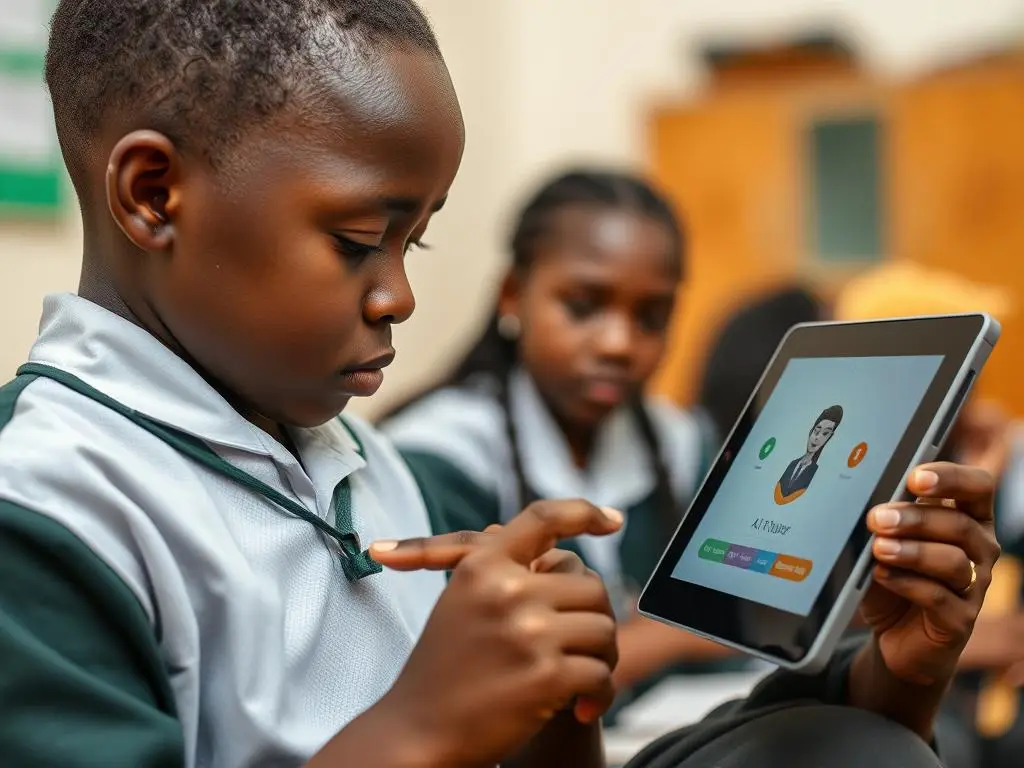
The Future of AI Learning in Nigeria
AI tutors are not a passing trend. They are part of a larger shift in how education works globally.
In Nigeria, this shift could be transformative. With the right approach, AI can help reduce educational inequality, support struggling students, and prepare children for a technology-driven future.
But the outcome depends largely on how it is used.
If parents treat AI as a replacement for learning, it could weaken children’s abilities. If they treat it as a tool for growth, it could unlock new opportunities.
The reality is that children today are growing up in a digital world where AI is everywhere. From smartphones to social media, they are already interacting with intelligent systems daily.
Ignoring AI is not an option. The better approach is to understand it, guide its use, and ensure that children develop the skills they truly need, such as thinking, questioning, and problem-solving.
In the end, the most important teacher in a child’s life is still not a machine. It is a combination of parents, educators, and real life experiences.
AI can assist, but it cannot replace that foundation.
Join Our Social Media Channels:
WhatsApp: NaijaEyes
Facebook: NaijaEyes
Twitter: NaijaEyes
Instagram: NaijaEyes
TikTok: NaijaEyes