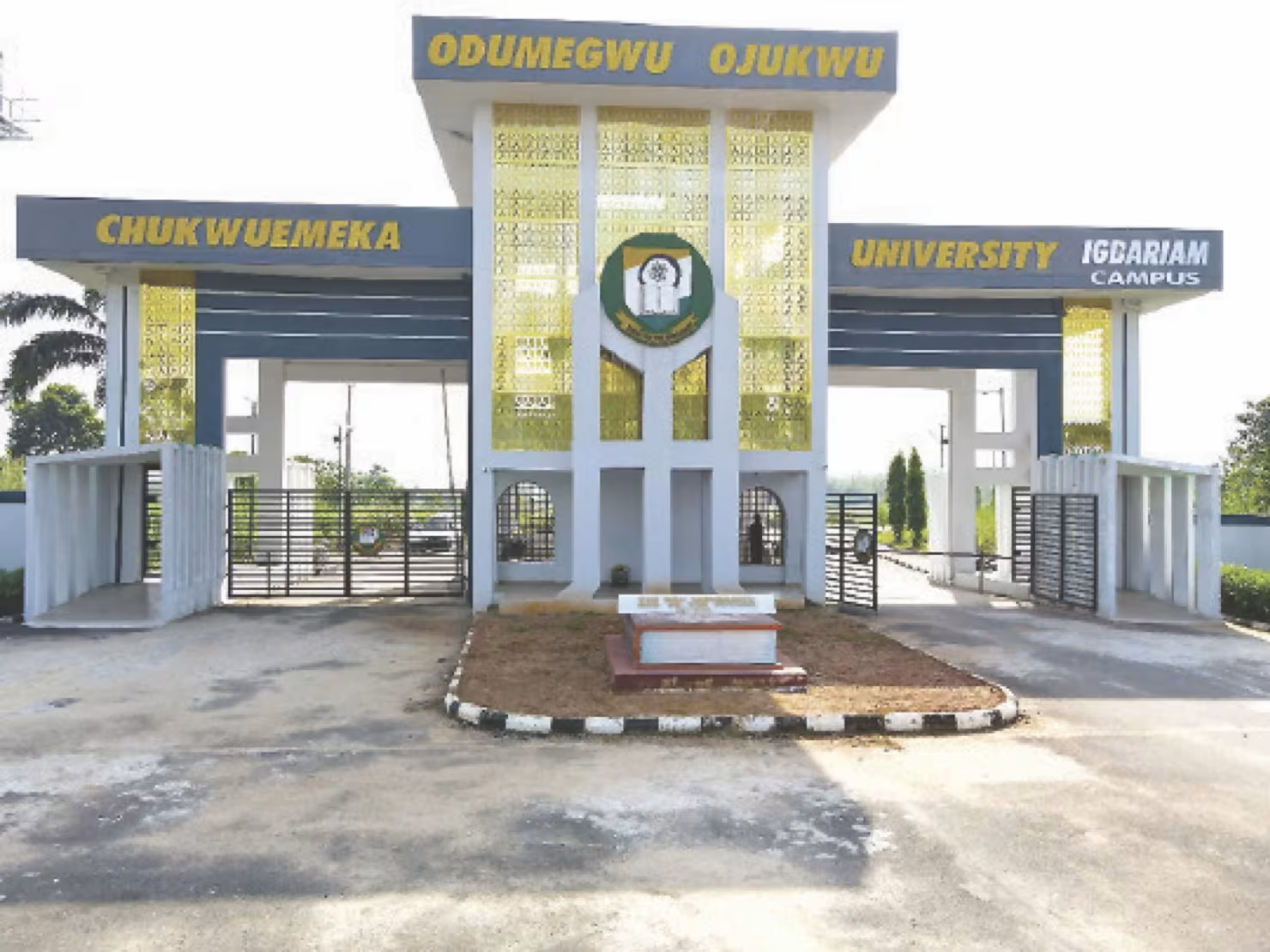

Two lecturers of Chukwuemeka Odumegwu Ojukwu University, Prof. Chike Osegbue and Comrade Emeka Nwabunnia, who were among five academic staff recently dismissed by the institution’s governing council, have rejected the allegations against them.
However, at a press briefing on Sunday, both lecturers denied the allegations and accused the university of deeper administrative issues.
Osegbue said he was unaware of his dismissal, noting that he only saw the reports in the media.
“When I was suspended, I received a letter, but as for sack, I am hearing it from the media just like you. I have just concluded my six months suspension and I’m waiting for a recall,” he said.
He explained that his refusal to teach the postgraduate course, PSC 811: Environmental Politics and Sustainable Development, was because the affected students, in his view, were not properly qualified.
He alleged that the students were admitted shortly before examinations, which he described as a violation of university regulations, adding that he resisted what he termed irregular academic practices.
Osegbue also linked his troubles to his participation in the university’s vice chancellorship selection process, claiming he scored highest but was not appointed, a development he said was now the subject of legal disputes.
He further alleged that there were ongoing petitions and corruption-related claims involving the university leadership, which are already before relevant authorities.
On his part, Nwabunnia denied the sexual misconduct allegations against him, insisting that the evidence presented was fabricated using artificial intelligence.
He described himself as a principled academic and former ASUU leader who has consistently opposed corruption and misconduct within the institution.
Both lecturers maintained their innocence and insisted that they would continue to challenge their dismissal.
BACKSTORY…
The dismissal of the two lecturers at Chukwuemeka Odumegwu Ojukwu University comes amid rising tensions within the institution over allegations of misconduct, academic governance, and internal disciplinary processes.
The university’s governing council recently approved the sack of five academic staff following investigations into various complaints, including alleged insubordination, examination-related irregularities, and accusations of sexual misconduct in some departments.
The decision has since sparked controversy within the academic community, with affected staff members rejecting the allegations and insisting that the disciplinary actions were unjust and linked to deeper institutional disputes.
The situation also reflects ongoing debates within Nigerian tertiary institutions about transparency in staff discipline, academic standards, and governance processes, as well as concerns raised by some lecturers over what they describe as internal power struggles and procedural disagreements within university management structures.