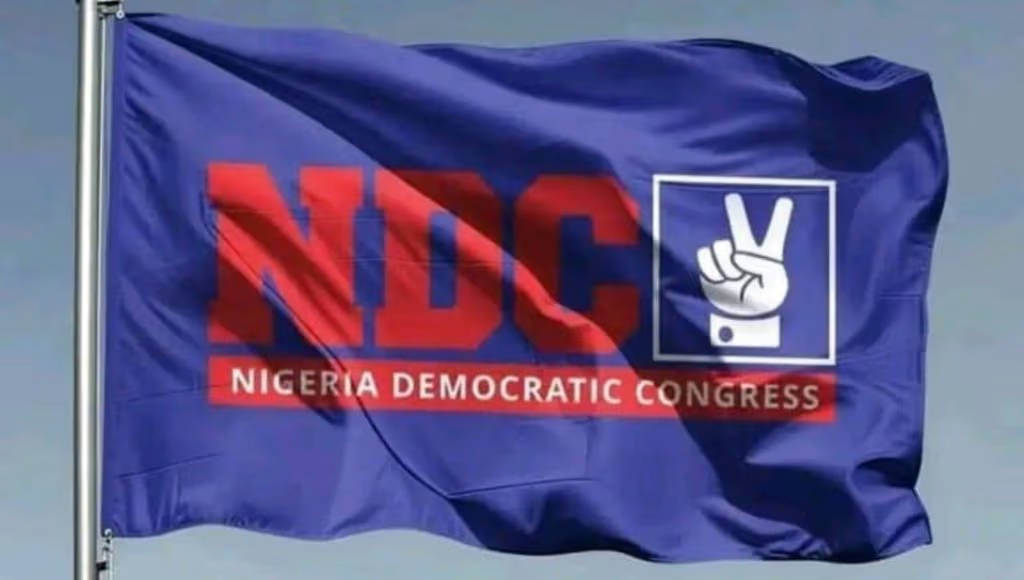

The Nigeria Democratic Congress (NDC) has defended its anti-defection policy, which requires all its candidates to sign legal agreements committing to resign from office if they defect from the party after being elected.
Speaking during an interview on Arise Television’s ‘Prime Time’ on Thursday, NDC’s National Publicity Secretary, Osa Director, said the policy is enshrined in the party’s constitution.
He explained that the rule applies to all NDC candidates contesting positions such as governor, members of the National Assembly, and other elective offices under the party’s platform.
According to him, “Article 16 of the NDC constitution clearly outlines the anti-defection policy.
“Every member is expected to have gone through our constitution, which stipulates in Article 16 that they must submit an affidavit to remain in the party after being elected.
“Politicians are focused on elections, while statesmen focus on nation-building.
“The NDC is committed to the overall growth and development of Nigeria. In that regard, we encourage other political parties to adopt this policy to strengthen democracy and uphold the rule of law,” he said.
BACKSTORY…
The controversy around the NDC’s anti-defection policy reflects a long-standing issue in Nigerian politics: the frequent movement of elected officials from one party to another after winning elections. Over the years, such defections have often been driven by internal party disputes, shifting alliances, or strategic positioning ahead of future elections.
Against this backdrop, the NDC’s decision to introduce a binding commitment from candidates is seen as an attempt to tighten party discipline and reduce post-election defections. The requirement for candidates to sign legal undertakings before contesting is intended to ensure loyalty and prevent elected officials from abandoning the party once they gain political office.
The move also highlights broader debates about party ideology and political stability in Nigeria, where critics of defection practices argue that it weakens voter trust, while supporters of political flexibility maintain that politicians should be free to change affiliations.

Chinenye Ubunama
Chinenye Ubunama is a content writer and storyteller with a background in Biological Science. She specializes in crafting engaging, well-structured, and SEO-optimized content that simplifies complex ideas for everyday readers. With a focus on audience-centered writing, she consistently delivers value-driven content that informs, connects, and drives visibility across digital platforms.