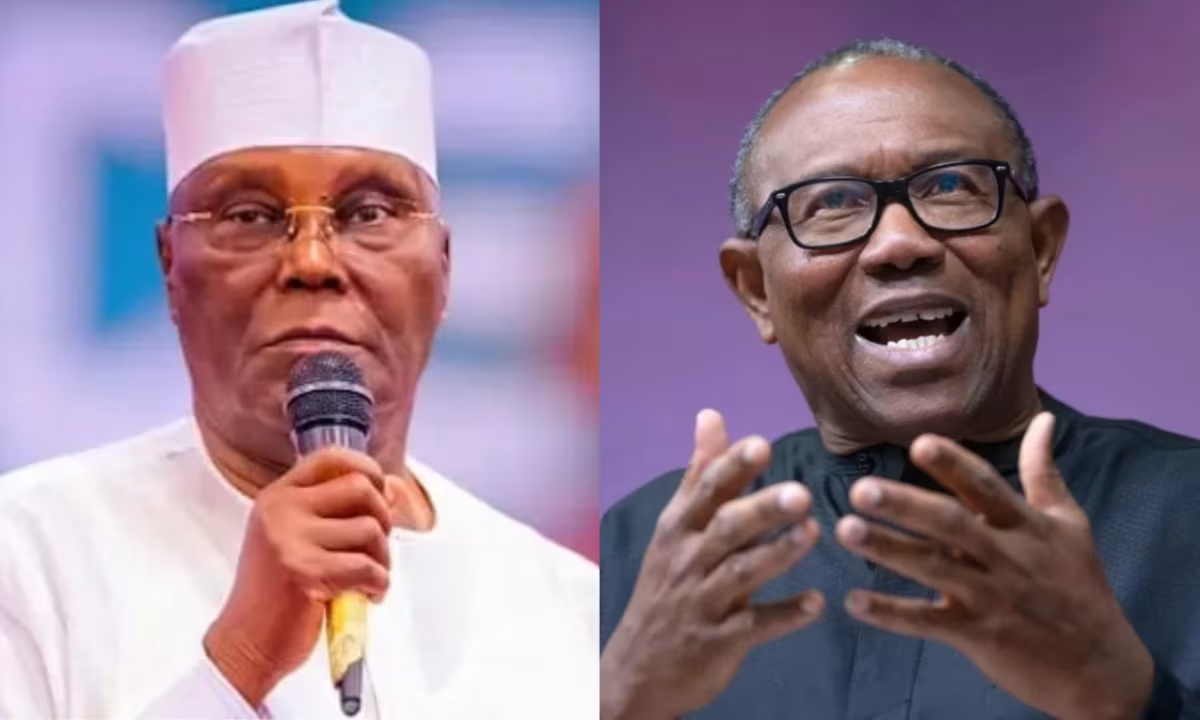

Presidential aide on Information and Strategy, Bayo Onanuga, has said former presidential candidates, Atiku Abubakar and Peter Obi, are unwilling to acknowledge the positive development in Nigeria’s foreign reserves.
Onanuga disclosed that the country’s foreign reserves climbed to $51.04 billion as of June 18, describing it as the highest level recorded in the last 17 years.
He noted that the last time the reserves were at a similar level was in January 2009, when they stood at $50.5 billion.
In a post on X, Onanuga said the increase reflects the achievements of President Bola Tinubu’s administration, despite criticism from opposition figures.
According to him, Atiku, Obi, and other opposition leaders have continued to overlook what he described as significant progress made under Tinubu’s leadership.
He added that the administration’s achievements remain evident, regardless of efforts to downplay them.
BACKSTORY…
The statement by Bayo Onanuga comes amid ongoing political tension between the ruling All Progressives Congress (APC) government led by President Bola Tinubu and opposition figures such as Atiku Abubakar and Peter Obi, who both contested the 2023 presidential election and continue to criticize the administration’s economic policies.
The Presidency recently highlighted that Nigeria’s foreign reserves rose to about $51.04 billion as of June 18, describing it as the highest level in about 17 years. This was presented as evidence that the country’s economic reforms are beginning to yield positive results, especially in terms of external financial stability.
However, opposition voices have consistently argued that despite such macroeconomic indicators, many Nigerians are still facing harsh economic conditions, including inflation, high cost of living, and currency pressure. They question how much of the reported economic “improvement” is actually felt by ordinary citizens.
In response to these criticisms, Onanuga used his post on X to defend the administration, suggesting that critics like Atiku and Peter Obi tend to downplay or ignore positive economic indicators such as the rising reserves, while focusing mainly on areas where the government is under pressure.
Overall, the situation reflects the ongoing political back-and-forth in Nigeria, where economic data like foreign reserves often becomes part of the wider debate between the government and the opposition over the true state of the economy.

Chinenye Ubunama
Chinenye Ubunama is a content writer and storyteller with a background in Biological Science. She specializes in crafting engaging, well-structured, and SEO-optimized content that simplifies complex ideas for everyday readers. With a focus on audience-centered writing, she consistently delivers value-driven content that informs, connects, and drives visibility across digital platforms.