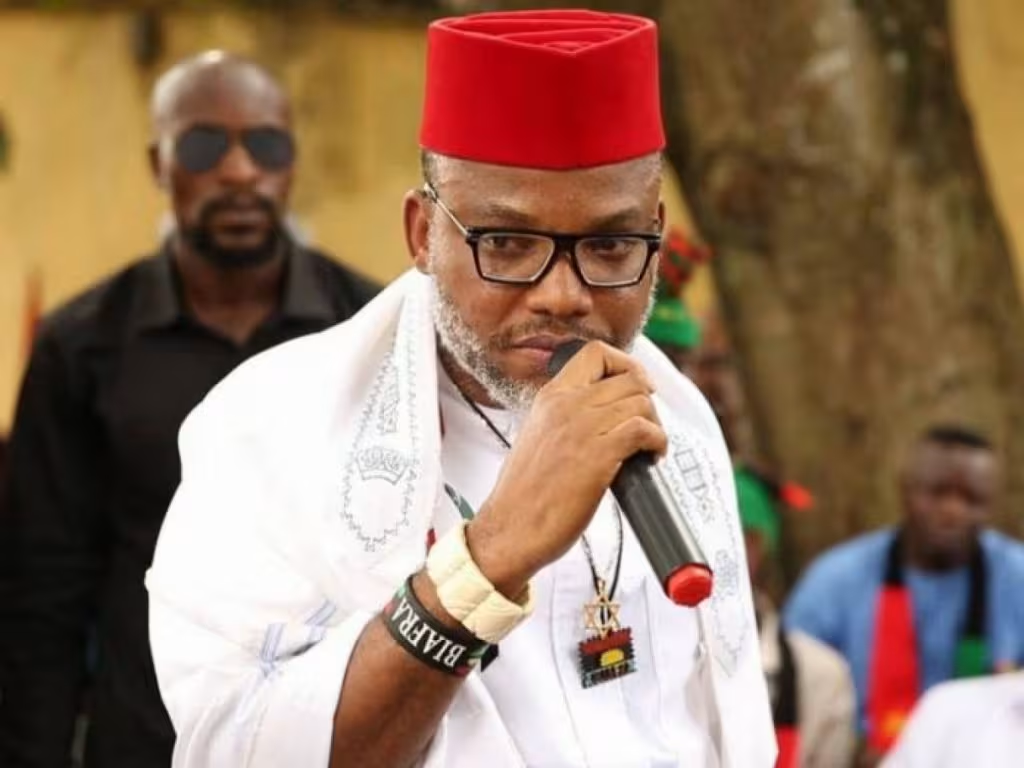

Amid the ongoing leadership dispute within the Indigenous People of Biafra (IPOB), the group has released details of its Code of Conduct, insisting that its detained leader, Nnamdi Kanu, holds exclusive authority to appoint and dissolve the Directorate of State (DOS), its top administrative body.
The controversy follows Kanu’s reported decision to dissolve the 3rd Administration of the DOS led by Chika Edoziem and replace it with a 4th Administration headed by Chris Nwaogu. Edoziem, however, rejected the move and countered by announcing what he described as the suspension of Kanu’s leadership role.
In response, IPOB’s spokesperson, Emma Powerful, dismissed Edoziem’s position, describing it as unlawful and without constitutional backing. He maintained that only the IPOB leader has the authority to appoint or remove members of the DOS, except where such power is expressly delegated.
The group explained that under its Code of Conduct, the leader has the sole power to appoint, suspend, or dismiss principal officers, and that such decisions are binding once made. It further argued that once the DOS is dissolved by the leader, its mandate automatically ends and cannot be challenged by affected officers.
IPOB also stated that appointments within the organization are temporary, performance-based, and typically reviewed after an initial six-month period. It added that officers serve by appointment and not by entitlement.
The statement emphasized that the Code of Conduct is the highest governing document of IPOB and that all structures, including the Directorate of State, derive their legitimacy from the authority of the leadership.
According to the group, the current dispute stems from misunderstanding the constitutional structure of IPOB, insisting that the dissolution of the 3rd Administration remains valid and that the newly constituted 4th Administration is already in operation.
BACKSTORY…
The Indigenous People of Biafra (IPOB) has been experiencing an internal leadership dispute over the control and authority of its Directorate of State (DOS), which serves as the group’s top administrative structure.
The issue escalated after IPOB leader, Nnamdi Kanu—who is currently in detention following his conviction by the Nigerian government—reportedly dissolved the existing DOS leadership (the 3rd Administration led by Chika Edoziem) and announced a new structure headed by Chris Nwaogu.
This move triggered disagreement within the group. Edoziem and his faction rejected the dissolution, arguing that no single individual should have absolute power over the DOS and even went further to announce what they described as the suspension of Kanu as leader of IPOB.
In response, IPOB released details of its Code of Conduct to clarify its internal structure and authority system. The group maintained that Kanu, as its Supreme Leader, has the exclusive constitutional power to appoint, suspend, or dissolve members of the DOS, except where such authority is delegated.
The release of the Code of Conduct is essentially meant to settle the dispute by reinforcing IPOB’s official position that all administrative organs derive their authority from the leadership, and that decisions made by the leader are final within the group’s structure.

Chinenye Ubunama
Chinenye Ubunama is a content writer and storyteller with a background in Biological Science. She specializes in crafting engaging, well-structured, and SEO-optimized content that simplifies complex ideas for everyday readers. With a focus on audience-centered writing, she consistently delivers value-driven content that informs, connects, and drives visibility across digital platforms.