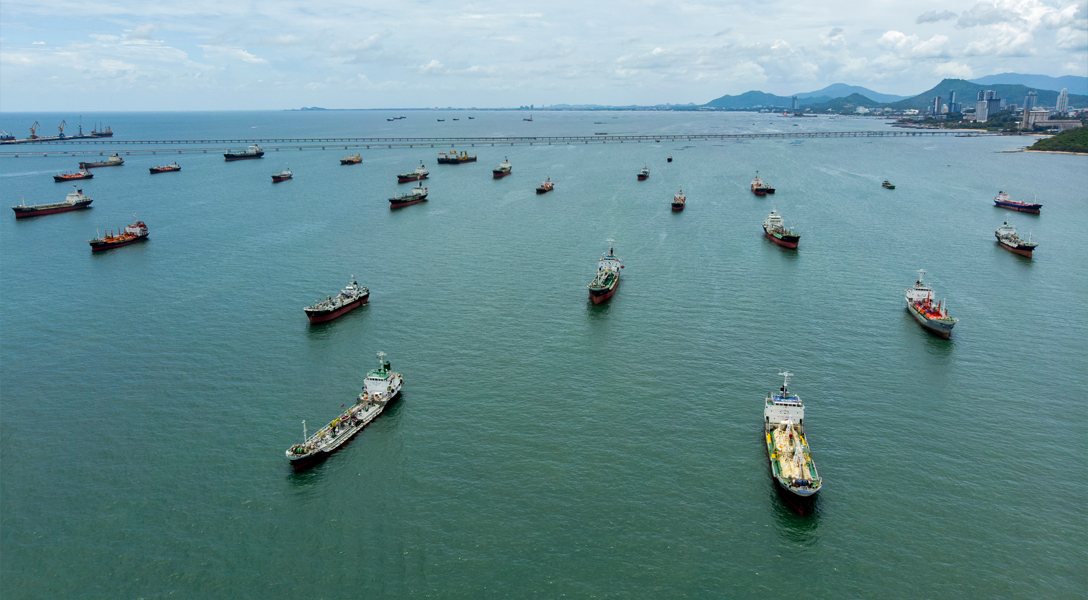

Amid escalating hostilities between the United States and Iran, the Strait of Hormuz—a vital maritime chokepoint for oil transport to Europe, Asia, and other global regions—has been closed.
When the Strait was initially shut down during the conflict involving the U.S., Israel, and Iran, global fuel prices surged dramatically.
Although the route eventually reopened after a six-month period when the U.S. and Iran signed a peace agreement, recent tensions have disrupted that stability. Over the past few days, aggressive rhetoric has intensified between the two nations, culminating in U.S. President Donald Trump declaring that the peace accord is no longer in effect.
On Sunday morning, Iran’s Islamic Revolutionary Guard Corps (IRGC) shut the Strait of Hormuz indefinitely after firing a warning shot at a vessel attempting to use an unauthorized route to cross the waterway.
In a statement published on the Arabic-language website of the semi-official, IRGC-affiliated Tasnim News Agency, the Islamic Revolutionary Guard Corps (IRGC) lamented what it termed “outside interference from foreign powers.” The group pointed specifically to multiple commercial vessels attempting to traverse the Strait using unauthorized routes.
“Given the instability caused by this unlawful interference from outside parties, the Strait of Hormuz will remain closed until further notice, and until regional interference by the US ceases,” the statement declared. “Consequently, neither commercial ships nor naval vessels will be permitted to pass.”
In response, the U.S. military announced it has launched a third round of strikes against Iran this week, responding to an attack on a vessel navigating the Strait of Hormuz.

Global Oil Supply Concerns
The Strait remains one of the most vital routes and passage globally, serving as a vital maritime chokepoint for oil transport to Europe, Asia, and other global regions.
The Strait of Hormuz carries roughly one-fifth of the world’s traded oil, making any disruption a major concern for global energy markets. Iran’s latest announcement to shut the waterway “until further notice” has therefore reignited fears of supply disruptions, soaring oil prices and a wider regional conflict, with Gulf states and international powers closely monitoring developments.
Read Also: Strait Of Hormuz- What It Is, and Why It Is Crucial In The Current M’ East Crisis
Backstory…
This comes just few weeks after Iran announced the re-closure of the Strait of Hormuz in June, citing what it described as violations by the United States and unresolved military tensions involving Israel.
The announcement, delivered through maritime radio channels by Iran’s Islamic Revolutionary Guard Corps, sent shockwaves across global markets and diplomatic circles. The decision effectively halted a fragile process that was meant to ease hostilities and reopen negotiations between Washington and Tehran.
Instead of proceeding to Switzerland for scheduled nuclear talks under a newly signed agreement, Iran drew a hard line. The message is clear. Conditions tied to the agreement have not been met, and until they are, the Strait of Hormuz will remain shut.
Read Also: Iran Re-Closes Strait of Hormuz, Accuses US of Breaching Deal as Nuclear Talks Collapse