
Tension in the Middle East has taken a fresh and troubling turn as Iran announced the re-closure of the Strait of Hormuz, one of the most strategic oil routes in the world, citing what it described as violations by the United States and unresolved military tensions involving Israel.
The announcement, delivered through maritime radio channels by Iran’s Islamic Revolutionary Guard Corps, has sent shockwaves across global markets and diplomatic circles. The decision effectively halts a fragile process that was meant to ease hostilities and reopen negotiations between Washington and Tehran.
Instead of proceeding to Switzerland for scheduled nuclear talks under a newly signed agreement, Iran has now drawn a hard line. The message is clear. Conditions tied to the agreement have not been met, and until they are, the Strait of Hormuz will remain shut.
This development introduces fresh uncertainty into an already volatile region, with implications not only for global diplomacy but also for energy supply chains that affect countries far beyond the Middle East, including Nigeria.
Iran cites US violations and regional conflict
At the centre of the dispute is a memorandum of understanding signed earlier in the week between the United States and Iran. The agreement, endorsed by US President Donald Trump and Iranian President Masoud Pezeshkian, was expected to reduce tensions and pave the way for renewed nuclear negotiations.
However, Iran now insists that the United States has failed to honour key aspects of that agreement.
According to the IRGC, the deal clearly outlined conditions that must be fulfilled before normal operations in the Strait of Hormuz could resume. These include Israel’s withdrawal from southern Lebanon, the full lifting of a naval blockade affecting Iran, and the complete withdrawal of US military forces from the Persian Gulf and surrounding region.
Iran maintains that none of these conditions have been properly met.
In a strongly worded statement, the IRGC warned that the waterway would remain closed indefinitely until compliance is achieved. It also issued a direct warning to international shipping operators, advising all vessels to stay away from the strait for their own safety.
The message was not ambiguous. Any ship that attempts to pass through the area risks being targeted.
This position has significantly escalated tensions, especially as it directly links the status of the Strait of Hormuz to a broader regional conflict involving Israel and Lebanon.
A separate statement from Iran’s Tasnim news agency reinforced this stance, declaring that ongoing Israeli military actions and continued occupation of Lebanese territory effectively render the agreement void.
From Iran’s perspective, the deal is no longer viable under current conditions.
Also Read: US-Iran Deal to Be Signed Sunday, Strait of Hormuz to Reopen Immediately- Trump
Confusion over blockade and shifting military realities
Despite Iran’s claims, the situation on the ground remains complex and somewhat unclear.
The United States Central Command had earlier announced that it had lifted its two month blockade on Iranian ports, a move that was expected to support the agreement and facilitate smoother maritime operations.
However, Iranian authorities argue that the lifting of the blockade has not been fully completed. This disagreement over what constitutes full compliance appears to be one of the key triggers for the current standoff.
Security analysts suggest that the phased nature of the agreement may have contributed to the confusion. The deal reportedly allows for the gradual removal of restrictions over a 30 day period, meaning that not all measures would be lifted immediately.
Iran appears to be using this gap to justify its position, insisting that partial compliance is not sufficient.
At the same time, developments in the Israel-Lebanon conflict have added another layer of complication.
Although there were reports suggesting a possible ceasefire between Israel and Hezbollah, Israeli Prime Minister Benjamin Netanyahu has indicated that military operations will continue.
Israeli forces have also expanded their presence deeper into Lebanese territory, including areas north of the Litani River. This expansion contradicts expectations that Israel would withdraw as part of broader de-escalation efforts.
For Iran, this ongoing military activity reinforces its claim that the agreement’s conditions have not been met.
Shipping activity continues amid rising risk
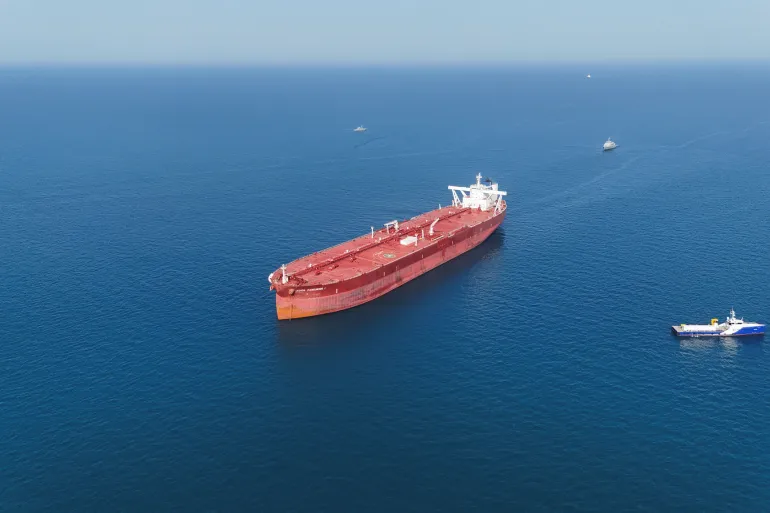
Interestingly, despite the strong warnings issued by Iran, early data from June 19 showed that commercial shipping activity was still ongoing in the Strait of Hormuz.
This reflects the difficult reality faced by global shipping companies. The strait is too important to ignore, yet increasingly risky to navigate.
Operators must now weigh the economic necessity of using the route against the growing threat of military confrontation.
Insurance costs are expected to rise sharply, while some companies may begin exploring alternative routes, even if they are longer and more expensive.
The uncertainty also extends to new regulations introduced by Iran’s recently established Persian Gulf Strait Authority.
The agency has announced that all vessels must now obtain permits before passing through the strait. This marks a major shift from previous practice, where the waterway functioned as an open international route.
Although the current agreement prevents Iran from charging transit fees within the first 60 days, provisions exist that would allow such charges to be introduced later.
These changes suggest that Iran is not only asserting control over the strait but also positioning itself to reshape how the route is managed in the future.
Also Read: Iran Signals Willingness to End War if US Lifts Blockade on Strait of Hormuz
Back story: from fragile peace to renewed standoff
To understand how the situation deteriorated so quickly, it is important to examine the events leading up to this latest crisis.
In recent months, the Middle East has experienced a steady rise in tension involving Iran, the United States, and Israel. Military actions, strategic warnings, and political disagreements created an atmosphere of deep mistrust.
The Strait of Hormuz, due to its global importance, became a focal point in this wider conflict.
At one stage, access to the strait was heavily restricted, disrupting oil shipments and raising concerns across international markets. The impact was felt globally, with energy prices reacting sharply to every new development.
In response to mounting pressure, diplomatic efforts intensified, eventually leading to the signing of the memorandum of understanding between Washington and Tehran.
The agreement was seen as a breakthrough. It aimed to reopen the strait, reduce military tensions, and create a pathway for renewed nuclear negotiations.
There was cautious optimism that the deal could stabilise the region.
However, underlying issues remained unresolved.
Key among them was the Israel-Lebanon conflict, which was not directly negotiated as part of the agreement. This created a disconnect between the expectations of different parties involved.
Iran has now moved to bridge that gap in its own way by linking the two issues.
By insisting that Israel’s actions in Lebanon must be addressed before the Strait of Hormuz can reopen, Tehran has effectively expanded the scope of the agreement beyond its original framework.
This has complicated an already delicate diplomatic situation and drawn additional actors into the dispute.
Also Read: Trump Orders US Navy to Shoot Vessels Laying Mines in Strait of Hormuz
What this means for global stability
The re-closure of the Strait of Hormuz is not just a regional issue. It carries significant global consequences.
The waterway handles a large portion of the world’s oil supply, making it a critical link in the global energy chain. Any disruption has the potential to affect fuel prices, inflation, and economic stability across multiple regions.
For countries like Nigeria, which are both producers and consumers within the global energy market, the effects could be mixed but significant.
Higher oil prices may boost revenue, but increased global instability and rising costs of imported goods could create economic pressure.
Diplomatically, the situation presents a major challenge.
The collapse of planned nuclear talks indicates a setback in efforts to manage Iran’s nuclear ambitions through negotiation. It also raises questions about the effectiveness of recent agreements and the willingness of parties to adhere to them.
Going forward, much will depend on whether diplomatic channels can be reopened and whether compromises can be reached on the key issues at stake.
For now, the situation remains fluid, with tensions high and the risk of further escalation very real.
The Strait of Hormuz has once again become a symbol of how quickly global stability can be disrupted when geopolitical interests collide.
What happens next will not only shape the future of the Middle East but will also influence economic and political developments around the world.