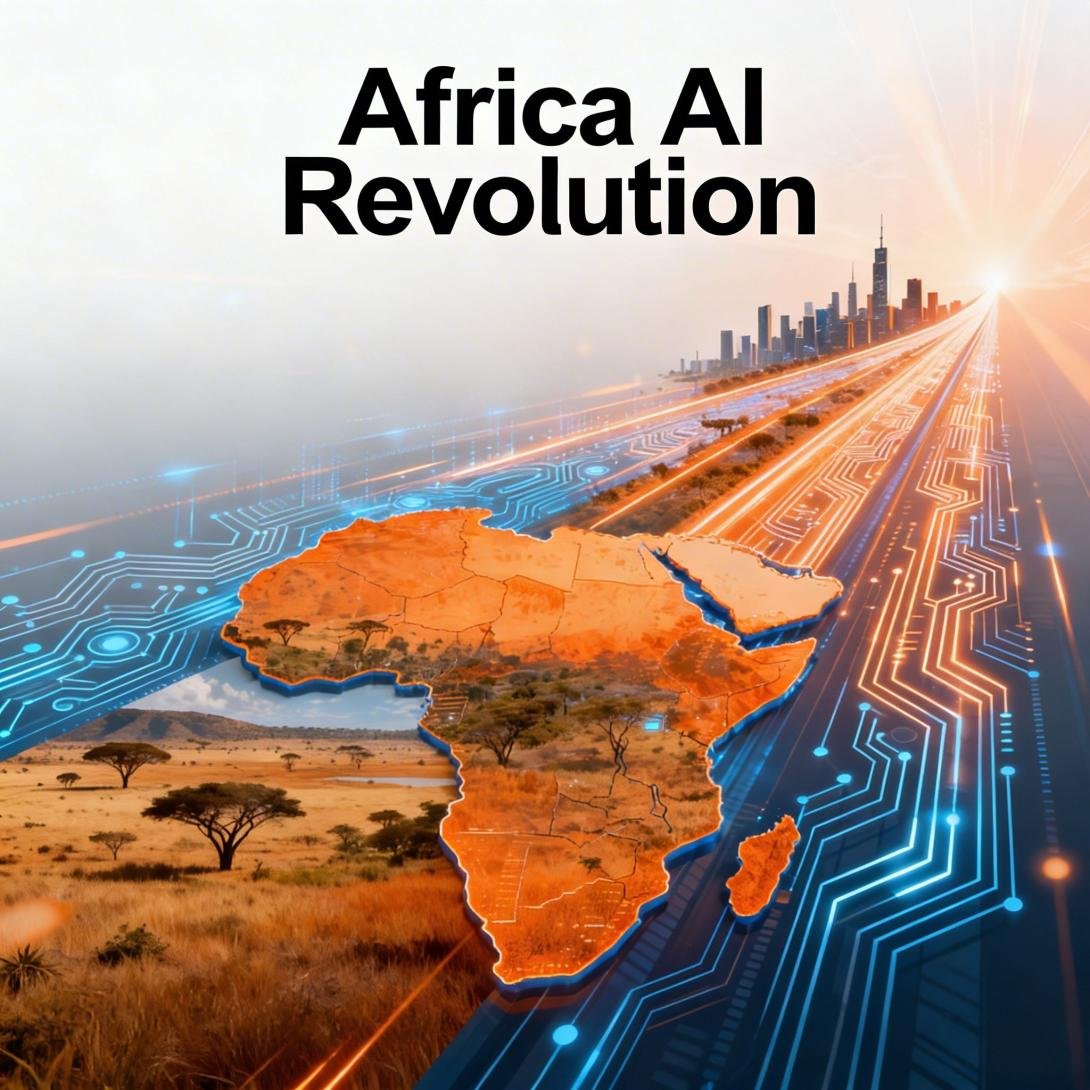

Africa is experiencing one of its biggest technology shifts in recent years as governments, investors and global technology companies pour billions of dollars into artificial intelligence. Across the continent, AI is beginning to improve agriculture, healthcare, education, financial services and public administration, creating fresh optimism about Africa’s digital future.
However, beneath the excitement lies a growing concern. Experts warn that the AI revolution could benefit only a handful of countries while leaving dozens of smaller economies struggling to keep pace. Without deliberate investments in infrastructure, digital skills and regional cooperation, the technology that promises to drive economic growth may instead widen the development gap across the continent, as reported by Reuters.
Recent analysis by the International Monetary Fund suggests that artificial intelligence could increase Sub-Saharan Africa’s economic output by about four percent over the next decade. Yet that outcome depends heavily on countries improving electricity supply, expanding internet access and building stronger digital capabilities. Without those improvements, AI’s contribution to economic growth could remain almost negligible.
The challenge is becoming increasingly clear. Much of the continent’s AI investment is flowing into countries that already have stronger digital ecosystems such as Nigeria, South Africa and Kenya. These nations have attracted significant investment in data centres, cloud infrastructure and AI research, giving them a substantial advantage over countries that are still battling unreliable electricity, poor internet connectivity and limited technical expertise.
While these investments strengthen Africa’s overall technology landscape, they also raise concerns that smaller economies could become consumers of AI rather than creators of the technology.
Also Read: Africa’s AI Future Hinges on Power Supply More Than Smart Algorithms, IMF Warns
Infrastructure Remains the Biggest Barrier to Inclusive AI Development
Artificial intelligence depends on reliable infrastructure. High-speed internet, stable electricity, powerful computing facilities and secure data centres form the backbone of every successful AI ecosystem.
Unfortunately, many African countries continue to struggle with these basics.
According to the IMF, almost half of Sub-Saharan Africa still lacks dependable electricity, while internet penetration remains significantly below the global average. These limitations make it difficult for businesses, researchers and startups to develop or deploy advanced AI solutions.
Data infrastructure presents another major hurdle. Africa accounts for only a small fraction of the world’s data centres, with most facilities concentrated in a few countries. This concentration means businesses in smaller nations often rely on foreign infrastructure to process and store data, increasing operational costs and limiting technological independence.
Industry observers also warn that dependence on foreign technology companies could leave African countries with limited control over critical AI infrastructure. While international partnerships bring much-needed investment and expertise, they also raise important questions about data ownership, digital sovereignty and long-term economic value.
Beyond infrastructure, there is an equally pressing challenge involving talent. Africa is producing more AI graduates and technology professionals than ever before, but many leave for opportunities abroad or work remotely for overseas companies. This brain drain limits the continent’s ability to build locally owned AI businesses capable of competing globally.
Smaller African Economies Face the Greatest Risk
For many smaller African nations, the challenge goes beyond adopting artificial intelligence. It is about remaining competitive in an economy increasingly shaped by AI-powered innovation.
Countries with smaller markets often struggle to attract major investments because large technology firms naturally prioritise locations with bigger populations, stronger infrastructure and established digital markets. This creates a cycle where the countries already leading in technology continue attracting even more investment while others fall further behind.
Experts believe regional cooperation could help change this trajectory. Shared investments in digital infrastructure, cross-border fibre networks, common regulatory frameworks and collaborative AI research could allow smaller economies to benefit from economies of scale that would otherwise be impossible to achieve individually.
There is also growing support for open source AI models, local language datasets and African-developed applications that address the continent’s unique needs. Rather than relying solely on imported technologies, researchers argue that African governments should encourage solutions built for local communities, businesses and public institutions.
For countries like Nigeria, which already has one of Africa’s largest technology ecosystems, the opportunity extends beyond domestic growth. Stronger collaboration with neighbouring countries could help spread AI expertise across the region while creating larger digital markets capable of attracting sustainable investment.
Also Read: Nigeria Elevates TVET as National Priority to Tackle Unemployment and Drive Economic Growth
Back Story
Artificial intelligence has become a strategic priority for governments, development institutions and technology companies across Africa. In recent years, several countries have introduced national AI strategies while international firms have announced major investments in cloud computing, data centres and digital infrastructure.
The latest IMF assessment estimates that AI could significantly boost economic growth across Sub Saharan Africa if governments strengthen electricity supply, internet connectivity and digital skills. At the same time, global organisations such as UN Trade and Development have warned that AI investment is becoming increasingly concentrated, creating a risk that many developing economies may struggle to benefit equally from the technology.
As Africa’s AI economy continues to expand, policymakers face a critical choice. They can allow investment to remain concentrated in a few technology hubs or pursue policies that help every nation participate in the continent’s digital transformation. The decisions taken over the next few years are likely to determine whether AI becomes a shared engine of prosperity or another source of economic inequality across Africa.