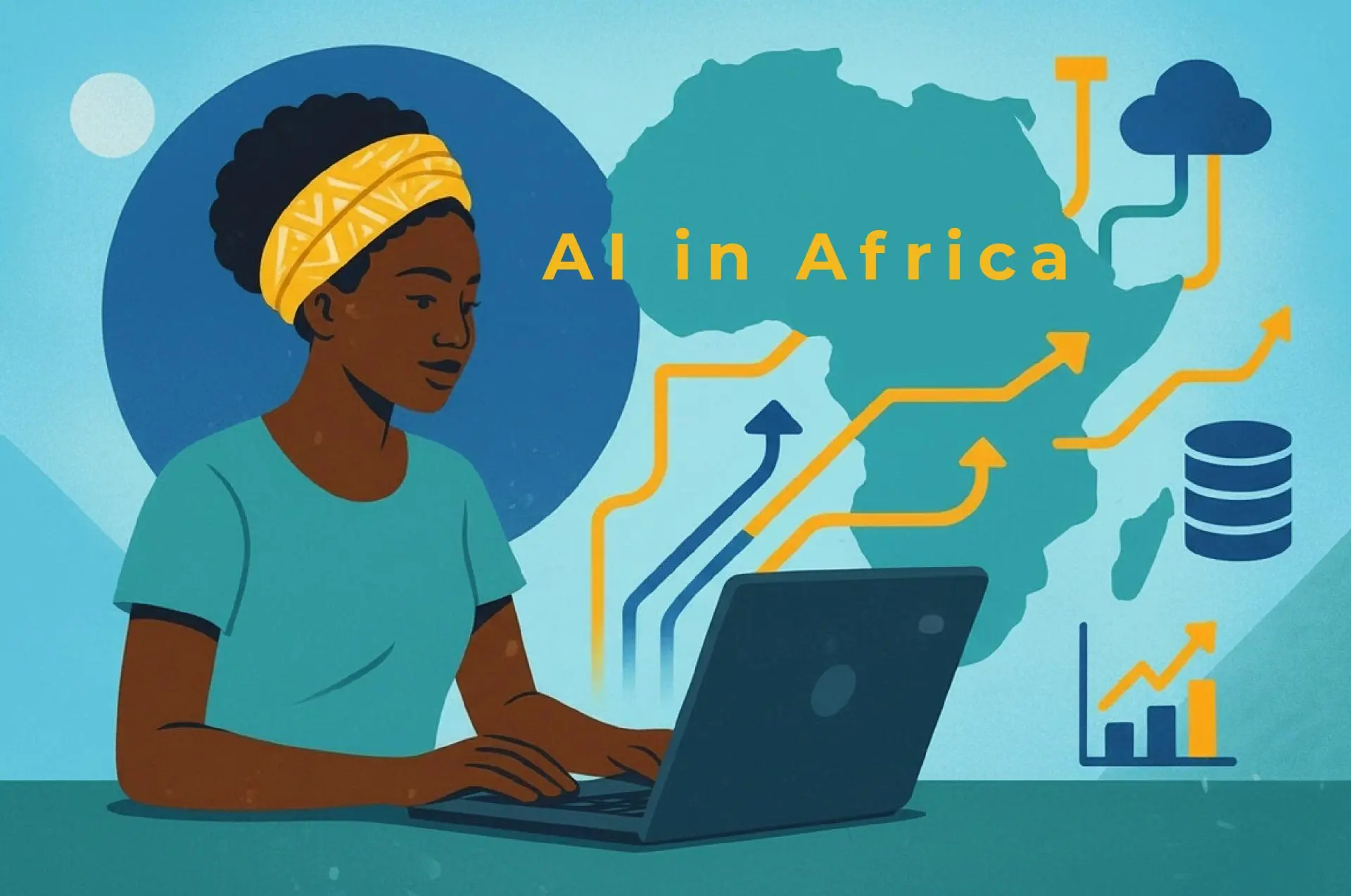

Africa’s ambition to become a major player in the global artificial intelligence revolution may ultimately depend less on breakthrough software and more on something far more basic: access to reliable electricity.
A new report from the International Monetary Fund has highlighted that while artificial intelligence could become a powerful driver of economic growth across Sub-Saharan Africa, the continent’s biggest obstacle is not a shortage of ideas or talent. Instead, it is the lack of dependable power, internet connectivity and digital infrastructure needed to support AI technologies, as reported by Reuters.
The report estimates that AI could increase economic output across Sub-Saharan Africa by about 4 percent over the next decade if governments invest aggressively in electricity networks, broadband infrastructure and digital skills. Without those improvements, however, AI’s contribution to growth could remain almost insignificant.
This finding shifts the conversation about Africa’s AI future. For years, discussions have focused on developing advanced models, attracting technology companies and promoting innovation. Increasingly, experts believe that none of these ambitions can succeed without solving one of the continent’s oldest challenges: reliable electricity.
Artificial intelligence relies heavily on energy-intensive data centres, cloud computing facilities and high-performance processors that require constant, stable electricity. Even the most advanced AI systems cannot function effectively where power outages are frequent or internet access remains unreliable.
Today, around half of Sub-Saharan Africa still struggles with unreliable electricity, while internet penetration remains well below the global average. According to the IMF, only about 38 percent of Africans had internet access in 2024, compared with approximately 68 percent globally. These limitations continue to slow digital transformation across many countries.
Despite these obstacles, investment in Africa’s AI ecosystem is gathering momentum.
Technology firms and infrastructure investors have begun committing billions of dollars to projects designed to strengthen Africa’s computing capacity. Microsoft and G42 are planning a geothermal-powered data centre in Kenya, while Cassava Technologies and Nvidia are investing hundreds of millions of dollars in AI computing infrastructure across several African countries.
These projects signal growing confidence in Africa’s long-term digital potential. However, analysts warn that investments could become concentrated in only a handful of countries if broader infrastructure challenges remain unresolved.
At present, Africa has only around 160 data centres, with the majority located in South Africa, Nigeria and Kenya. This uneven distribution raises concerns that AI development could widen existing economic and technological gaps between countries rather than reduce them.
Experts also argue that electricity planning must now become part of every national AI strategy. Building more data centres without strengthening national grids could place additional pressure on already stretched energy systems.
Research published this month also suggests that AI expansion and electricity development should be treated as complementary priorities. Rather than seeing digital transformation and energy investment as separate goals, policymakers are encouraged to develop integrated strategies that improve both simultaneously.
The International Energy Agency has similarly stressed that the future of artificial intelligence is closely tied to energy availability. Although AI technologies continue to become more energy efficient, growing demand for advanced applications means electricity consumption by data centres is expected to keep rising in the coming years.
For Africa, this presents both a challenge and an opportunity.
Many African countries possess abundant renewable energy resources, including solar, wind, geothermal and hydroelectric power. If these resources are developed alongside modern digital infrastructure, the continent could build an AI ecosystem powered increasingly by clean energy while attracting new technology investments.
That approach would also support wider economic development by expanding electricity access for businesses, schools, hospitals and households beyond the technology sector.
Also Read: Why Schools Should Lead AI Education Instead of Banning Technology
Why Reliable Electricity Is Becoming Africa’s Biggest AI Advantage
The global race for artificial intelligence is often portrayed as a competition between sophisticated algorithms and powerful computer chips. Increasingly, however, it is becoming clear that electricity has become just as valuable as software.
Reliable power determines where data centres can operate, how quickly AI systems process information and whether businesses can deploy advanced digital services without interruption.
For African governments, this means future AI competitiveness may depend less on importing cutting-edge technology and more on investing in transmission networks, renewable energy projects, fibre optic connectivity and digital education.
Countries that successfully combine these investments are likely to attract more AI companies, create higher-skilled jobs and strengthen their digital economies over the next decade.
Back Story
Artificial intelligence has emerged as one of the world’s fastest-growing technologies, with governments and businesses investing heavily in AI research, cloud infrastructure and advanced computing.
Across Africa, countries including Nigeria, Kenya, South Africa, Rwanda and Ghana have introduced national AI strategies or digital transformation plans aimed at increasing innovation and economic growth.
However, international organisations have consistently warned that infrastructure gaps remain one of the continent’s greatest barriers. Limited electricity access, expensive internet services and insufficient data centre capacity continue to restrict the pace of AI adoption.
The latest IMF report reinforces that message, arguing that Africa’s success in the AI era will depend not only on developing smarter technologies but also on building the reliable physical infrastructure that allows those technologies to thrive.