
As artificial intelligence continues to reshape industries across the world, schools are facing one of the biggest educational questions of this generation. Should they prohibit students from using AI tools or teach them how to use them responsibly?
The debate has become more urgent since the rise of generative AI platforms such as ChatGPT, Google Gemini and Microsoft Copilot. While many schools initially responded by blocking access to these tools because of fears about cheating and plagiarism, education experts are increasingly arguing that outright bans are unlikely to prepare students for the future they are about to enter.
Across different countries, schools are beginning to rethink their approach. Rather than treating AI as an enemy of education, many educators now believe schools should become the very place where students learn how to use artificial intelligence ethically, critically and productively.
For Nigeria, where digital skills are becoming increasingly valuable in the labour market, the conversation is especially significant. As businesses, government institutions and multinational organisations continue adopting AI-powered systems, the next generation of graduates will be expected to understand these technologies rather than fear them.
Education experts say schools have a responsibility not just to teach traditional subjects but also to prepare students for the realities of the modern workplace.
Artificial intelligence is already transforming industries such as banking, healthcare, agriculture, engineering, journalism, law, software development and customer service. Whether students become doctors, teachers, lawyers, engineers or entrepreneurs, AI will almost certainly become part of their professional lives.
That reality has shifted the conversation from whether students should use AI to how they should learn to use it responsibly.
Many teachers admit they understand the concerns surrounding AI. Students can ask chatbots to complete assignments, solve mathematics problems or write essays within seconds. Without proper guidance, the technology could weaken independent thinking and reduce genuine learning.
However, experts argue that banning AI does not remove those risks.
Students can still access AI applications using personal devices or home internet connections, making school bans difficult to enforce. Several education researchers have suggested that prohibiting AI inside classrooms may simply push its use outside school, where students receive little or no guidance on ethical practices.
Instead, many educators believe schools should take ownership of AI education by helping students understand both the opportunities and limitations of these powerful tools.
Teaching AI literacy involves much more than showing students how to type prompts into a chatbot.
Students need to understand how AI systems generate responses, why they sometimes produce incorrect information, how misinformation spreads, the importance of verifying facts, copyright issues, privacy concerns and the ethical responsibilities that come with using artificial intelligence.
Critical thinking remains central to this approach.
Teachers want students to question AI responses rather than accept every answer as accurate. Artificial intelligence can produce convincing information that contains factual mistakes or outdated data. Helping students recognise these weaknesses is becoming as important as teaching them how to search the internet effectively.
Many education specialists compare today’s AI debate with earlier concerns about calculators and search engines.
When calculators first entered classrooms, some educators feared students would lose basic mathematical skills. Similar worries surrounded internet search engines, with concerns that students would stop reading books or memorising facts.
Instead of permanently banning those technologies, schools eventually taught students how and when to use them appropriately.
Many experts believe artificial intelligence should follow a similar path.
Schools that successfully integrate AI into teaching often redesign assessments instead of relying solely on traditional homework. More classroom discussions, oral presentations, project-based learning and practical demonstrations allow teachers to evaluate genuine understanding while still encouraging responsible use of AI tools.
Another important consideration is equity.
Students from wealthier families may already have access to AI tools, private tutors and digital learning platforms. If schools refuse to teach AI literacy, disadvantaged students could fall even further behind in developing essential digital skills needed for higher education and future employment.
Rather than widening educational inequality, schools can help ensure every learner understands how to use emerging technologies safely and effectively.
Teachers themselves also stand to benefit.
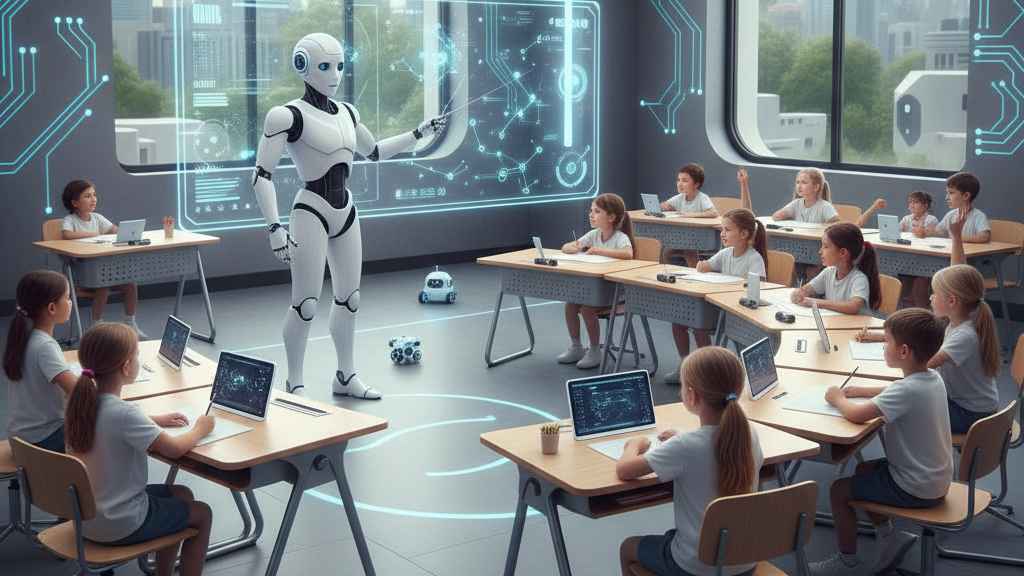
Artificial intelligence is increasingly helping educators prepare lesson plans, generate quizzes, simplify complex topics, provide personalised feedback and reduce administrative workloads. Experts emphasise that AI should support teachers rather than replace them.
Good teaching still depends on human judgement, empathy, creativity and mentorship, qualities that machines cannot replicate.
Recent discussions among school leaders suggest the future of education lies in finding a careful balance.
Students need opportunities to think independently without becoming overly dependent on technology. At the same time, ignoring AI altogether risks leaving graduates unprepared for workplaces where these tools are becoming standard.
Education leaders increasingly argue that digital literacy should now include AI literacy.
Just as students learn about online safety, responsible internet use and media literacy, many believe they should also learn how artificial intelligence works, when it should be trusted and when human judgement must take priority.
For countries like Nigeria, embracing this balanced approach could strengthen workforce readiness while encouraging innovation among young people.
Universities around the world are already introducing AI-related courses across disciplines, recognising that understanding artificial intelligence is no longer limited to computer science students.
Secondary schools are expected to follow this trend as governments update national curricula to reflect changing workforce demands.
Parents also have an important role.
Instead of viewing AI solely as a shortcut for homework, families can encourage children to use it for brainstorming ideas, practising languages, understanding difficult concepts and exploring new areas of knowledge while still completing original work independently.
Experts caution that responsible AI use begins with honest conversations about ethics, accountability and learning.
The goal is not to replace curiosity with convenience but to use technology as a tool that strengthens education rather than weakens it.
Back Story
The debate over artificial intelligence in schools gathered pace after the public release of generative AI tools in late 2022. Students quickly discovered that these platforms could write essays, solve mathematics problems, summarise textbooks and even generate computer code within seconds. The speed and sophistication of these tools caught many schools off guard.
The first reaction in several countries was to restrict or completely ban AI tools on school networks. Educators feared that students would rely on chatbots to complete assignments instead of developing their own understanding. Concerns also grew over plagiarism, misinformation and the possibility that AI could weaken essential skills such as writing, critical thinking and problem solving.
As the technology matured, however, attitudes began to change. Researchers, universities and education policymakers increasingly argued that bans alone would not solve the problem because students could still access AI through personal devices outside school. Instead, they recommended updating teaching methods, assessment styles and digital literacy programmes to reflect the growing role of artificial intelligence in society.
International organisations have also stressed the importance of responsible AI education. The United Nations Educational, Scientific and Cultural Organisation, known as UNESCO, has encouraged governments to adopt a human-centred approach that equips both teachers and students with the knowledge needed to use AI ethically, safely and responsibly. The organisation warns that while AI can improve learning experiences, it should never replace human judgement or widen existing inequalities in education.
This shift in thinking is influencing education systems across the world. Rather than asking whether artificial intelligence belongs in schools, policymakers are increasingly focusing on how it can be introduced in ways that strengthen learning while protecting academic integrity.
Also Read: Why Artificial Intelligence Is Making This One of the Most Important Eras for Teachers
Nigeria Has an Opportunity to Prepare Students for an AI-Driven Future
For Nigeria, the conversation goes beyond classroom policies. It is about national competitiveness in an increasingly digital global economy.
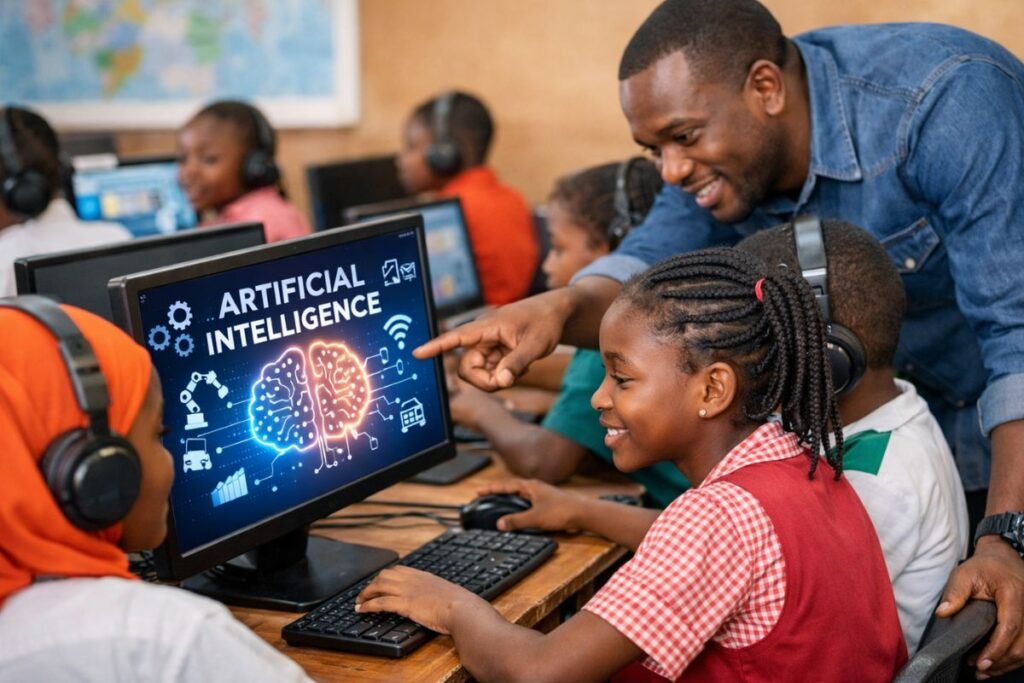
The country’s youthful population represents one of its greatest strengths. Millions of young Nigerians are already using digital platforms for education, business, software development, content creation and entrepreneurship. Introducing structured AI education into schools could help transform this digital familiarity into practical skills that employers increasingly demand.
Artificial intelligence is expected to reshape sectors that are critical to Nigeria’s economy. Agriculture is adopting AI-powered systems to improve crop monitoring and increase yields. Financial institutions are using AI to detect fraud and enhance customer service. Hospitals are exploring AI-assisted diagnostics, while media organisations are integrating AI into news production and audience engagement.
These developments suggest that today’s students will enter workplaces where artificial intelligence is part of everyday operations.
Education experts therefore argue that schools should not simply teach students how to use AI tools but also how to question their outputs, recognise bias, protect personal data and apply human judgement when making important decisions.
Teachers will remain central to this process.
While AI can provide information within seconds, it cannot replace the guidance, emotional intelligence and mentorship that educators bring into the classroom. Effective teachers help students develop confidence, resilience, collaboration and ethical values, qualities that technology alone cannot provide.
This is why many experts believe the future classroom should combine the strengths of human teaching with the efficiency of artificial intelligence.
Students should still write essays, solve problems independently and participate in classroom discussions. AI can support those activities by providing additional explanations, generating practice questions or helping learners explore new ideas, but it should not become a substitute for genuine learning.
Achieving this balance will require investment in teacher training, updated curricula and reliable digital infrastructure. Many Nigerian schools continue to face challenges such as limited internet access, inadequate electricity and shortages of digital devices. Addressing these issues will be essential if AI education is to benefit students across both urban and rural communities.
Experts also believe parents should become active partners in promoting responsible AI use. Open conversations at home about honesty, originality and digital responsibility can reinforce what students learn in school.
Ultimately, the question is no longer whether artificial intelligence will influence education. It already has.
The real challenge is ensuring that students are equipped to use it wisely.
Schools that embrace AI education thoughtfully are more likely to produce graduates who can adapt to changing technologies, think critically, solve complex problems and compete in a rapidly evolving global economy.
For Nigeria, where innovation and digital entrepreneurship continue to grow, preparing students for an AI-driven future is not simply an educational priority. It is an economic necessity.
Rather than seeing artificial intelligence as a threat to learning, schools have an opportunity to shape how the next generation understands and uses one of the most influential technologies of the twenty-first century. If that opportunity is embraced with careful planning, strong ethical standards and effective teaching, AI could become one of the most valuable educational tools available, helping students develop the knowledge and skills they need to thrive in a world where human intelligence and artificial intelligence will increasingly work side by side.