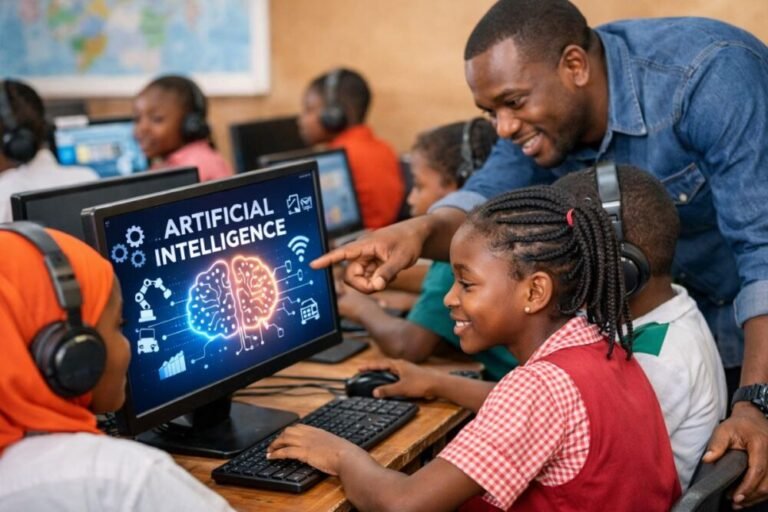

Nigeria’s push to prepare young people for a technology-driven future is gathering momentum as the Experience AI programme expands into more secondary schools across the country, bringing artificial intelligence education closer to thousands of students and teachers.
The initiative, which focuses on building AI literacy among educators and learners, is entering a new phase after recording significant progress in its early implementation. Organisers say the programme will deepen its presence in Nigerian classrooms over the next year, providing teachers with the knowledge and resources needed to introduce students to one of the world’s fastest-growing technologies.
As artificial intelligence continues to reshape industries, economies and workplaces across the globe, education stakeholders increasingly believe that AI literacy is becoming an essential skill rather than an optional one. The expansion of Experience AI reflects a growing determination to ensure that Nigerian students are not left behind in the global digital transformation.
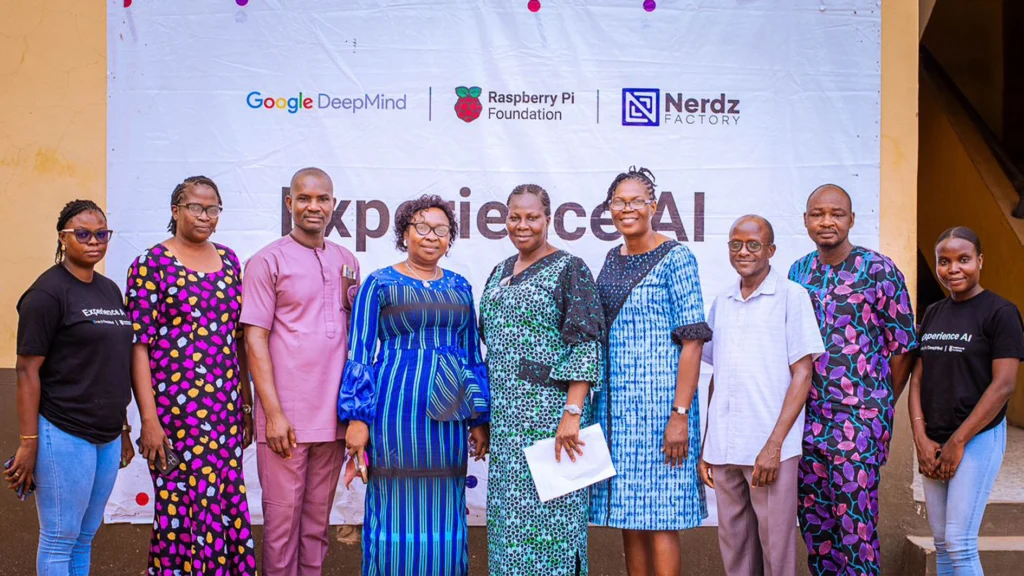
The programme is being implemented through partnerships involving education and technology organisations committed to improving digital learning opportunities for young Nigerians. Developed by the Raspberry Pi Foundation and Google DeepMind, with support from Google.org, Experience AI provides educators with practical tools that help students understand how artificial intelligence works and how it is already influencing everyday life.
Unlike many technology-focused initiatives that target only advanced learners, Experience AI is designed to introduce foundational concepts in a way that is accessible to secondary school students. The programme includes lesson plans, classroom activities, videos, assessment tools and learning materials that help teachers explain complex AI concepts in simple and engaging ways.
Also Read: Interswitch Expands Developer Academy, Picks New Interns From Over 20,000 Applications
Teachers at the Centre of Nigeria’s AI Education Drive
A major feature of the programme is its focus on empowering teachers first.
Organisers believe meaningful change in education begins with educators who are confident enough to guide students through emerging technologies. Instead of concentrating solely on students, Experience AI trains teachers and provides them with resources they can immediately use in their classrooms.
The strategy has already delivered promising results. During the programme’s initial phase, more than 1,100 public secondary school teachers from states across southwestern Nigeria received training in artificial intelligence education. Those teachers are expected to transfer their knowledge to thousands of students, creating a ripple effect that extends far beyond the original training sessions.
The next phase aims to expand that impact considerably. Programme coordinators have set ambitious targets that include reaching more educators and ultimately impacting over 157,000 students through classroom-based AI learning experiences.
Education experts say this approach is particularly important because many teachers are eager to embrace new technologies but often lack access to structured training opportunities. By providing professional development alongside ready-made classroom resources, the programme reduces barriers that might otherwise prevent schools from introducing AI-related subjects.
Stakeholders also view teacher training as a sustainable model because educators continue sharing their knowledge long after the original workshops have ended. Each trained teacher potentially influences hundreds of students over several years, multiplying the programme’s long-term impact.
Beyond technical knowledge, the training encourages teachers to explore the ethical and social implications of artificial intelligence. Participants learn how to help students think critically about issues such as data privacy, algorithmic bias and responsible technology use.
Supporters argue that understanding these issues is just as important as learning the technical foundations of AI itself.
Also Read: What Nigerian Schools Should Teach About Online Scams and Digital Safety
Why AI Literacy Is Becoming Essential for Nigerian Students
Artificial intelligence is no longer confined to research laboratories or major technology companies. It increasingly influences the tools people use every day, from online searches and digital assistants to healthcare systems, financial services and educational platforms.
As a result, many education experts believe students need more than basic digital skills. They also need a practical understanding of how intelligent systems work and how those systems affect decision-making in society.
The Experience AI curriculum is designed to meet that need by introducing students to concepts such as machine learning, data analysis, AI applications and digital ethics. Lessons encourage learners to ask questions, solve problems and examine how technology can be used responsibly.
Advocates say AI education can help young people become creators rather than passive consumers of technology. Instead of simply using digital tools, students are encouraged to understand the systems behind them and explore how they might contribute to future innovations.
The initiative also aligns with wider efforts to strengthen science, technology, engineering and mathematics education in Nigeria. Policymakers increasingly see digital skills as critical to future economic growth and competitiveness.
For many students, exposure to AI concepts during secondary school could influence career choices and open doors to opportunities in sectors that are expected to experience rapid growth in the coming years.
Supporters of the programme argue that early exposure matters because the future workforce will operate in an environment where artificial intelligence is deeply integrated into daily life and business operations.
Rather than waiting until university, they believe students should begin developing AI awareness while still in secondary school.
Government Support and Expanding National Ambitions
The expansion of Experience AI comes amid broader efforts by government agencies and education stakeholders to strengthen technology education across Nigeria.
In recent years, policymakers have repeatedly emphasised the importance of digital transformation within the education sector. This has led to a growing number of initiatives focused on coding, digital literacy and artificial intelligence.
Federal authorities have also launched programmes aimed at helping teachers adapt to emerging technologies. One notable initiative involved the training of thousands of secondary school teachers in AI-related pedagogy, reflecting a wider commitment to preparing educators for a changing educational landscape.
The Experience AI programme complements those efforts by providing practical classroom resources and structured learning pathways that schools can adopt.
Organisers say partnerships with government institutions and education agencies will be critical to ensuring long-term success. By working closely with policymakers, regulators and school administrators, they hope to make AI education accessible to students regardless of location or background.
The programme’s broader vision extends beyond urban centres. Stakeholders want AI literacy to reach underserved communities where access to emerging technologies has historically been limited. Through partnerships with educators and youth-focused organisations, the initiative seeks to reduce digital inequalities and create opportunities for students in different parts of the country.
While challenges remain, including infrastructure gaps and uneven internet access, supporters believe the expansion marks an important step towards building a digitally prepared generation.
For many educators, the programme represents more than a technology project. It is viewed as an investment in the future capabilities of Nigerian youth and the country’s ability to compete in a rapidly evolving global economy.
Also Read: FG Opens Applications for Second Phase of TVET Programme
Back Story
The expansion of Experience AI follows growing concern among policymakers and education experts that traditional learning models alone may not adequately prepare students for the future workplace.
Artificial intelligence has become a major focus of education reform discussions around the world, with governments increasingly seeking ways to equip young people with future-ready skills.
In Nigeria, those conversations have intensified over the last few years as technology adoption accelerates across multiple sectors. Policymakers have introduced initiatives aimed at strengthening digital literacy and encouraging innovation among young people.
Experience AI emerged as part of that broader movement. Developed by the Raspberry Pi Foundation and Google DeepMind, the programme has already been adopted in numerous countries, providing educators with free teaching resources designed to make AI concepts easier to understand.
Its arrival in Nigeria was driven by a recognition that the country’s large youth population represents both a challenge and an opportunity. Equipping students with relevant digital skills could help improve future employability, stimulate innovation and strengthen the country’s participation in the global digital economy.
As the programme expands into more secondary schools, stakeholders hope it will help create a generation of students who not only understand artificial intelligence but are also prepared to shape how it is used in the future.
For Nigeria, the initiative signals a growing belief that AI literacy is no longer a subject for tomorrow. It is increasingly becoming a necessity for today.