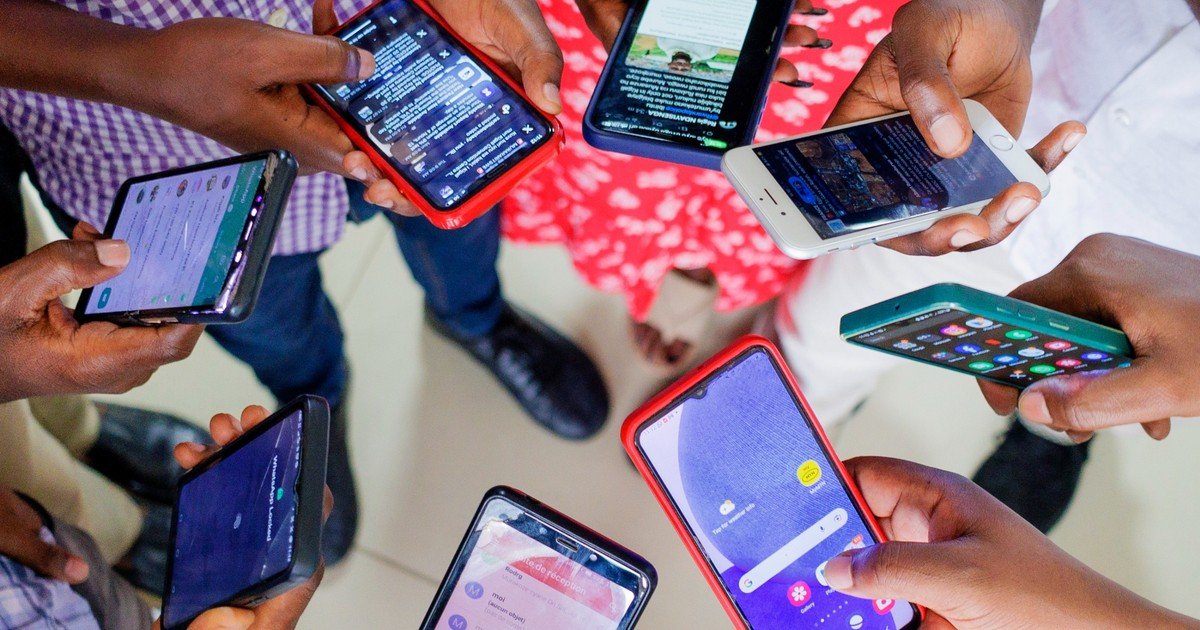

African countries are taking fresh steps to make internet access more affordable by lowering the cost of smartphones and introducing policies that encourage wider digital connectivity across the continent.
The renewed commitment came during discussions involving governments, telecommunications regulators and industry leaders, where participants agreed that reducing the cost of entry-level smartphones and improving digital infrastructure are essential if Africa is to benefit fully from emerging technologies such as artificial intelligence.
Despite major investments in mobile broadband networks over the past decade, millions of Africans still remain disconnected, not because network coverage is unavailable, but because many people cannot afford internet-enabled devices.
Industry stakeholders say closing this affordability gap could unlock new opportunities in education, healthcare, financial services, entrepreneurship and digital innovation for millions of people.
According to the GSM Association, commonly known as GSMA, about 961 million Africans live within areas covered by mobile broadband services but still do not use mobile internet. The organisation says affordability remains one of the biggest barriers preventing people from getting online.
Also Read: How Mobile Learning Could Transform Education in Rural Africa

Smartphone affordability takes centre stage
Speaking during a regional telecommunications workshop held alongside meetings of the African Telecommunications Union in Abuja, GSMA representatives called on governments to review taxes placed on entry-level smartphones and other digital devices.
The organisation argued that lowering import duties and other charges on affordable smartphones would make internet-enabled devices accessible to millions of low-income households across Africa.
Officials also urged governments to introduce policies that encourage competition, simplify regulations and support investments that can extend connectivity to underserved communities.
According to GSMA, only a relatively small percentage of Africans remain outside mobile broadband coverage. However, the much larger challenge is that hundreds of millions of people who already have network coverage still do not use mobile internet because smartphones remain beyond their financial reach.
Experts noted that connecting remote communities also presents financial challenges for network operators because building telecommunications infrastructure in rural locations often costs significantly more while generating lower returns than urban deployments. As a result, they believe governments and private sector partners must work together to develop sustainable funding models that can expand digital access.
Industry leaders also stressed the need for technology-neutral regulations that allow operators to deploy the most suitable connectivity solutions, including satellite-based technologies where appropriate, to improve internet access across difficult terrain.
Why affordable internet matters for Africa’s future
The push for cheaper smartphones goes beyond increasing internet subscriptions.
Digital experts believe affordable internet access will play a major role in determining how successfully African countries participate in the rapidly growing artificial intelligence economy.
Artificial intelligence applications increasingly depend on reliable internet connections and smartphones capable of accessing cloud-based services. Without affordable devices, millions of people could miss opportunities to benefit from AI-powered education, healthcare, agriculture and business tools.
Digital inclusion also supports financial inclusion by allowing more citizens to use mobile banking, digital payment platforms, government services and online learning resources.
Nigeria and several other African countries have already identified digital transformation as a major driver of economic growth, making internet affordability an important policy priority.
Earlier this year, GSMA and several leading mobile network operators announced plans to pilot ultra-affordable 4G smartphones costing about $40 across six African countries, including Nigeria. The initiative aims to increase smartphone ownership and bring millions of additional users online.
Technology analysts believe that combining affordable devices with supportive government policies could significantly reduce Africa’s digital divide over the next few years.
Also Read: Nigeria, UNESCO and African Union Launch Mobile Learning Programme to Boost Teacher Training
Back story
Africa has experienced rapid growth in mobile network coverage over the past two decades, yet internet adoption has not kept pace with infrastructure expansion.
Many countries have invested heavily in expanding broadband services, but affordability remains a persistent obstacle. While mobile signals reach large portions of the population, the cost of smartphones, data services and related taxes continues to prevent millions from connecting to the digital economy.
To address this challenge, governments, telecommunications companies and international organisations have increasingly focused on policies that make smartphones more affordable and encourage wider internet adoption.
In March 2026, GSMA launched a partnership with major African mobile operators and device manufacturers to pilot affordable 4G smartphones in Nigeria, Rwanda, Ethiopia, Uganda, Tanzania and the Democratic Republic of Congo. The programme is designed to reduce device costs and accelerate digital inclusion across the continent.
As governments continue to shape policies around taxation, connectivity and digital infrastructure, industry experts believe that making smartphones more affordable could become one of the most effective ways to bring millions of Africans into the digital economy and ensure they are not left behind as technologies such as artificial intelligence become part of everyday life.