
Artificial intelligence is transforming workplaces, classrooms and industries at a pace few imagined possible just a few years ago. Today, AI can draft reports, write software code, analyse data and even answer complex questions within seconds. As these capabilities improve, many students and professionals are asking the same question: If AI can do so much, what skills should people focus on learning?
Increasingly, educators, technology experts and business leaders are pointing to one answer. The future belongs not to those who simply master technical skills, but to those who can think critically, solve unfamiliar problems and make sound decisions that machines cannot replicate. While coding remains valuable, it is no longer the only ticket to a successful career. The ability to ask the right questions, evaluate information and apply human judgment is becoming even more important.
Also Read: 90% of Students Now Use AI in the Classroom as Global Survey Signals New Era of Learning
AI Is Changing the Value of Technical Skills
There was a time when learning to code was seen as one of the safest career investments. Software developers were in high demand, and programming became a core recommendation for anyone entering the technology industry.
That advice is now evolving rather than disappearing.
Modern AI systems can generate large sections of computer code, identify programming errors and suggest improvements in seconds. Developers are increasingly using AI as a productivity tool, allowing them to complete routine programming tasks much faster than before. This does not mean coding has become obsolete. Instead, it means coding alone is no longer enough.
Technology companies are placing greater value on professionals who understand business problems, design practical solutions and make informed decisions before a single line of code is written. According to UC Berkeley, AI may produce code, but it still depends on humans to define the objectives, identify risks and ensure the final product solves real-world challenges.
The same shift is happening across other professions. Lawyers are using AI for research. Doctors use it to support diagnosis. Journalists use it to organise information. Yet in every case, human expertise remains essential because AI cannot fully understand context, ethics or the consequences of complex decisions.
Critical Thinking Is Becoming the Most Valuable Skill
As AI becomes more capable, many experts believe the greatest competitive advantage will come from skills that technology cannot easily imitate.
Critical thinking sits at the centre of that list.
Unlike AI, people can question assumptions, challenge existing ideas and combine knowledge from different experiences to create entirely new solutions. Human beings also understand emotions, culture, relationships and ethical concerns in ways that machines cannot genuinely experience.
Recent studies have also raised concerns about becoming too dependent on AI. Researchers found that people who rely heavily on AI are less likely to question incorrect answers and may become overconfident even when the technology is wrong. Education experts worry that students who allow AI to complete thinking tasks may gradually lose the habit of analysing problems independently.
This is why schools and universities are increasingly encouraging students to use AI as a learning assistant rather than a replacement for thinking. Instead of asking AI to complete assignments from start to finish, students are being advised to use it to generate ideas, check grammar or explore different perspectives before developing their own conclusions.
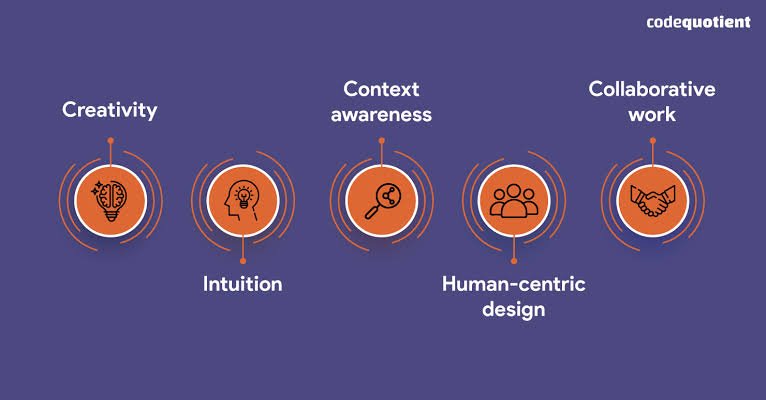
Employers are also recognising this shift. Business leaders say qualities such as creativity, communication, leadership, ethical reasoning and sound judgment will become even more valuable as automation expands across industries.
Why This Matters for Nigeria’s Future Workforce
For Nigeria, the conversation goes beyond artificial intelligence. It is about preparing young people for an economy that is changing rapidly.
Nigeria has one of Africa’s youngest populations, with millions of students preparing to enter a global workforce where AI will become a standard workplace tool. Learning how to use these technologies is important, but developing the ability to think independently may prove even more valuable over the long term.
Educational institutions across the country have an opportunity to redesign learning around problem-solving rather than memorisation. Students should be encouraged to debate ideas, conduct research, collaborate on projects and solve real-life challenges that require original thinking.
Businesses can also play a role by training employees to work alongside AI instead of competing against it. Rather than replacing workers, organisations can help staff become better decision makers, stronger communicators and more effective leaders by combining human expertise with intelligent technology.
The future workplace will likely reward people who understand both technology and humanity. Those who can interpret AI-generated information, verify facts, recognise bias and make responsible decisions will remain in high demand regardless of how advanced artificial intelligence becomes.
Also Read: Why Schools Should Lead AI Education Instead of Banning Technology
Back Story
The growing debate about AI and human skills has intensified following rapid improvements in generative AI tools that can write code, create content and automate many routine tasks. While these advances have sparked concerns about job displacement, education specialists and business leaders argue that the conversation should focus less on what AI can replace and more on what people should continue developing.
Several recent studies and industry reports suggest that overreliance on AI could weaken critical thinking if users accept machine generated answers without careful evaluation. At the same time, organisations are increasingly investing in training that strengthens human capabilities such as creativity, ethical decision making, communication and complex problem solving.
Rather than signalling the end of coding or technical careers, experts say AI is reshaping the definition of valuable work. The professionals most likely to thrive will be those who combine technical knowledge with curiosity, sound judgment and the ability to solve problems that have no straightforward answer.