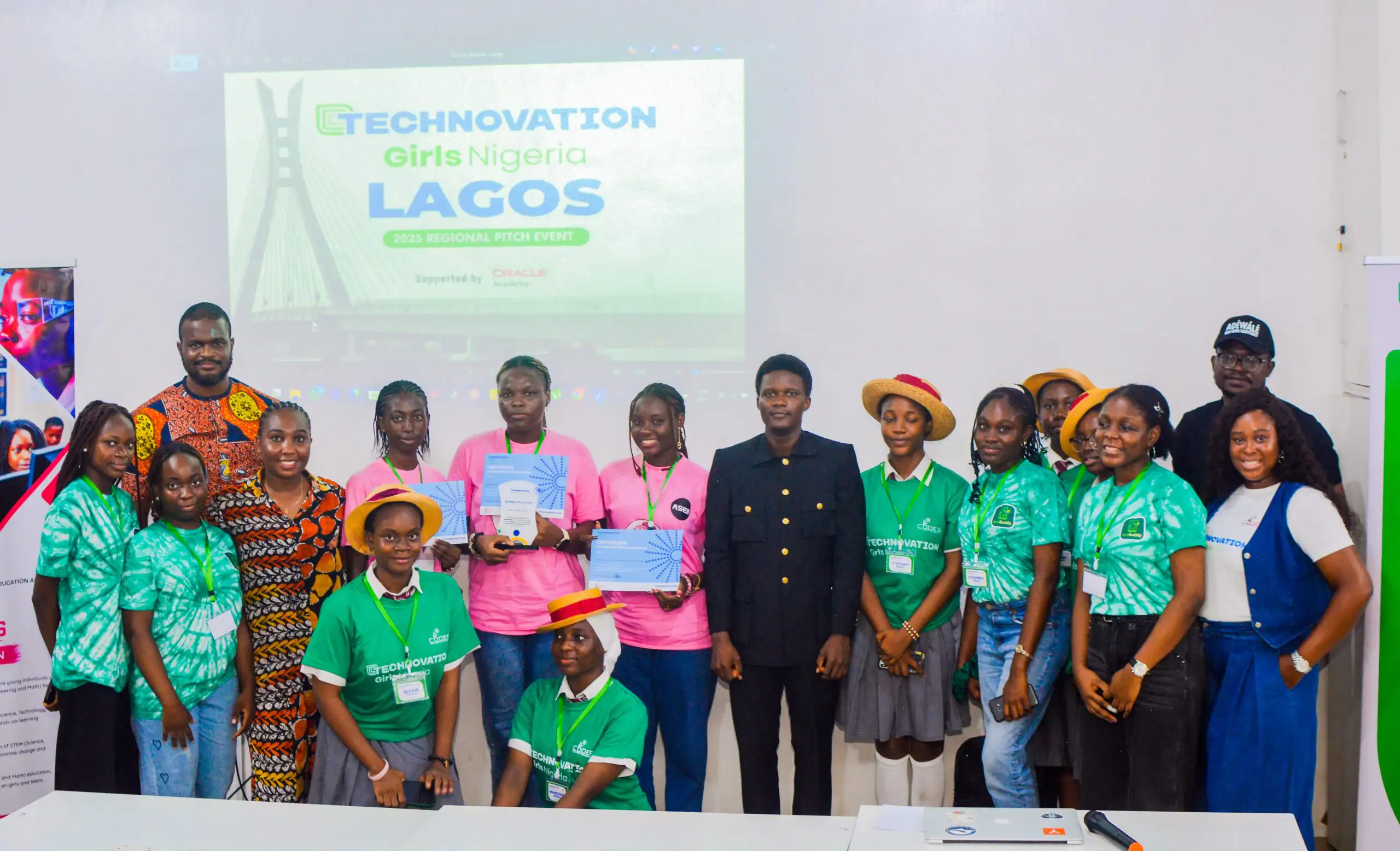

Young Nigerian girls are turning technology into a practical tool for solving problems in their communities, with more than 50 participants taking part in the 2026 Technovation Girls Regional Pitch Event in Lagos.
The Senior Division event, held on May 22 at the University of Lagos, brought together students who had spent 14 weeks working in teams, researching problems, developing technology solutions and preparing to present their ideas to industry professionals.
The programme was organised by CODES Foundation as part of the global Technovation Girls initiative, which encourages girls to develop the technical, entrepreneurial and leadership skills needed to become technology creators and future leaders.
Oracle Academy played a major role in this year’s Lagos programme by hosting the Senior Division pitches at its Lagos office and supporting the event alongside Oracle volunteers. The students had the opportunity to present their projects, receive feedback from professionals and celebrate the completion of an intensive learning experience.
The scale of participation also shows the growing interest in technology education among young Nigerians. Oracle Academy reported that 101 teams registered for the Lagos chapter, with 76 teams beginning their project submissions and 40 eventually completing and submitting their projects.
At the regional pitch stage, nine Beginner Division teams, 13 Junior Division teams and 11 Senior Division teams presented their projects.
What makes the programme particularly interesting is the emphasis on solving real problems rather than simply learning how to code. The girls are encouraged to identify challenges around them and then explore how technology can be used to address those challenges.
That approach gives technology education a more practical meaning. A student is not only learning programming concepts, but also learning how to research a problem, work with other people, develop an idea and explain why the proposed solution could make a difference.
Also Read: Nigeria and Meta Launch AI Academy to Build the Next Generation of Nigerian AI Talent
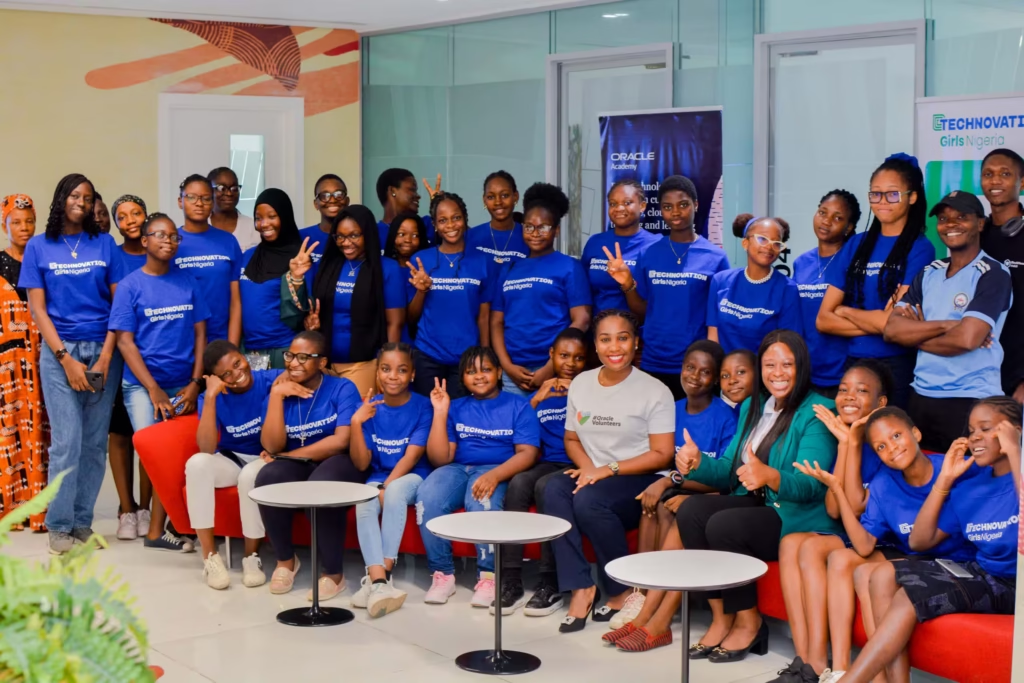
Nigerian Students Advance With Technology Solutions
The Lagos participants were competing for an opportunity to progress to the global stage, and five teams emerged as regional winners.
Team Atinuda won in the Beginner Division, while Team Food Reach and Team Pearlshore emerged from the Junior Division. In the Senior Division, Team My-Baby and Team PartnerUP secured the winning positions and advanced to the Global Semifinal Round.
Team My-Baby later achieved an additional milestone by being recognised as the Regional Honoree for Africa in the Senior Division. Members of the team received a US$250 educational stipend to support their continued education.
The achievement is significant because it demonstrates that students participating in a local technology programme can compete beyond Nigeria and have their ideas recognised within an international innovation community.
It also highlights the importance of giving young people an environment where they can experiment with technology without being limited to conventional classroom assignments.
For the students, presenting before technology professionals can be just as valuable as the competition itself. Learning how to explain a product, respond to questions and accept professional feedback are skills that can become useful in university, employment and entrepreneurship.
Back Story: Oracle Academy and Technovation Girls in Nigeria
Oracle Academy’s relationship with Technovation Girls in Nigeria is not new.
In 2024, girls participating in the Nigerian chapter visited Oracle’s Lagos office, where they took part in a mentorship session led by female Oracle professionals. The students discussed their Technovation projects, exchanged ideas and received guidance on coding, leadership and developing their solutions.
The experience was designed to give the students more than technical knowledge. It gave them direct access to women working in the technology industry and allowed them to see possible career paths within the sector.
The wider Technovation Girls programme follows a similar model. Participants work in teams to identify a problem, develop a technology-based solution and present their work. The emphasis on entrepreneurship and leadership means students are expected to think beyond the application itself and consider the people and problems it is designed to serve.
Oracle Academy’s continued involvement in the Lagos programme therefore forms part of a broader effort to expand access to technology education and encourage more young people, particularly girls, to consider careers in STEM and the digital economy.
Also Read: Strikes Cripple Ebola Medical Teams as Cases Rise
Why the Lagos Programme Matters to Nigeria’s Tech Future
Nigeria’s technology sector needs a strong pipeline of young people who can do more than use digital products. The country also needs people capable of creating them.
Programmes such as Technovation Girls provide an early opportunity for students to make that transition.
A girl who begins the programme with an idea can finish it having worked in a team, conducted research, developed a technology project and stood before professionals to defend her solution. That experience can influence how she sees herself and what she believes she can achieve.
The significance goes beyond the individual participants. As Nigeria continues to expand its digital economy, increasing female participation in technology will be important for creating a broader and more diverse talent base.
The 2026 Technovation Girls Lagos event therefore represents more than another student competition. It demonstrates what can happen when young Nigerians are given the tools, mentorship and platform to transform everyday problems into technology ideas.
For Oracle Academy and CODES Foundation, the objective is not simply to produce competition winners. It is to help young people develop the confidence and skills to become innovators.
And for Nigeria, some of the girls who pitched their ideas in Lagos this year could eventually become the software developers, engineers, entrepreneurs and technology leaders shaping the country’s next chapter.