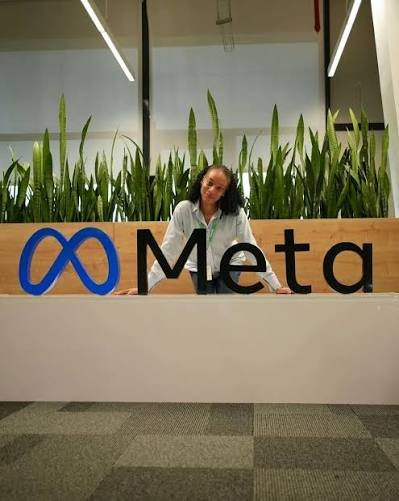

Nigeria is taking another step towards building a stronger artificial intelligence workforce as the Federal Government partners with Meta to launch AI Academy Nigeria, a national programme designed to train developers, entrepreneurs, students and young professionals while creating new opportunities for Nigerian startups.
The initiative brings together Meta, the Federal Ministry of Communications, Innovation and Digital Economy, the 3 Million Technical Talent programme, the National Centre for Artificial Intelligence and Robotics and Robotics and Artificial Intelligence Nigeria.
At a time when artificial intelligence is rapidly changing how businesses operate and how people learn, work and create, the partnership is aimed at ensuring Nigerians are not left on the sidelines of that transformation. Instead, the goal is to equip more people with the practical skills needed to build AI-powered products and businesses from Nigeria.
The programme will combine AI skills development, startup support and intensive developer training, giving participants different entry points depending on their experience and ambitions.
Also Read: Tinubu’s Health Tech Drive Could Produce Africa’s Next Billion-Dollar Startups
AI Academy Nigeria Will Offer Training, Startup Support and a Developer Bootcamp
One of the most important aspects of the new AI Academy is that it goes beyond teaching people the basic concepts of artificial intelligence.
The programme will operate through three major components: AI Skills Development, a Startup Pitchathon and a six-week Developer Bootcamp.
The AI Skills Development track is designed to give members of the wider 3MTT community access to training in areas such as generative AI, prompt engineering, multimodal AI, data analytics and application development using Meta’s Llama models.
According to information released about the programme, participants can access courses through platforms including Coursera, DeepLearning.AI and DataCamp at no cost. The strongest 100 performers will also be eligible for scholarships towards Meta Blueprint certifications and up to $5,000 in advertising credits.
The startup component takes the initiative a step further.
The AI Startup Pitchathon is targeted at Nigerian startups developing solutions with Meta’s AI technologies. Applications are scheduled to close on August 21, with 10 startups expected to be selected to pitch at GITEX Nigeria on September 3.
Two winning startups will each receive $5,000 in cash funding and $2,000 in Meta advertising credits. They will also have an opportunity to represent Nigeria at Meta’s AI Summit in Istanbul, Türkiye, later in November.
For developers seeking deeper technical experience, the six-week bootcamp will be delivered by RAIN. Selected participants will receive intensive hands-on training aimed at helping them move from learning AI concepts to building functional, market-ready products, with technical guidance and access to Meta AI experts.
Why Nigeria’s AI Talent Push Matters Now
For Nigeria, the timing of the initiative is significant.
Artificial intelligence is no longer confined to research laboratories or large technology companies. Nigerian businesses are increasingly exploring AI for customer service, content creation, data analysis, education, financial services and other areas of the economy.
Yet having access to AI tools is not the same thing as having people who can build useful AI systems.
That distinction matters.
A young Nigerian who knows how to use an AI chatbot can benefit personally from the technology. A developer who understands how to build, integrate and deploy an AI application can potentially create a business, provide jobs and solve problems for thousands of other people.
This is where the new academy could become particularly valuable.
Nigeria already has a substantial pool of young people interested in technology. The government’s 3MTT programme has been working to expand the country’s technical talent pipeline, while RAIN has continued to provide intensive training in artificial intelligence, machine learning and robotics.
The challenge now is converting training into measurable economic outcomes.
That means more developers building products, more startups finding customers, more technical workers securing quality jobs and more Nigerian solutions reaching markets outside the country.
Meta’s Head of Public Policy for Anglophone West Africa, Sade Dada, said Nigeria already has a strong pool of AI talent but needs greater access to practical training, funding and platforms that allow developers and founders to turn their ideas into impactful solutions.
Also Read: Can Nigeria Become Africa’s Largest Producer of AI Talent by 2030?
Back Story: Meta Has Been Building Nigeria’s AI Pipeline
The new AI Academy is not Meta’s first major AI-focused initiative in Nigeria.
Meta previously worked with RAIN on the Meta AI Developer Academy Nigeria 2025, a programme that combined intensive training with a hackathon. RAIN’s programme information shows that the 2025 initiative was sponsored by Meta and involved selected participants from its academy, alumni and innovation ecosystem.
The earlier programme placed considerable emphasis on practical development. Participants were challenged to build AI agents capable of addressing real customer relationship management problems faced by small and medium-sized businesses.
The training included technologies and tools associated with Meta’s AI ecosystem, including Llama, WhatsApp API, Segment Anything Model and computer vision technologies.
Meta has also previously worked with the Nigerian government on initiatives designed to support local AI startups and innovation. In 2025, Nigeria and Meta launched an AI Accelerator focused on startups developing solutions in areas including agriculture, healthcare, education and financial services.
The latest academy therefore appears to be part of a wider effort rather than a standalone training exercise.
What makes the 2026 programme particularly interesting is its broader structure. It connects basic AI education with advanced developer training and startup opportunities, creating a pathway from learning to building and, potentially, commercialisation.
For Nigeria, that pathway could be more important than the certificates themselves.
The country does not simply need more people who can talk about artificial intelligence. It needs engineers who can build with it, founders who can turn ideas into viable companies and professionals who can apply the technology to real Nigerian problems.
If AI Academy Nigeria can help produce that kind of talent at scale, its impact could extend well beyond the participants entering the programme today.