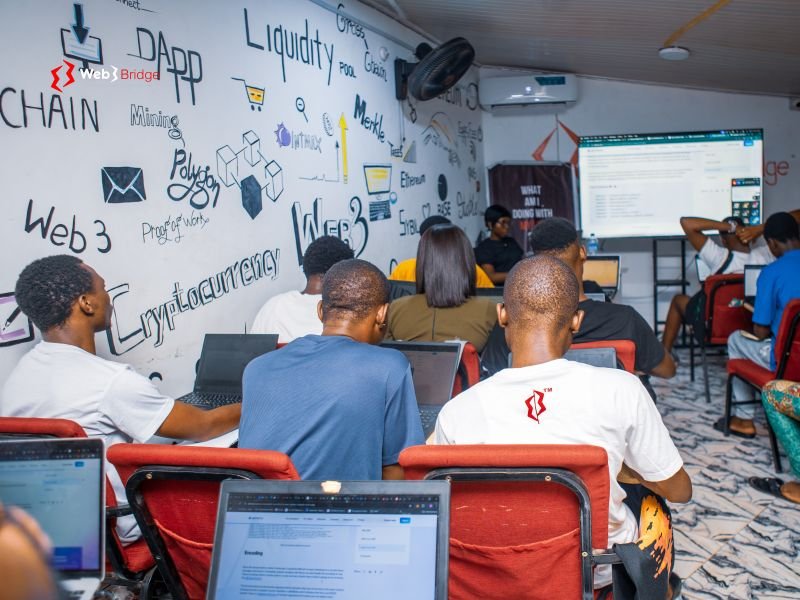

Web3Bridge, the Nigerian organisation known for training blockchain developers, is expanding into startup incubation through a Founders Residency. Its move raises the question of who will build companies able to employ the developers that training programmes produce.
On September 29, 2026, Web3Bridge posted that it had “closed up shop”. A clarification published the next day said the organisation was not shutting down. It would continue developer training while adding support for entrepreneurs turning ideas and early products into businesses.

From coding skills to company building
Founded in 2019, Web3Bridge set out to widen African access to blockchain development. Its programmes have covered Solidity, including Rust and zero-knowledge development. Its current website continues to advertise Web2 and Web3 training, software development and talent placement. Web3Bridge+1
The Founders Residency targets a stage of the technology economy. Web3Bridge says founders need support to identify problems worth solving, test whether customers will pay, assemble teams, manage finances, sell products and raise capital. These capabilities can turn a product into a viable company over time.
Newzroom Africa reported on November 5 that the residency was expected to begin on November 12, with registration closing on November 28. It also reported that a separate training cohort would be limited to 150 participants. These are announced plans, not evidence that the residency has already produced successful startups.
Also Read: Nigeria and Meta Launch AI Academy to Build the Next Generation of Nigerian AI Talent
A paid model creates a new test
The residency will charge participating founders, according to founder Ayodeji Awosika’s interview with Technext. That marks a change for an organisation whose previous model relied on grants and partners. Awosika said Web3Bridge had invested nearly ₦700 million in facilities and infrastructure without recovering the expenditure. technext24.com+1
Charging fees could help the organisation maintain its facilities and reduce dependence on sponsors. It also creates a challenge: early-stage founders often have limited funds. The mentorship, networks and practical support must justify the price. Web3Bridge has not published fees, selection criteria or measurable residency outcomes.
Why the shift matters
The funding environment makes the experiment relevant. CV VC’s 2025 Africa Blockchain Report found that African blockchain startups raised $90.1 million across 28 deals in 2025, a 26.6 per cent decline from 2024. Nigeria recorded $12.2 million across five deals.
Incubation cannot solve access to capital. Startups still need customers, infrastructure, regulation and investors willing to back credible businesses. The residency’s real test will be whether participating founders develop validated products, paying users, stronger teams or investment beyond graduation.
Back Story: Seven years of developer training
Web3Bridge began in 2019 as 500NigeriaDevs4Eth, inspired by efforts to expand the Ethereum developer community. It developed remote and in-person training and a Lagos developer hub, reaching learners across Africa. The organisation says more than 2,500 people have been trained as developers and 305 have graduated.
The new direction does not erase that record. It seeks to connect technical skills with founders and companies that can create sustained demand for them. Whether it succeeds will depend on the businesses it helps build and how they perform after the residency.
Also Read: Nigeria’s Next Tech Opportunity May Be Critical Infrastructure Cybersecurity