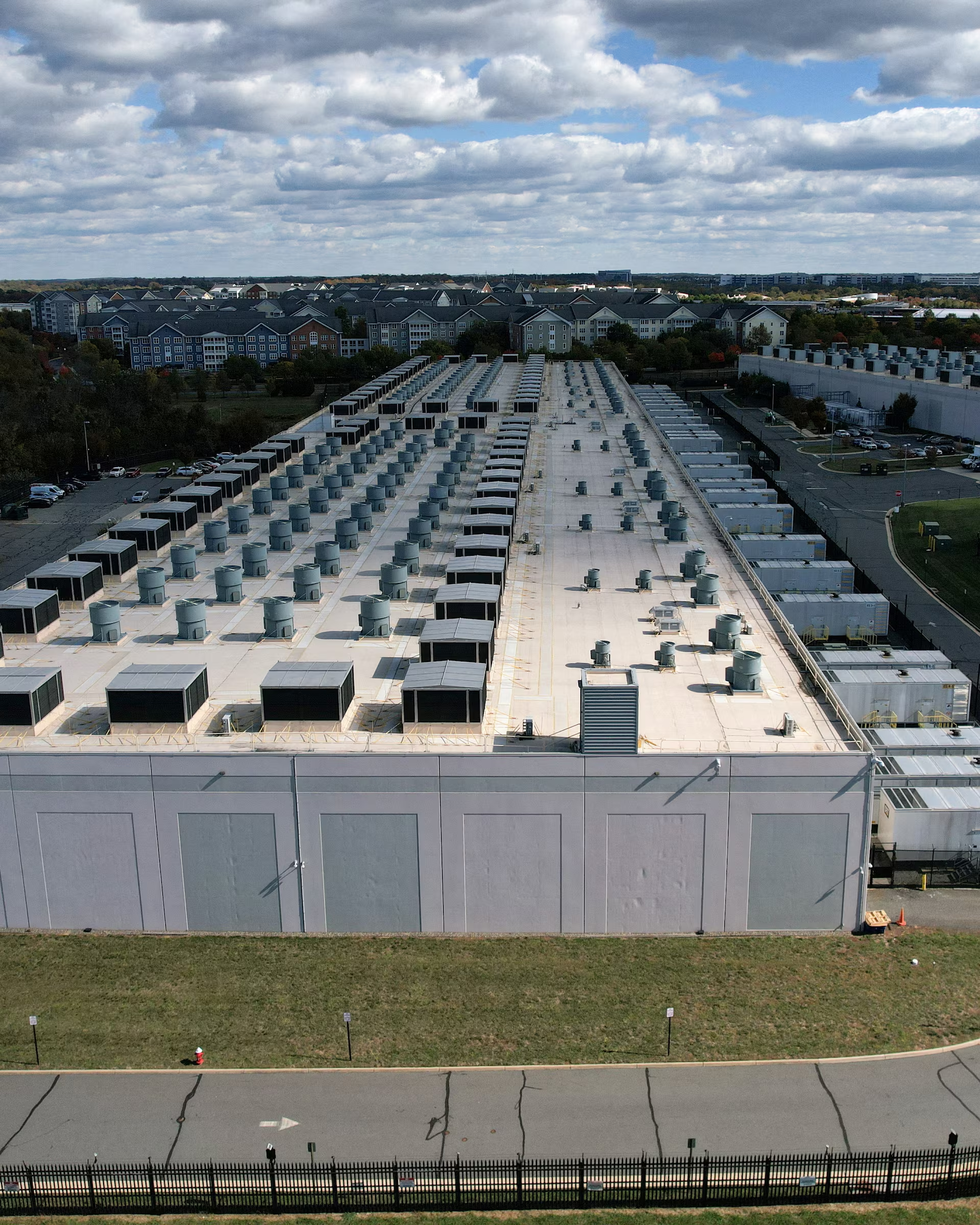

Public enthusiasm for the artificial intelligence boom is facing an unexpected test: the enormous data centres being built to power it.
Across the United States, support for new AI data centres has fallen sharply as communities become more concerned about electricity demand, water consumption, environmental effects and the possible impact on household utility bills. Recent polling suggests that the issue is no longer limited to activists or technology critics. It is increasingly becoming a mainstream public and political concern.
A Reuters/Ipsos poll found that only 33 per cent of Americans support the current pace of AI-driven data centre construction, while 64 per cent oppose it. More strikingly, 57 per cent said they would object to having a data centre built in their own community.
The findings come as technology companies race to build the computing infrastructure needed for increasingly powerful AI systems.
Why Public Support for AI Data Centres Is Falling
The concerns surrounding data centres are largely practical. People may not see an AI model operating behind the scenes, but they can see a large industrial facility, its electricity demand and the infrastructure required to support it.
A Gallup survey published in May found that seven in 10 Americans oppose building AI data centres in their local area. Nearly half, 48 per cent, strongly opposed the projects, while only about a quarter supported them. Gallup said the facilities are attracting concern because they require large amounts of land, electricity and water.
Electricity has become particularly sensitive. The Reuters/Ipsos research found that 77 per cent of respondents were worried that AI development could increase electricity costs. A separate Ipsos survey found that 65 per cent of Americans were worried about the energy use of AI data centres, while 61 per cent were concerned about their environmental impact.
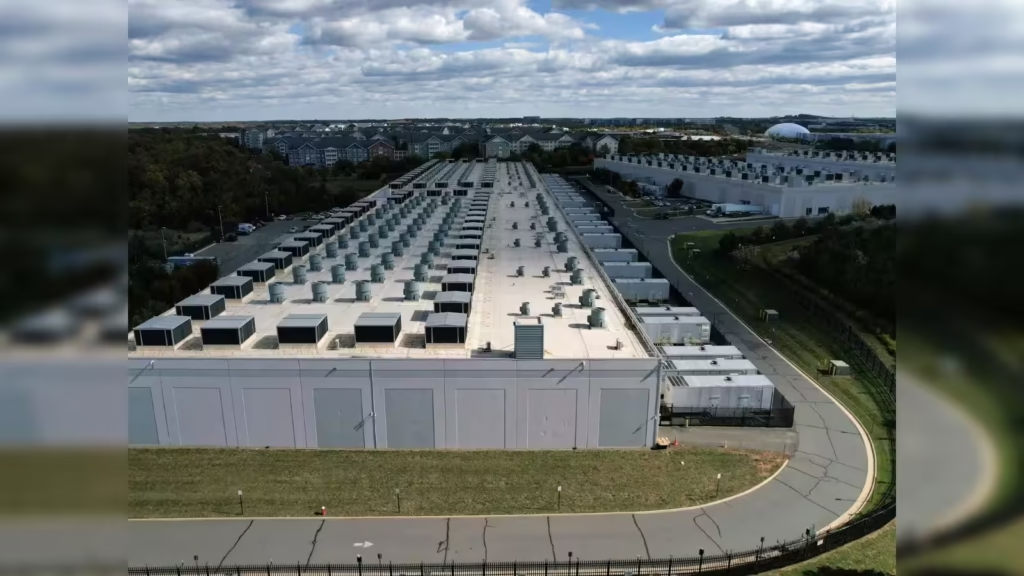
This matters because data centres are not small office buildings. They contain thousands of computing systems that can operate around the clock. As AI workloads become more demanding, companies are seeking larger facilities and greater amounts of power.
For communities already dealing with high electricity prices or strained water supplies, the arrival of a major data centre can therefore raise difficult questions about who ultimately pays for the infrastructure.
The economic argument is also facing scrutiny. Data centre developers often highlight investment, tax revenue and jobs. However, public confidence appears less certain about how widely those benefits will be shared.
A June CBS News poll found that only 20 per cent of Americans favoured a new data centre in their area, compared with 50 per cent who opposed one. Although 51 per cent believed data centres could increase jobs in the short term, only 22 per cent expected them to increase employment in the long term.
Back Story: How AI Infrastructure Became a Political Issue
The backlash has developed as the AI industry has moved from experimental technology into a massive infrastructure-building phase.
Technology companies, cloud providers and investors are committing billions of dollars to new data centres as demand for AI computing grows. The United States already has hundreds of operational facilities, with many more planned.
But the expansion is increasingly encountering resistance from residents and politicians.
In Pennsylvania, Governor Josh Shapiro recently signed an executive order introducing tougher requirements for AI data centres, including environmental and transparency measures and greater community involvement. Reuters reported that the decision came amid growing concerns about electricity bills and environmental impacts.
The political response is significant because opposition is not confined to one party. Democrats and Republicans in several states have criticised rapid data centre development, making the issue particularly difficult for politicians who want to promote AI investment while responding to voters.
There is also evidence that public opposition can change when stronger rules are attached to projects. The AI Policy Institute found in an August poll that opposition to a local data centre fell from 57 per cent to 38 per cent when respondents were told the facility would operate under AI-specific safety guardrails.
That suggests the public may not necessarily be rejecting data centres altogether. Instead, many people appear to be asking for stronger conditions before communities accept them.
What the Backlash Means for the Future of AI
The growing resistance could become one of the biggest challenges facing the AI industry outside the technology itself.
AI companies need enormous computing capacity to train and operate advanced systems. However, securing land and investment is only one part of the equation. Developers also need electricity, water, permits and community acceptance.
For countries and communities considering their own AI infrastructure strategies, the lesson is worth paying attention to. Building data centres can support digital economies, attract investment and improve access to computing resources, but projects that ignore local concerns may face delays, protests or tighter regulation.
The public debate is therefore shifting from whether AI is useful to who should bear the cost of powering it.
For the technology industry, that may be the more difficult question to answer. The future of AI will require more than powerful chips and sophisticated software. It will also depend on whether ordinary people believe the infrastructure behind the technology is worth having in their communities.