
Amid ongoing US-Iran war, Iranian President Masoud Pezeshkian has declared that Iran will never submit following nearly seven months of military conflict with the United States and Israel, while reiterating a readiness to achieve a diplomatic solution.
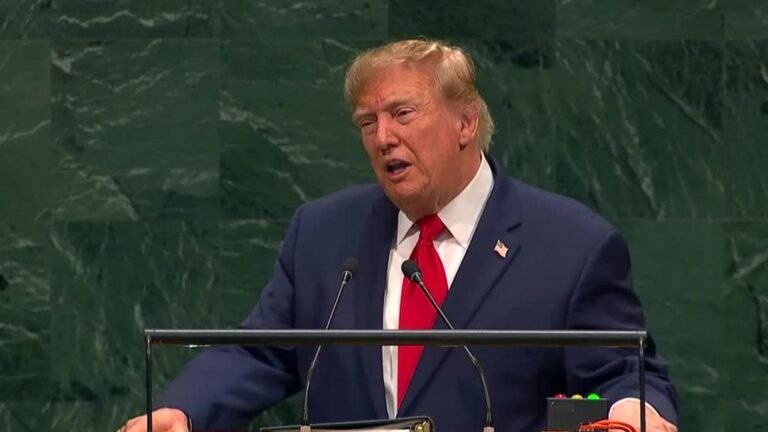
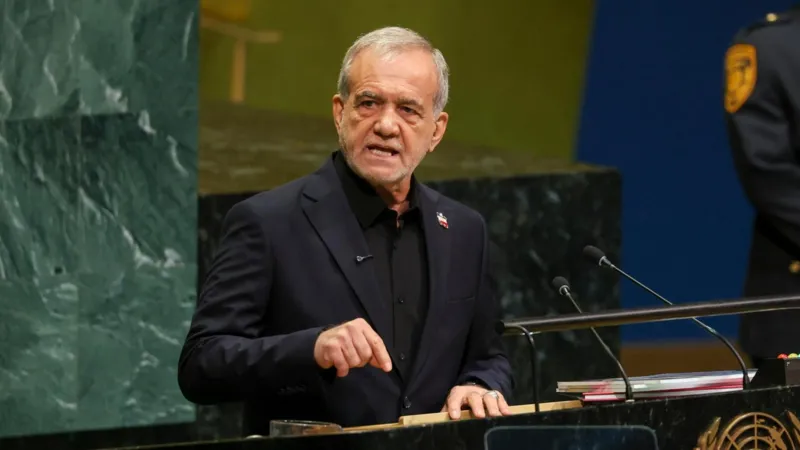
Addressing the UN General Assembly in response to US President Donald Trump’s warning to “annihilate the Islamic Republic” if it failed to reach a peace deal, Pezeshkian asserted that economic sanctions, escalating pressure, and coercive tactics will only strengthen the resolve of the Iranian people.
Pezeshkian further emphasized that any potential agreement must include the removal of the US blockade restricting Iranian vessels from accessing a critical Gulf waterway.
“It cannot be the case that everyone benefits from the Strait of Hormuz while we are denied access,” he said.
The United States did not immediately respond after its delegate left the chamber at the beginning of Pezeshkian’s speech.
“The US president described us as terrorists. We have been the victims of terrorism,” Iran’s president told the UN in New York.
Pezeshkian then displayed a picture of the late Ayatollah Ali Khamenei, Iran’s Supreme Leader, whom the US and Israel allegedly assassinated in a coordinated attack on his home in late February.
He also displayed images of some of the more than 175 civilians whom Iranian authorities claimed died in missile strikes on a sports complex in Lamerd amid the US-Iran war, and a primary school in Minab that day. Iranian authorities said two-thirds of the victims were children.
“Our innocent people have been the targets of cowardly attacks and aggressions imposed on our country. And we defended ourselves with utmost strength,” Pezeshkian said.
Recent attacks on Strait of Hormuz
Meanwhile, an Indian sailor was killed during an attack on a merchant vessel in the Strait of Hormuz, according to reports from Agence France-Presse citing Indian and Omani officials on Wednesday.
India’s Ministry of External Affairs condemned the attack and called for the immediate restoration of safe, unimpeded navigation through the maritime corridor.
The incident follows a series of lethal Iranian missile and drone strikes launched in February against Israel and Gulf Arab nations hosting US military facilities, executed in response to a major joint US-Israeli air campaign.
Iran effectively halted transit through the Strait of Hormuz—a bottleneck accounting for approximately 20 percent of global oil and gas supply—by targeting commercial shipping across the Persian Gulf, the Gulf of Oman, and the Arabian Sea. In April, the US responded by implementing a naval blockade on Iranian ports and maritime shipments.
Backstory…
Recall that Trump in his address on Tuesday at the UN General assembly said he faced a “major decision”: either “annihilating the Islamic Republic” or negotiating a solution that would allow Iranians to rebuild their country.
Trump urged other countries to support US efforts to economically isolate Iran and pressure Tehran to return to the negotiating table. He also predicted that his administration would reach a peace deal with Iran after the US midterm elections on November 3.
Read Also: Trump Warns Iran Of ‘Annihilation’ If No Peace Deal Is Reached