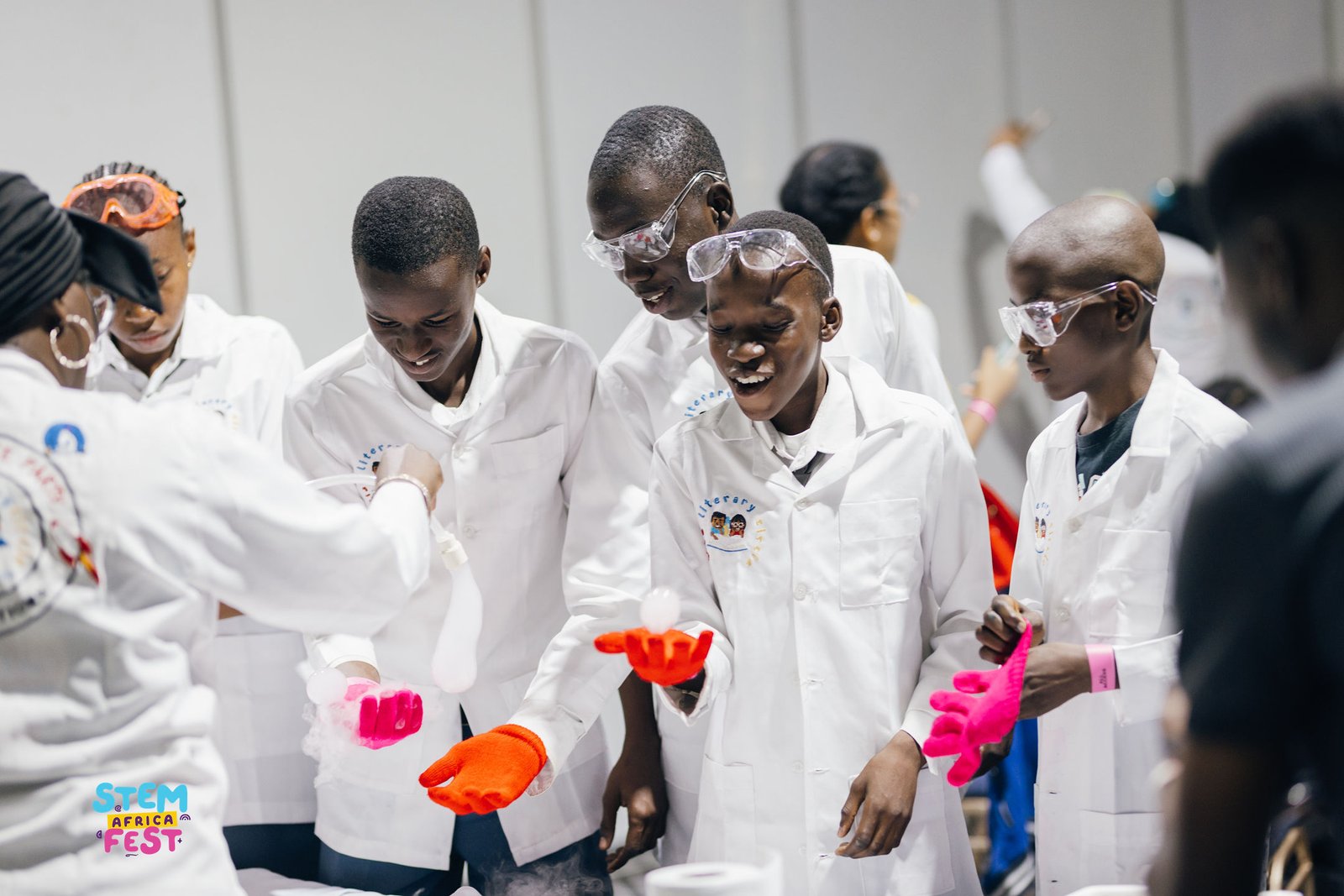

As the demand for digital skills continues to rise across Africa, STEM Africa Fest is encouraging a shift from traditional classroom teaching to practical, innovation-driven learning that prepares young people for the future of work.
The annual event has grown into one of Africa’s leading platforms for Science, Technology, Engineering, Arts and Mathematics education, bringing together students, teachers, parents, innovators and industry professionals for immersive learning experiences. Rather than focusing only on textbooks and examinations, the festival exposes participants to hands-on activities in robotics, artificial intelligence, coding, engineering design, creative arts and entrepreneurship.
Organisers say the vision is to help children discover their potential by allowing them to solve real-world problems through experimentation and collaboration. Since its launch in 2021, the initiative has expanded significantly, attracting thousands of participants every year and creating opportunities for young Africans to interact with experts across various technology sectors.
This year’s edition continues that mission by offering interactive workshops, exhibitions, mentorship sessions and innovation competitions. The festival also connects students with professionals working in emerging fields, giving them firsthand insight into careers that are shaping tomorrow’s economy. According to the organisers, exposing children to practical experiences at an early age builds confidence, creativity and critical thinking, qualities that are increasingly valued in today’s workforce.
Education experts have repeatedly argued that Africa must move beyond memorisation-based learning if it hopes to remain competitive in a technology-driven global economy. STEM Africa Fest aligns with this thinking by encouraging learners to ask questions, test ideas and develop solutions instead of simply recalling information.
Also Read: Preparing Children for Tomorrow: Why Nigerian Schools Must Look Beyond Academic Success
Practical Skills Taking Centre Stage
A defining feature of STEM Africa Fest is its emphasis on learning by doing. Participants engage in practical projects that introduce them to artificial intelligence, robotics, engineering concepts and digital creativity. These activities are designed to help young learners understand how technology can solve everyday challenges within their schools and communities.
Among its flagship initiatives is Project iCommunity, which encourages public school students to identify challenges around them and develop innovative solutions using design thinking principles. The programme has already reached students across several Nigerian states through training in critical thinking, machine learning and AI applications.
The organisation has also introduced specialised AI training programmes for children and adults, helping participants become familiar with emerging technologies that are transforming industries worldwide. Instead of presenting artificial intelligence as a distant concept, learners are taught practical ways to use AI for storytelling, content creation, problem-solving and productivity.
Industry leaders who have partnered with the festival believe exposing young Africans to these technologies today will improve the continent’s ability to produce future innovators, entrepreneurs and technology professionals capable of solving local and global problems.
Why Innovation-Focused Education Matters
Across Africa, governments, schools and private organisations are increasingly recognising that future employment will depend not only on academic qualifications but also on creativity, adaptability and digital competence.
Programmes like STEM Africa Fest seek to bridge that gap by complementing classroom education with practical experiences that make science and technology more engaging. The approach also encourages teamwork, communication and problem-solving, skills that employers consistently rank among the most valuable in the modern workplace.
Parents and educators attending previous editions have praised the festival for inspiring children to explore careers they had never previously considered. Many participants leave with renewed confidence and a clearer understanding of how science and technology can be applied beyond the classroom.
As African economies continue investing in digital transformation, initiatives that nurture innovation from an early age are expected to play an increasingly important role in developing the next generation of scientists, engineers, software developers and entrepreneurs.
Also Read: Education Leaders Share Practical Roadmap for Safe AI Use in Schools
Back Story
STEM Africa Fest was established in 2021 after its founders identified a growing need to give African children greater access to quality STEM education and career opportunities. What started as a relatively small gathering has evolved into a major annual event, reaching more than 15,000 young innovators across six editions and hosting over 120 exhibitors.
The festival welcomes children between the ages of seven and eighteen, alongside parents, educators and technology professionals. Beyond its flagship event, the organisation now runs year-round initiatives including Project iCommunity, AI training programmes and school-based STEAM projects, all aimed at equipping young Africans with practical skills needed for an increasingly digital future.