
Nigeria is reshaping its education and skills system around changing demands in the global labour market, seeking to produce workers who can compete for digitally enabled jobs.
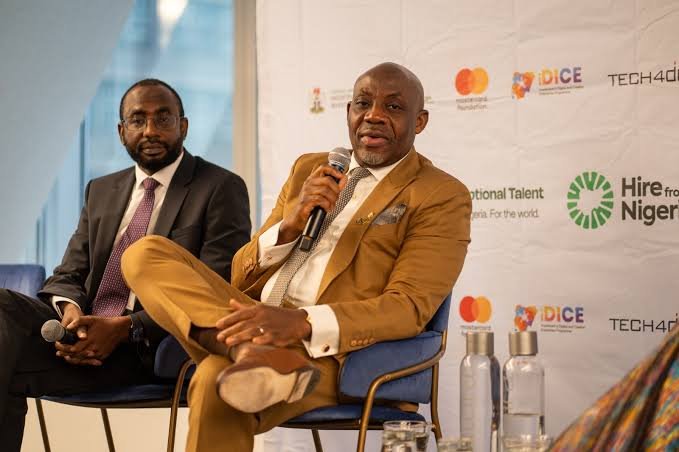
Minister of Education, Dr Tunji Alausa, disclosed the direction at the Hire From Nigeria side event on the margins of the 81st United Nations General Assembly in New York. He said the ministry is building a talent pipeline linked to international employment opportunities.
The minister said Nigeria’s young population, English-language advantage, cultural adaptability and digital capacity could support a bigger role in global outsourcing and digital services. He added that such opportunities could create jobs, increase service exports and allow Nigerians to build international careers while remaining at home.
Federal Government Links Education With Global Employment
Alausa said the education system has to go beyond awarding qualifications and focus more clearly on verified skills, recognised certification and the ability to meet employer needs.
According to the Voice of Nigeria report, the ministry plans to strengthen curriculum reform, accreditation and quality assurance while expanding digital and technical training through federal institutions and credible private providers.
A major part of the approach is stronger participation by employers. The minister said companies should be involved from programme design and training through assessment, certification, recruitment and feedback on graduate performance. The aim is to make education more responsive to what organisations need, with a more direct transition into employment.
The government also wants technical and vocational education to be treated as a practical route into income, enterprise and international opportunities. More than one million applications have reportedly been received for the free TVET programme, while about 160,000 trainees are being supported through roughly 1,200 centres, including Federal Technical Colleges and accredited private centres.
The plan covers university education, TVET, apprenticeships and continuous upskilling as routes into employment.
Back Story
The latest announcement builds on programmes already being introduced to expand access to digital training. On September 14, the government launched the Digital Training Academy, a six-month programme designed to train 32,000 Nigerians in digital and professional skills.
The Federal Ministry of Information and National Orientation said 72,850 applications were received from the 36 states and the Federal Capital Territory between August 17 and September 1. It said 19,699 applicants met the entry requirements, while 16,000 were selected for the first cohort, with the wider programme targeting 32,000 beneficiaries.
Training covers software development, cybersecurity, artificial intelligence and machine learning, cloud computing, IT automation, natural language processing, fintech and quantum computing. Participants can also pursue internationally recognised credentials.
The wider strategy therefore depends on producing candidates whose skills can be verified and understood across borders.
Skills, AI and the Road to 2030
The education ministry is placing growing attention on artificial intelligence. Alausa said young Nigerians should be trained to work with AI rather than depend on routine tasks that technology can increasingly perform.
The skills being emphasised include data literacy, cybersecurity, cloud services, software development, quality assurance, creativity, judgement and AI-enabled operations.
The broader National Talent Export Programme has set a target of creating one million export-linked jobs and producing 10 million globally certified Nigerians by 2030. The [Punch report]Punch report said the education ministry is playing a supply-side role by developing the trained workforce needed for that target.
For Nigerian students and young workers, the direction suggests that education is increasingly being viewed not only as preparation for local employment, but also as preparation for a labour market that operates across borders. The challenge will be turning policy announcements, training numbers and certifications into sustained employment, useful work experience and reliable access to global opportunities.
The government’s message is clear: Nigeria wants its education system to produce people whose skills can travel, even when the workers themselves do not.