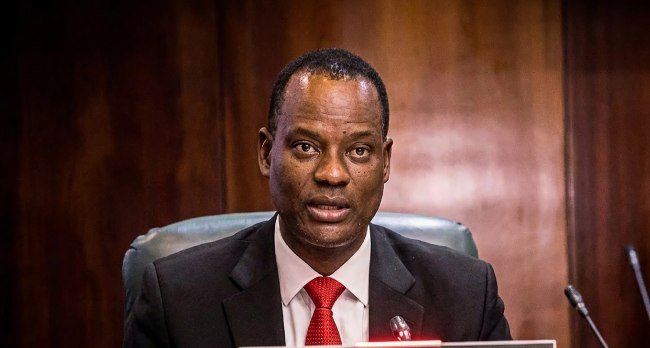

The Federal Government has announced a 30-day discount on petrol dispensed through Nigerian National Petroleum Company Limited (NNPCL) retail outlets, introducing the relief package as part of a temporary measure to ease high fuel costs and stabilize pump prices.
Speaking at a news conference on fuel pricing and subsidy dynamics on Thursday in Abuja, the Minister of Finance and Coordinating Minister of the Economy, Taiwo Oyedele, stated that public transporters will receive priority under the program.
Oyedele clarified that the temporary discount does not constitute a return to fuel subsidies, explaining that the government has instead agreed to sell the product at cost rather than absorbing profit margins or providing a direct price-support subsidy.
“We are offering a discount on petrol dispensed by NNPC limited for the next 30 days in the first instance with priority for public transporters nationwide. So, it’s not a subsidy, government is just saying we sell to you at cost.”
Oyedele further disclosed that the Federal Government is seeking to establish an ex-gantry or landing cost ceiling of ₦1,350 per liter for gasoline.
Acknowledging that previous interventions had failed to fully mitigate the impact of rising fuel and transportation costs on households and businesses, the minister explained that the government is instituting a monthly reviewed price modulation framework to maintain the ₦1,350 landing cost benchmark.
The proposed cap will not guarantee a retail pump price of ₦1,350 per liter at service stations; rather, it is designed to buffer domestic fuel prices against immediate shocks caused by sudden fluctuations in foreign exchange rates or global crude oil prices.
Watch the video here
FG’s 30-day petrol discount sparks opposition backlash
The Nigeria Democratic Congress (NDC), the Obidient Movement, Oyo State Governor Seyi Makinde’s presidential campaign organization, and former Vice President Atiku Abubakar have all rejected the Federal Government’s proposed 30-day petrol discount, describing the initiative as insufficient and politically motivated.
In a statement issued by Phrank Shaibu, Director of Strategic Communication for the African Democratic Congress (ADC) Presidential Campaign Council, Atiku characterized the intervention as a “panic-driven publicity ploy”.
The former vice president questioned the long-term viability of the measure, raising concerns over economic conditions once the 30-day period expires.
The Obidient Movement similarly questioned the timing of the intervention, linking the measure to political maneuvering ahead of the 2027 general elections.
Onyeka Dike, the movement’s media and communications director, questioned the government’s delay in acting to ease fuel costs, noting that over three years had elapsed since the initial removal of subsidies. Dike stated that citizens have endured severe financial pressure from high fuel prices, new taxes, increased tuition fees, and rising food costs following the policy shift.
The Nigeria Democratic Congress (NDC) also rejected the intervention, characterizing it as “tokenism and a Greek gift” from an administration that abruptly eliminated fuel subsidies without sufficient planning, public consultation, or protective buffers for citizens.
Read Also: NLC Issues 2-Week Ultimatum To FG Over Petrol Prices, New Minimum Wage