
Global investors are taking a more cautious approach to artificial intelligence (AI) infrastructure spending as rising borrowing costs, mounting debt and concerns about future profitability put pressure on the companies building the technology behind the AI boom.
The shift became more apparent in October 2026 following a market sell-off that affected AI-related stocks and increased scrutiny of companies investing heavily in data centres, computing equipment and supporting infrastructure. According to a Reuters report published on October 15, several major fundraising plans in the data centre sector have been delayed, suspended or withdrawn as investors demand stronger evidence that these investments can deliver sustainable returns.
For years, the rapid adoption of generative AI encouraged technology companies and investors to commit enormous sums to computing capacity. However, the financial environment is changing. Investors are increasingly asking whether the revenue generated by AI services will justify the cost of building and maintaining the infrastructure required to run them.
This does not mean that confidence in artificial intelligence has disappeared. Instead, the market is becoming more selective about which companies deserve funding, how much they should be worth and whether their expansion plans are financially sustainable.
Also Read: Corporate AI Spending More Than Doubles as Businesses Move Beyond IT Budgets
Rising Costs Put Data Centre Investments Under Pressure
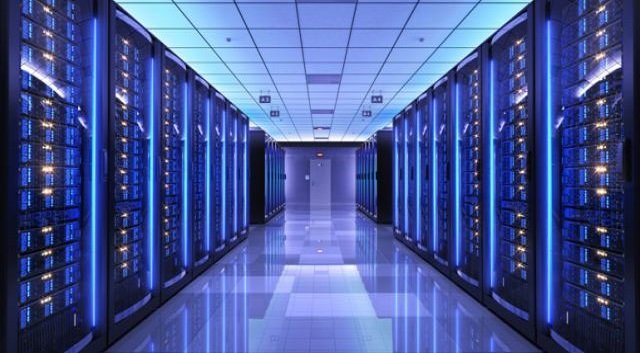
One of the biggest challenges facing AI infrastructure developers is the increasing cost of financing new projects. Data centres require substantial upfront investment in land, buildings, electricity supplies, cooling systems, networking equipment and advanced processors. These facilities may take considerable time to become profitable, particularly when construction costs rise or customers delay their commitments.
Higher interest rates are making this challenge more difficult. Companies that depend on borrowing must now consider whether their expected earnings will be sufficient to service their debts while funding further expansion.
Reuters reported that planned listings involving data centre businesses backed by major investment firms and technology companies had recently faced setbacks. The affected projects included an AirTrunk real estate investment trust, chipmaker Nvidia-backed Firmus and SoftBank-backed SB Energy.
The figures show that the sector is still attracting capital, although investors are becoming more careful about where they place it. Reuters reported that mergers and acquisitions involving Asian data centres had reached $21.3 billion by October 13, 2026, more than twice the $10 billion recorded throughout 2025. However, equity fundraising for the sector stood at $5.4 billion, down 4.6 per cent compared with the same period in 2025.
These developments suggest that investors have not abandoned AI infrastructure. Rather, they are paying closer attention to valuations, debt levels, customer agreements and the ability of companies to complete projects without depending continuously on new financing.
AI Revenue Expectations Face Greater Scrutiny
Beyond financing costs, investors are concerned about whether AI-related revenue will grow quickly enough to justify the scale of planned infrastructure spending.
According to Gartner’s October 14 analysis, AI providers are expected to spend nearly $1 trillion on infrastructure in 2026, followed by another $6 trillion between 2027 and 2030. However, Gartner estimates that enterprise and consumer AI revenue over the period will fall short of the $8.5 trillion required to cover planned spending, financing costs and a 12 per cent return on invested capital.
The difference raises concerns about potential financial losses if companies build more capacity than customers eventually require or fail to charge enough for their services.
There is also the possibility that today’s demand for computing power will not continue at its current pace. Although AI companies need more processing capacity to develop and operate advanced models, changes in technology, competition and pricing could affect the long-term profitability of infrastructure providers.
A Financial Times analysis published on October 15 similarly highlighted the risk that heavy investment could create excess capacity if future AI demand and revenue do not meet expectations.
For investors, the challenge is distinguishing between companies with reliable customer contracts and those relying mainly on optimistic forecasts. Established operators with predictable income may be better positioned to withstand financial pressure than newer businesses carrying substantial debt without guaranteed revenue.
Back Story: The Global Race to Build AI Infrastructure
The current reassessment follows a period of extraordinary investment in artificial intelligence. Technology companies have raced to develop increasingly powerful AI models, expand cloud computing services and secure the processors and data centres needed to support growing demand.
According to PwC’s Global Data Centre Outlook 2026, global investment in AI infrastructure could reach $31.6 trillion cumulatively through 2050. The report estimates that annual data centre capital expenditure could increase from approximately $800 billion in 2026 to $1.8 trillion by 2050.
The long-term projections indicate that AI infrastructure will remain an important investment area. However, access to affordable electricity, suitable land, advanced chips and reliable financing will influence which regions and companies benefit most.
For Nigeria and other African economies, these global developments are worth watching. Increased scrutiny of infrastructure spending could influence the availability and cost of international capital for data centres and cloud computing projects. At the same time, countries with reliable electricity, strong connectivity and supportive policies could attract investment as demand for AI services expands.
Ultimately, the market is entering a phase in which growth alone may no longer be enough to convince investors. Companies will need to demonstrate that their infrastructure can generate dependable revenue, manage operating costs and deliver acceptable returns over time.
The central question is no longer simply how much computing capacity the world needs. It is whether the companies building that capacity can turn enormous investments into sustainable businesses.
Also Read: AI Computing Shortages Are Reshaping the Global Technology Industry