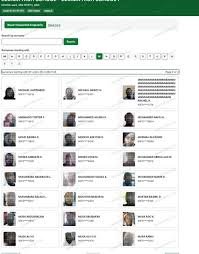
Abia State’s preliminary voter register raises a frightening question: why do screenshots attributed to Eziama Ward show clusters of Northern-associated names, and why does a separate comparison appear to show a similar sequence in Maiduguri, Borno State? INEC must explain what is happening immediately. The screenshots do not prove fraud, but the apparent discrepancies are too serious to dismiss.
The pattern is alarming, but what is confirmed?
A November 5 report by ThisDawn described screenshots said to come from INEC’s register in Eziama High School, Aba North, and Maiduguri North. It identified 24 entries in a similar sequence. One displayed name appeared beside different photographs in the two records. The publication acknowledged that it had not authenticated the screenshots against INEC’s database. Matching names do not prove matching people, and different photographs alone do not establish duplicate registration. This Dawn+1
Separately, MundX Analytics said it found 75 questionable or gibberish entries in Eziama Ward. This remains the group’s claim, not an INEC-confirmed finding, and must not be confused with the Abia-Borno comparison. Still, several allegations about questionable entries in one ward demand a response. TELL Magazine+1
Why INEC cannot dismiss this as a naming issue
Names associated with Northern communities do not establish a person’s ethnicity, origin or eligibility. Nigerians move, work and settle across the country. The real question is whether each record belongs to an eligible voter and is assigned to the correct polling unit.
The Electoral Act 2026 sets registration conditions, prohibits registration at multiple centres and provides a formal process for transferring voters. INEC should explain whether the entries represent new registrations, approved transfers, corrections or something else. It should confirm whether similar records have distinct voter identification numbers and separate biometric identities. PLACNG
Also Read: NDC accuses INEC of denying access code for candidates’ nomination
Back Story: A register already under pressure
The Abia allegations emerged as INEC reviewed wider problems in the preliminary register. Its ICT director, Lawrence Bayode, told Premium Times that biometric screening flagged about 1.5 million records from the 2026 registration exercise. He said 1,277,252 were confirmed invalid and removed, while about 268,000 remained for verification. This does not mean 1.5 million fake voters were discovered; the pending records have not all been declared fraudulent. Premium Times Nigeria+1
INEC says the preliminary register was published for public scrutiny. The final register is scheduled for certification on December 15, 2026.
An error would still carry a heavy price
If the Abia entries are genuine, INEC must explain how they passed its controls. If they are mistakes, that is not a harmless outcome. Bad data can expose legitimate voters to suspicion, require costly investigation and correction, invite legal disputes and weaken confidence ahead of the 2027 elections.
INEC should publish an anonymised explanation of the Abia and Borno entries, detail the checks conducted and state what was corrected. Protecting voters’ personal information is essential, but privacy cannot excuse silence.
Nigerians need verifiable answers, not speculation or ethnic blame. The voter register is the foundation of an election. If INEC cannot explain serious anomalies in its preliminary list, public confidence will pay the price.