
Odu’a Investment Foundation’s Byte Busters Coding Club has reached more than 4,500 learners across South-West Nigeria, introducing public secondary school students to coding, artificial intelligence and other digital skills. The programme operates through 20 centres in 18 local government areas, according to figures presented at its 2026 showcase in Ibadan.
The milestone raises a question: can training become sustained digital education in public schools?
The clubs operate under the Foundation’s Digital Education for Innovation and Economic Development (DEFINED) project. They offer after-school learning in coding, digital creativity and problem-solving. The Foundation aims to extend digital skills opportunities to all 137 local government areas in the South-West.
Also Read: Leo Stan Ekeh Foundation Commissions AI Tech Centres in Two Lagos Schools
Students Apply Coding to Community Problems
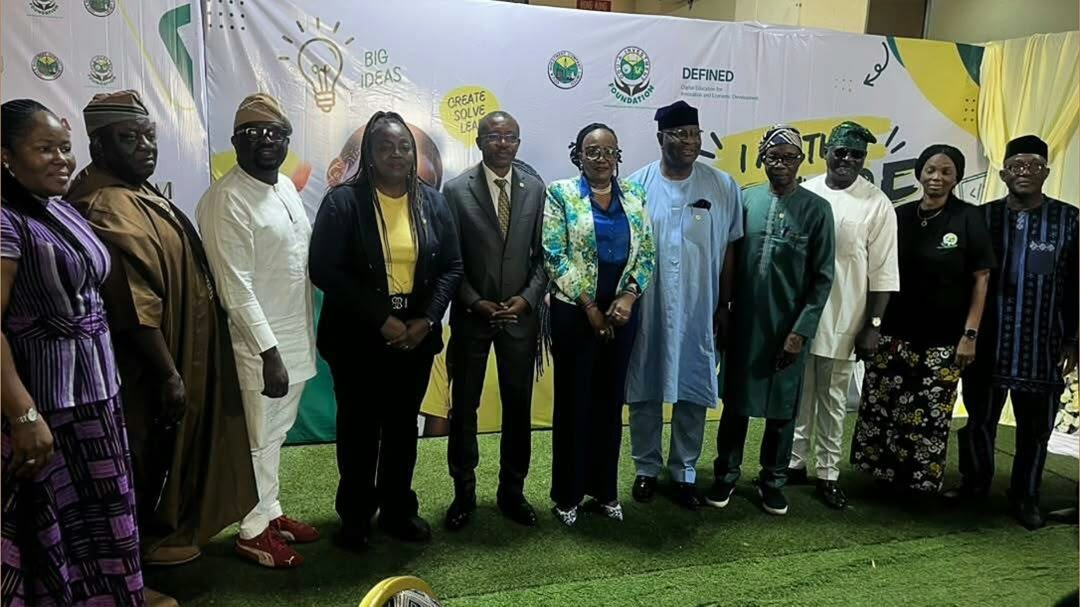
At the second Byte Busters Showcase, students presented applications addressing agriculture, education, commerce, accessibility and public safety.
Projects included an AI-powered computer-based testing platform, a tomato farming application, an emergency response system, a sign-language application, an AI-powered marketplace and a Yoruba-English translation tool. Other teams explored ways to reduce post-harvest losses in maize production.
These projects connect digital learning with problems students recognise in their communities. Coding becomes not merely a technical subject, but a tool for developing practical solutions.
A showcase does not establish that every prototype is ready for public use. Testing, security checks, user feedback and technical support would be necessary before the applications could be relied upon.
Growth Must Translate Into Sustained Access
Figures represent growth from nine centres and about 100 pupils associated with the programme’s inaugural showcase in 2025. More than 220 students participated in the 2026 showcase, while the wider initiative has reached over 4,500 learners.
Learners reached should not automatically be counted as active club members or graduates. The figures do not establish how many complete a learning pathway or progress to advanced training.
The Foundation is also training teachers. Its first Digital Literacy Training for Teachers cohort had 72 participants, 67 of whom completed the programme. The train-the-trainer initiative targets 3,000 teachers by the end of 2026.
This could extend digital learning beyond clubs, but teachers need computers, reliable internet and continuing support to deliver meaningful classroom learning over time.
Back Story: The DEFINED Project
Odu’a Investment Foundation launched Project DEFINED in October 2023. Its original plan was to take digital skills education to all 137 local government areas in Oyo, Ondo, Ogun, Osun, Ekiti and Lagos through coding clubs, competitions and innovation hubs.
In October 2024, the Foundation reported more than 1,000 Byte Busters club members, including 662 fully onboarded participants across six local government areas in four states. By October 2025, BusinessDay reported that the project had engaged 3,367 learners, with 1,334 actively registered in coding clubs.
But 18 local government areas remain a fraction of the original 137-area ambition. The next test is whether partners can sustain access, retain learners, equip teachers and support projects beyond showcase events.
The programme’s value will depend not only on how many pupils it reaches, but on how many gain lasting skills and opportunities to use them.