
A Nigerian graduate is developing a cocoa-husk filter for textile wastewater, but its promise depends on performance outside controlled experiments.
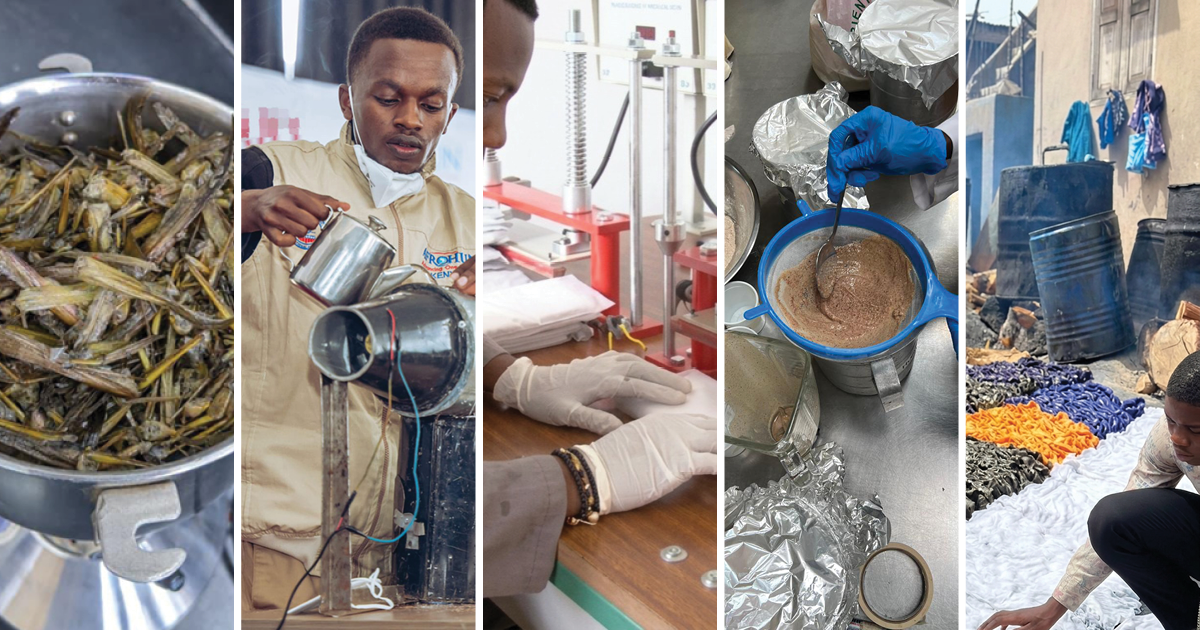
UniThread EcoHusk, developed by Oluwatayo Ayodele Michael’s team, turns cocoa pod husks into activated-charcoal material for filtering textile dye wastewater. The model also proposes returning stabilised biochar to farms, linking agricultural waste with industrial pollution.
The project targets wastewater before discharge. It is not yet a household filter proven to make unsafe drinking water safe.
Turning two waste streams into one circular system
After cocoa beans are removed, husks are often discarded or burned. Textile dyeing also generates wastewater that can carry pollutants into drains and rivers when inadequately treated.
UniThread EcoHusk proposes processing husks into activated charcoal for filtration kits and returning stabilised biochar to farms.
Ayodele told Punch the idea grew from an effort to improve the value cocoa farmers receive from the supply chain. Research into cocoa waste led him to explore water treatment.
Also Read: Nigerian Startup Ororo Waste Secures Up to $1 Million to Expand Used Cooking Oil Collection
What the science supports, and what it does not
Adsorption occurs when dissolved substances attach to a material’s surface. Porous carbon can capture certain contaminants as water passes through it.
A 2024 study in the Bulletin of Environmental Contamination and Toxicology reported 98.87 per cent removal of Rhodamine B dye using chemically modified cocoa-husk activated carbon under optimised laboratory conditions. A 2023 paper in Applied Water Science also found high removal rates for lead, mercury and cadmium using cocoa pod husk biochar in controlled tests.
Neither study tested the UniThread EcoHusk filter. Prepared laboratory solutions cannot predict performance on industrial wastewater, which may contain mixtures of dyes, salts, metals and other chemicals.
Ferris State University says EcoHusk kits are designed to keep 95 per cent of textile dye pollution out of water and wastewater streams. However, its public announcement does not include the testing conditions behind that figure.
Back Story: Two awards mark the project’s progress
Ayodele told Punch the project evolved from a cocoa supply-chain idea developed in 2023. The team later entered the Wege Prize, an international circular-economy competition run by Ferris State University’s Kendall College of Art and Design.
UniThread EcoHusk became one of five finalists in 2026 and received a $2,500 award. Separately, Ayodele received the National Board for Technology Incubation’s NextGen Innovator Award at ExCeL London on October 9, 2026. UNIMED confirmed the recognition on October 13.
The next test is outside the competition
A 2024 study of Yemoja River in Abeokuta linked local textile and abattoir discharges with deteriorating water quality. It recommended treating effluent before discharge. PubMed
EcoHusk could become a locally sourced treatment option, but wider use requires independent testing on real wastewater. Evidence must show which pollutants the filter removes, how long it lasts, whether it can be reused and how trapped contaminants are handled safely.
Consistent production and affordable costs will matter too. Awards have brought visibility; performance in real conditions will determine whether the innovation can reduce industrial water pollution.