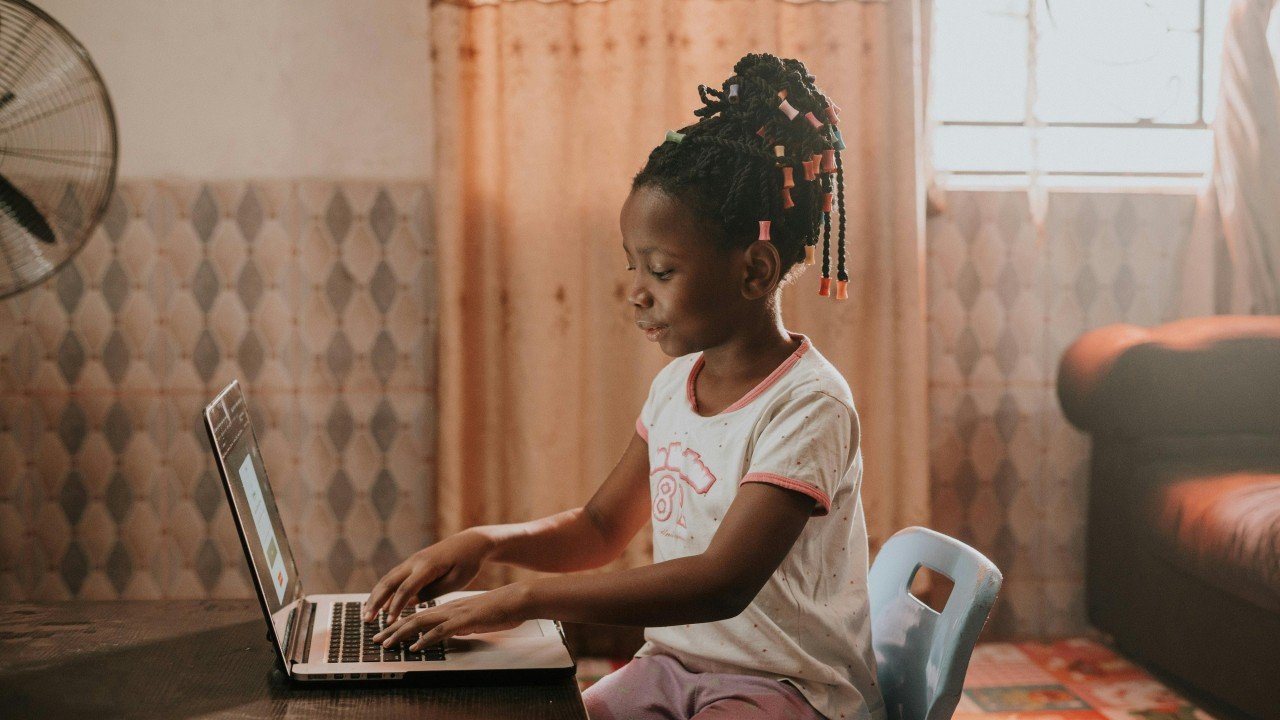

Artificial intelligence is changing how students find explanations, practise lessons and receive feedback. But across Africa, many learners still struggle to access stable internet, suitable devices and reliable electricity. The technology is advancing faster than the infrastructure needed to use it.
The question is whether students can reach AI tools consistently, afford them and find content suited to their schools and languages.
AI Is Moving Faster Than School Infrastructure
UNESCO’s 2024 report on education in Africa found that only three in ten primary schools, five in ten lower-secondary schools and six in ten upper-secondary schools in sub-Saharan Africa had electricity. It warned that school internet data were limited and of questionable quality.
Home connections can also be unreliable. UNICEF Innocenti’s 2025 report, based on 5,020 children in five Eastern and Southern African countries, found that 31 per cent experienced slow connections or poor signal. Data costs affected 30 per cent, while 13 per cent reported electricity problems. Some children had to share devices or obtain permission to go online.
Also Read: New Nigerian Study Finds AI Is Changing Students’ Study Habits
The Cost of Getting Online
For families balancing school expenses, transport and food, buying data or a suitable smartphone can be difficult. A phone in the household may not be available to a child during lessons. It may be shared or unsuitable for assignments.
Nigeria’s figures reveal the inequality. UNICEF’s Nigeria education analysis found that 39 per cent of students aged five to 24 had internet access at home, while only 10 per cent had access to a computer. Just nine per cent of students in the poorest wealth group had home internet, compared with 76 per cent in the wealthiest group.
Nigeria’s Digital Learning Test
The Nigeria Learning Passport illustrates both promise and limitation. It offers online and offline functions, allowing content to be used where connectivity is weak. Yet UNICEF and the National Bureau of Statistics’ MICS Plus report found that 18 per cent of children who attended formal or non-formal school in 2023/24 accessed education-related content through the platform in the preceding seven days. Sixteen per cent of respondents said they did not know about it.
This measures use of the Learning Passport, not all online learning in Nigeria. In March 2026, the Federal Ministry of Education announced collaboration with the communications ministry to expand reliable internet across schools. The announcement describes a plan, not proof that all schools are connected.
Back Story: The Divide Predates Artificial Intelligence
COVID-19 school closures exposed unequal access to remote learning. UNICEF’s Nigeria education fact sheet reported that 41 per cent of students lacked home access to listed remote-learning tools, including television, internet or a computer. Among students in the poorest wealth group, the figure was 91 per cent.
AI cannot fix these barriers alone. UNESCO recommends offline-capable tools, African-language data, teacher involvement, local evaluation and safeguards for children’s privacy. Governments and education providers must expand electricity, affordable connectivity, devices and teacher training alongside AI.
Progress should be measured not by AI projects announced, but by whether disadvantaged learners can use these tools safely, securely and meaningfully.
Also Read: Sean Kingston, Mom Found Guilty in Massive Fraud Case