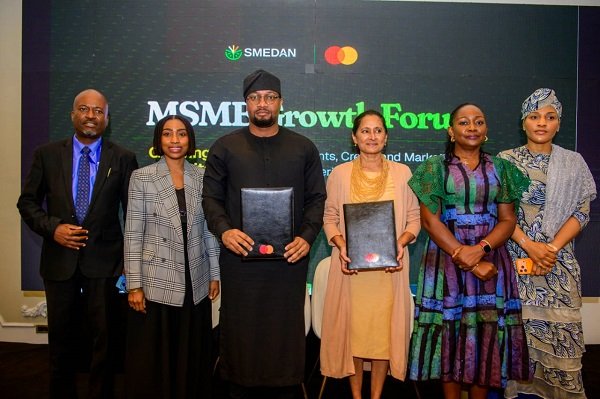

Mastercard and SMEDAN have signed a Memorandum of Understanding (MoU) to explore ways of accelerating digital adoption among Nigerian micro, small and medium-sized enterprises (MSMEs). Mastercard announced the agreement on November 12, following the SMEDAN MSME Growth Forum in Lagos on October 16.
The challenge is helping businesses use technology to manage daily operations, not simply getting them online. A SMEDAN-backed blueprint highlights the gap.
Many Businesses Are Online, but Not Digitally Equipped
The October 2026 Blueprint for the Digital Transformation of MSMEs in Nigeria, published by GIZ for SMEDAN, draws on research involving more than 1,600 MSMEs and support organisations across nine states and the Federal Capital Territory. [2]
It found that 69.5 per cent of MSMEs use social media, but only 13 per cent use operational tools such as accounting software, inventory systems or e-commerce platforms. They help manage stock and orders.
Cost is a major obstacle: 62 per cent cited the price of devices, data and tools, while 59 per cent had no internet connection at work. Another 39 per cent cited low confidence after fraud and service failures. Digital transformation therefore requires more than electronic payments. [2]
Also Read: Mastercard report: EEMEA SMEs turn to AI, cybersecurity and digital assets for growth

What the Mastercard-SMEDAN MoU Actually Promises
Mastercard says the agreement creates a framework for both organisations to explore initiatives that could help MSMEs adopt digital tools, improve efficiency and participate more fully in the formal economy. The October forum addressed payments, policy, finance and marketing, with masterclasses on digital marketing and agricultural solutions.
The announcement gives no target, launch date, coverage, funding details or application process. It is not an announced grant scheme or confirmed nationwide rollout.
Survey Findings Point to Connected Business Needs
Mastercard’s June 2026 SME Confidence Index found that all Nigerian SMEs surveyed considered digital and online payments important to growth. It also reported that 78 per cent prioritised digitisation, 79 per cent staff training and 69 per cent were seeking credit. [3]
These are Mastercard survey findings, not figures for every Nigerian business. Alongside SMEDAN’s blueprint, they point to connected needs: payment tools, skills, connectivity and finance. Digital transaction records may help document sales, but do not guarantee a loan.
The Real Test Is Practical Support
SMEDAN’s blueprint recommends affordable digital starter packs, local-language training, peer learning and support tailored to different businesses. It urges programme organisers to measure adoption, not workshop attendance.
A trader may need stock records; a manufacturer, inventory software; an agricultural business, digital links to buyers. Generic training will not meet every need. The partnership’s value will depend on whether programmes address these differences and reach businesses beyond major commercial centres.
Back Story: Earlier Efforts to Digitise MSMEs
In December 2024, Mastercard announced a collaboration with Alerzo and the e-Trade Alliance intended to support 10,000 Nigerian MSMEs with digital and financial tools. The new agreement creates another route for cooperation, but the announcement does not establish the earlier initiative’s adoption results.
The next milestones are delivery plans, eligibility rules, measurable targets and evidence that technology is improving business operations.
Also Read: Nigeria’s NDPC and NOA Sign MoU to Expand Data Protection Awareness Nationwide