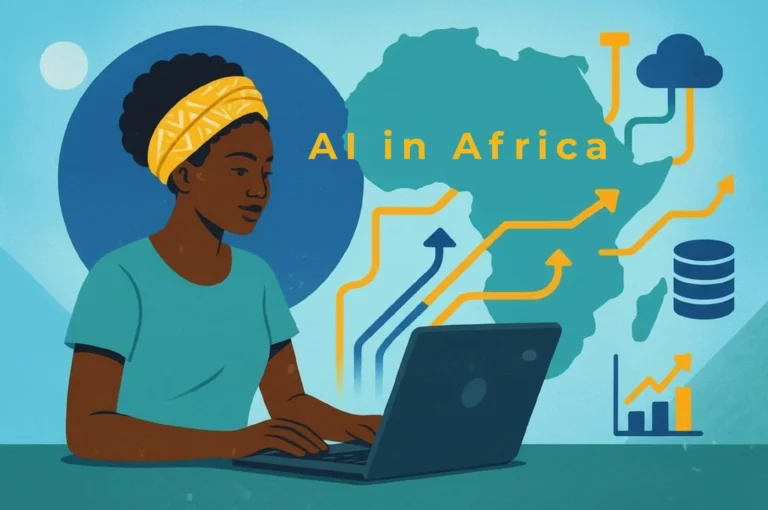

AI is changing employers’ work, not just creating technology jobs. Graduates will need to use AI in existing professions, build systems or assess risks. University readiness depends on relevant teaching, practical experience and institutional capacity.
The NUC and universities face a test: can they prepare students to use, develop and question AI?
The jobs are broader than software engineering
Opportunities include machine-learning and data roles, AI integration and governance, and professionals applying AI in finance, healthcare, agriculture, education and logistics. Employers need people who understand both the technology and the industry using it. An accountant or agricultural scientist may not need to train an AI model, but should interpret its output, spot errors and know when human judgement is essential.
The World Economic Forum’s 2025 report lists AI and big data, networks and cybersecurity, and technological literacy among the fastest-growing skills employers expect by 2030. The International Labour Organization estimates one in four workers worldwide is in an occupation with some exposure to generative AI; most affected jobs are more likely to change than disappear. Global forecasts are not Nigeria-specific, but underline the need for adaptable skills.
Policy ambition meets university capacity
Nigeria’s National Artificial Intelligence Strategy, published in August 2024, calls for an AI-ready workforce, curriculum reform, teacher training and research collaboration. It also acknowledges that educational infrastructure is not robust enough for widespread AI education and many institutions lack resources and trained educators.
Adding an AI course will not automatically produce work-ready graduates. Universities need lecturers with expertise, reliable electricity and connectivity, computing and data resources, and partnerships that expose students to real projects.
What universities should teach differently
AI literacy should extend beyond computer science. Every graduate should understand how AI works at a basic level, where its outputs can fail, how data shapes results, and why privacy, bias, copyright and cybersecurity matter.
Specialist programmes should cover statistics, programming, machine learning, data engineering, model evaluation and AI governance. Students should demonstrate abilities through projects, internships, research and practical assessments, giving employers evidence of competence rather than certificates alone.
Measure implementation, not announcements
NITDA and the NUC have renewed their commitment to a digital literacy and skills curriculum across universities, including exposure to AI, cloud computing, blockchain and cybersecurity. Nigeria’s National EdTech Strategy, dated October 2026, identifies AI literacy, research, institutional capacity and digital infrastructure as priorities. It also assigns universities and tertiary regulators roles in the wider education transformation.
The test is delivery. Regulators should report which universities have updated programmes, trained staff, laboratories and industry partnerships. Employers should shape projects and offer placements; institutions should track graduate outcomes. Without public evidence, policy ambition cannot be measured against employability.
Back Story
Nigeria’s 2024 National AI Strategy set an ambition to develop local talent and an AI-ready workforce. In October 2024, the Federal Ministry of Communications announced a ₦2.8 billion Google.org grant to Data Science Nigeria for AI and data-science training. The National EdTech Strategy, dated October 2026, adds a wider framework built around AI literacy, research, institutional capacity and a phased roadmap to 2030. These policies create direction; they do not prove university teaching has changed.