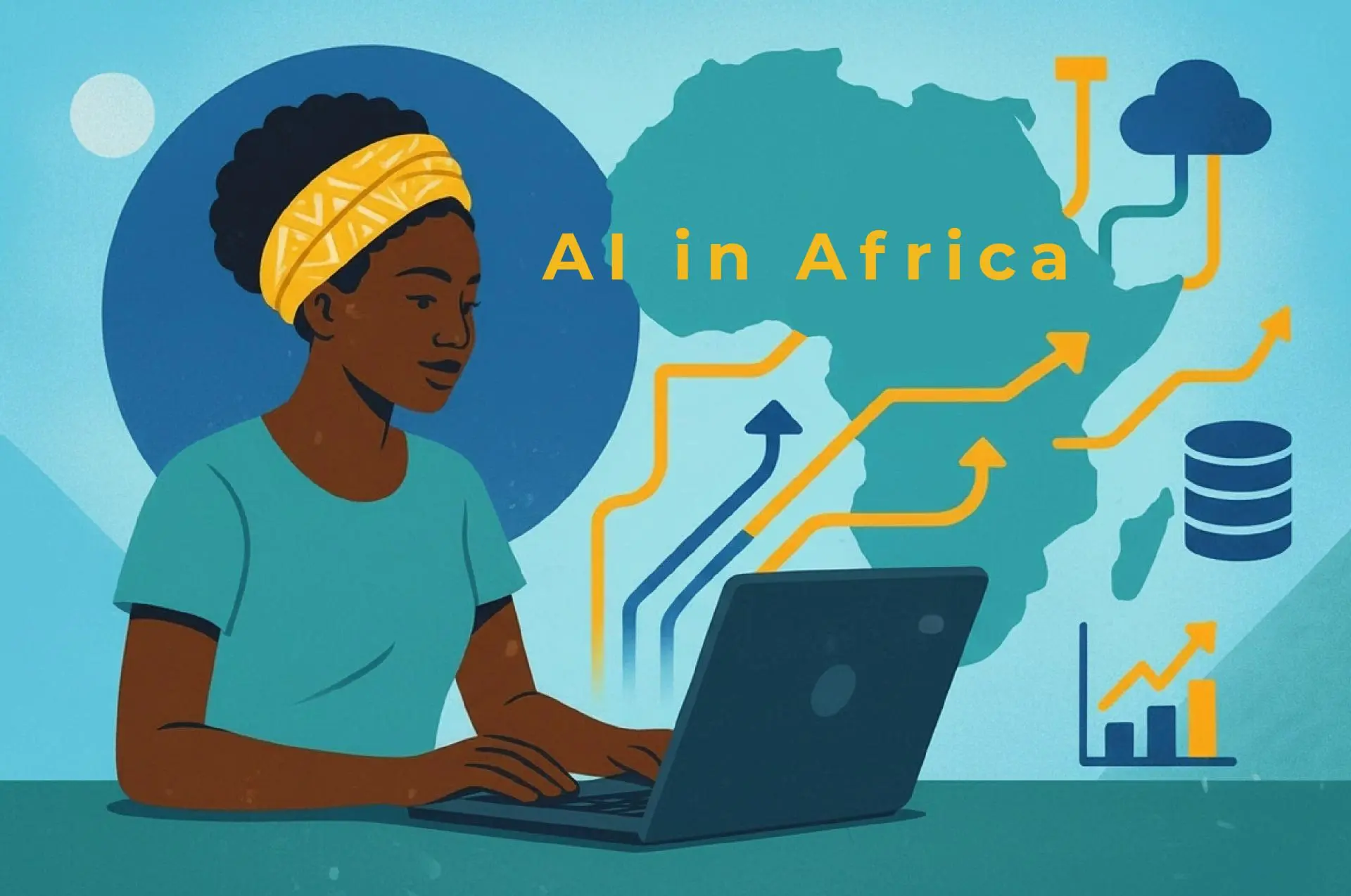

AI is entering research, from crop-disease prediction to medical-image analysis and African-language tools. But universities cannot compete through talent alone. Researchers need processors, storage, networks and electricity to process data and train models.
Universities must ensure researchers can access equipment and support to produce knowledge, not just use tools developed elsewhere.
The constraint is measurable
A 2024 article published on the United Nations Development Programme’s platform by the founders of Zindi and Alliance4AI reported that only five per cent of the AI talent represented in an 11,000-person Zindi data-scientist network had access to computing resources for research and innovation. The figure is not a census of every African AI researcher, but it signals an access gap. Most relied on ordinary laptops or limited free cloud access; few could use GPUs directly or pay for cloud processing.
The African Union’s Continental AI Strategy identifies computing capabilities, data centres, cloud services, energy and broadband as foundations for AI development. A 2026 International Monetary Fund analysis also identifies unreliable electricity and limited digital infrastructure as obstacles to AI adoption across Sub-Saharan Africa. Universities may teach machine learning yet lack capacity for demanding experiments.
Also Read: AI Computing Shortages Are Reshaping the Global Technology Industry
Why local computing capacity matters
High-performance computing is not only for building large language models. It supports genomic analysis, weather forecasting, crop improvement, disease modelling and tools for under-resourced languages. GPUs accelerate AI calculations, while storage and fast networks help teams manage large datasets.
Dependence on overseas cloud platforms can expose researchers to foreign pricing, payment restrictions, limited credits and service limits. Sensitive health or agricultural data may require safeguards before transfer. Local infrastructure gives institutions greater control over research location, data protection and access to computing time.
Back Story: African examples show what is possible
Morocco’s Mohammed VI Polytechnic University deployed the Toubkal supercomputer in 2021. A 2025 paper in The Journal of Supercomputing describes its 1,272 compute nodes, GPU partitions and 8 petabytes of storage. It reports applications including machine-learning weather forecasting and genomic selection for drought-resilient crops. The example shows that African institutions can operate advanced facilities for local research.
In March 2026, the University of Cape Town announced the African Compute Initiative, intended to provide researchers across Africa with GPU computing, secure storage and high-speed networking. UCT targeted operation within 12 months of the announcement. It remains a planned initiative, not one to describe as operational without confirmation.
Build shared capacity, not prestige projects
Most universities cannot afford a supercomputer alone. Governments and institutions should fund shared national or regional facilities, allocate transparent access and provide cloud credits where local hardware is impractical. Investment must cover electricity, cooling, cybersecurity, data governance, technicians and maintenance, not just GPUs.
Universities should publish access rules and measure whether infrastructure produces research, datasets, trained specialists and useful applications. Partnerships can help, provided African researchers retain access and leadership. Access must extend beyond a few well-funded flagship campuses.
The goal is not for every university to train a frontier model. It is to ensure African researchers can investigate local problems, test ideas and contribute to global science. Computing infrastructure is now part of the research system, not an optional upgrade for universities.
Also Read: Can Africa Build Its Own AI Infrastructure Instead of Depending on Foreign Data Centres?