Nigeria’s push to become a fully connected digital economy has taken a major leap forward after the African Development Bank approved a $200 million loan to support the rollout of a massive national fibre optic expansion project known as D-VIBE. The approval signals one of the biggest coordinated infrastructure pushes in Nigeria’s telecom history, aimed at expanding broadband access, boosting digital skills, and creating millions of jobs across the country.
The project is not just about laying cables. It is about reshaping how Nigerians access education, healthcare, business opportunities, and government services in an increasingly digital world. With this development, Nigeria is positioning itself for a future where internet connectivity is no longer a privilege but a basic utility available in every corner of the country.
This report breaks down what the project means, how it will be funded, what Nigerians should expect, and why it is being described as a game-changer for Africa’s largest economy.
AfDB funding and the structure of the D-VIBE fibre expansion project
The African Development Bank’s approval of the $200 million loan is part of a wider financing arrangement designed to unlock large-scale private and public investment into Nigeria’s digital infrastructure.
D-VIBE, also known as Project BRIDGE, is structured as a public-private partnership. The idea is to combine government oversight with private sector efficiency so the project can scale faster than traditional government-funded infrastructure projects.
According to official details, the $200 million AfDB loan is only one component of a much larger financing package that includes contributions from the World Bank, the European Bank for Reconstruction and Development, and private investors. In total, the project is estimated at around $2 billion, making it one of the most ambitious digital infrastructure investments in Nigeria’s history.
The structure allows private investors to hold majority participation while the public sector retains strategic control. This is designed to reduce common delays in infrastructure rollout, especially issues around funding gaps, construction bottlenecks, and right-of-way challenges.
The AfDB has described the project as a key driver for closing Nigeria’s connectivity gap and expanding opportunities across sectors such as agriculture, manufacturing, education, and financial services.
What the 90,000km fibre backbone means for Nigeria
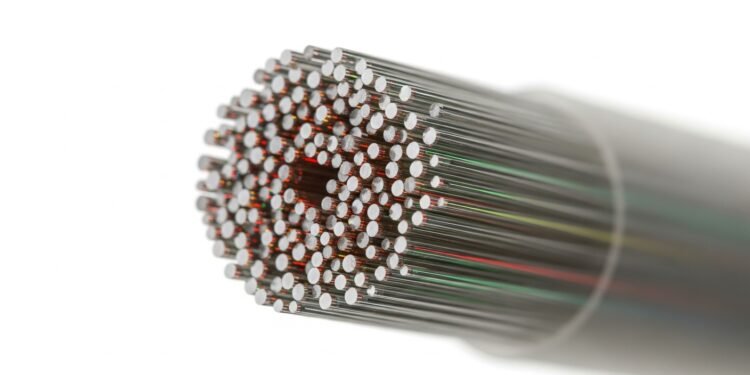
At the heart of the project is the expansion of Nigeria’s national fibre optic backbone by about 90,000 kilometres. This expansion will take the country’s fibre network from roughly 30,000 kilometres to about 120,000 kilometres once completed.
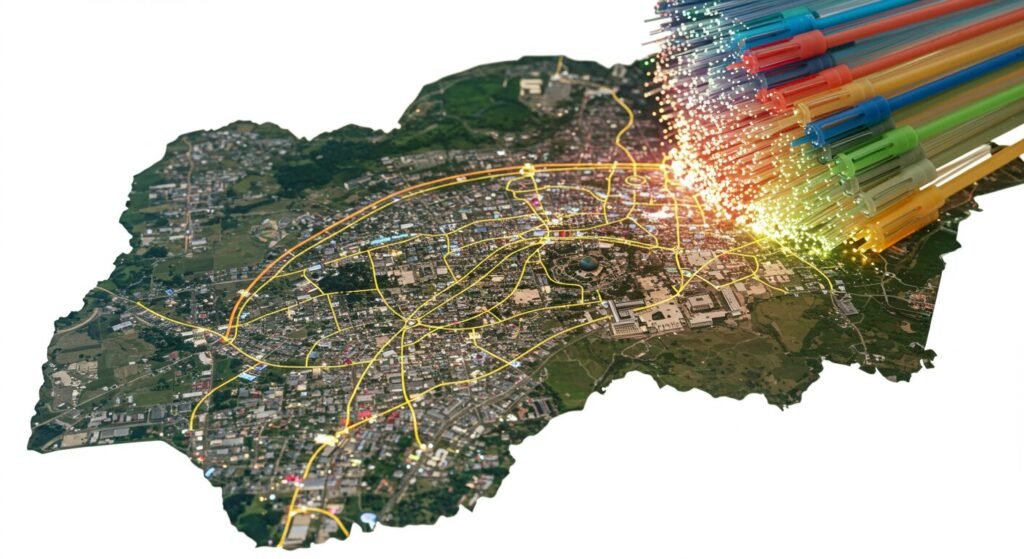
In practical terms, this means more reliable and faster internet connections across cities, towns, and rural communities. The plan also includes connecting all 774 local government areas in Nigeria to high-speed broadband infrastructure.
Beyond internal connectivity, the project also includes cross-border fibre links to neighbouring countries such as Benin, Niger, Cameroon, and Chad. This positions Nigeria not just as a consumer of digital services but also as a regional digital hub for West Africa.
The expansion is expected to improve access in critical public service areas. Schools will be better connected for digital learning, hospitals will have improved telemedicine capabilities, and rural communities will gain access to services that are currently limited by poor connectivity.
Nigeria’s current broadband penetration, estimated at around 45 percent, is expected to rise significantly as the network expands, with targets projecting up to 70 percent penetration in the coming years.
This shift is particularly important for a country with a young population that increasingly relies on mobile internet for education, work, and entrepreneurship.

Jobs, digital economy growth, and long-term impact
One of the most significant promises of the D-VIBE project is job creation. Estimates suggest that the project could support up to 2.8 million jobs over its lifetime.
These jobs will not only come from fibre installation and construction but also from the wider digital ecosystem that the infrastructure will enable. Improved connectivity typically leads to growth in sectors such as fintech, e-commerce, software development, digital media, and remote work services.
For many young Nigerians, this project could expand access to global job markets. With stronger broadband coverage, more people will be able to participate in remote work opportunities, digital freelancing, and tech entrepreneurship.
The project is also expected to support Nigeria’s broader economic diversification agenda. As oil revenues remain unstable, the government has increasingly focused on building a knowledge-based economy driven by technology and innovation.
Digital infrastructure is seen as the foundation for this transformation. Without reliable internet access, growth in sectors like artificial intelligence, cloud computing, and digital finance would remain limited.
Beyond jobs, the project also aims to reduce inequality in digital access. Rural areas, which often suffer from poor infrastructure, are expected to benefit significantly from improved connectivity.
Why this project matters for Nigeria’s future
The D-VIBE fibre expansion is not just another infrastructure project. It represents a long-term bet on Nigeria’s digital future.
At a time when global economies are rapidly shifting toward digital services, countries with strong internet infrastructure are gaining a competitive advantage. From education to commerce, nearly every sector now depends on connectivity.
For Nigeria, the stakes are even higher. With over 200 million people and one of the youngest populations in the world, the demand for digital access is growing rapidly. However, infrastructure gaps have slowed down full participation in the global digital economy.
This project aims to close that gap by building a backbone that supports both current needs and future technologies. It is expected to align with national development plans and broader African Union digital transformation goals.
Experts also see the project as a strategic move to strengthen Nigeria’s role in regional connectivity. By linking neighbouring countries through fibre, Nigeria could become a central digital gateway for West Africa.
There are also long-term implications for governance. Improved digital infrastructure could enhance e-government services, reduce inefficiencies, and improve transparency in public administration.
Ultimately, the success of the project will depend on execution. While funding and planning are in place, the real challenge will be implementation across diverse terrains, security concerns in some regions, and ensuring affordability for ordinary Nigerians.
Still, the approval of this loan marks a major milestone. It signals confidence from international partners in Nigeria’s digital future and sets the stage for one of the largest broadband expansions ever attempted on the continent.
Join Our Social Media Channels:
WhatsApp: NaijaEyes
Facebook: NaijaEyes
Twitter: NaijaEyes
Instagram: NaijaEyes
TikTok: NaijaEyes