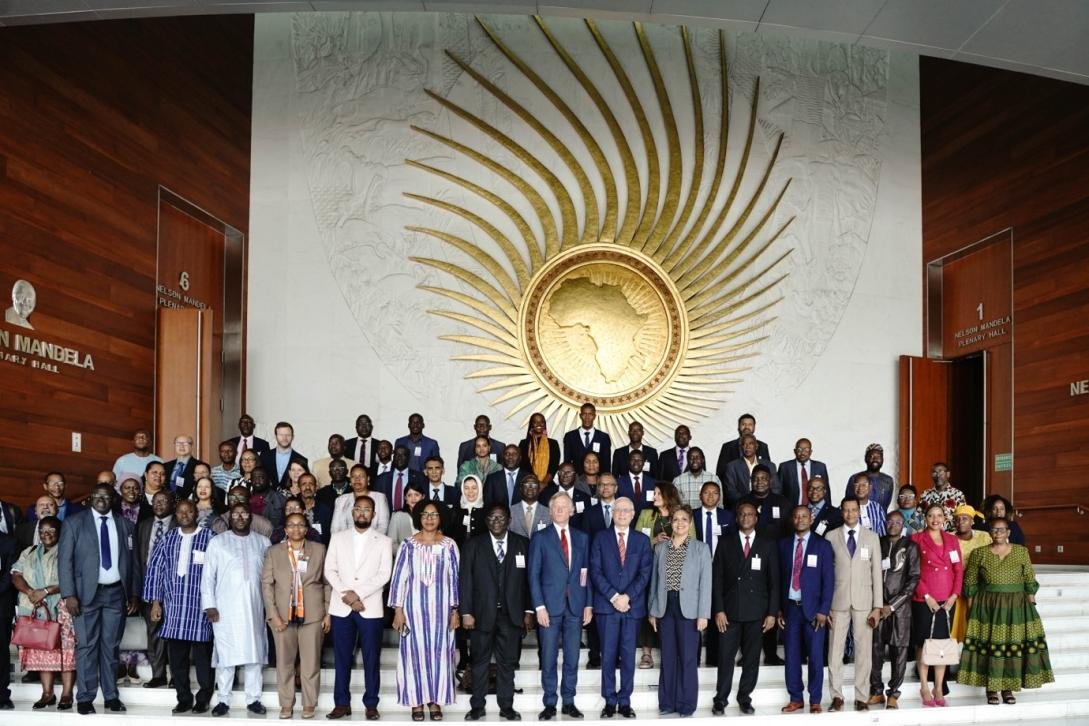

African education policy has moved closer to a shared continental framework after ministers in Addis Ababa adopted measures covering qualifications, higher education, skills, research and emerging technology.
The decisions came from the African Union’s Sixth Ordinary Session of the Specialised Technical Committee on Education, Science and Technology (STC-EST VI). Its ministerial session took place on 6 November, with representatives from 32 member states, according to the African Union Commission. The 9 November communiqué lists the decisions, but several require national action or further approval by AU policy organs before they operate.
A continental reference for qualifications
Ministers adopted the African Continental Qualifications Framework (ACQF), a ten-level reference system intended to make qualifications from different national systems easier to compare and support recognition of learning across borders.
The framework is not new, as it was in July 2023 that AU member states validated its policy document. The latest session places it among the formal ministerial decisions. Its value will depend on countries mapping their qualifications against the continental levels and building trusted recognition processes. It does not automatically make every African degree or certificate equivalent.
For Nigeria, the challenge is connecting the continental framework with existing national arrangements. The National Board for Technical Education describes the Nigerian Skills Qualifications Framework as a system for classifying and recognising skills gained through formal, workplace or less formal learning. Alignment could make Nigerian skills easier to understand across borders, but the AU communiqué announces no automatic recognition agreement for Nigerian graduates.
Also Read: Nigeria Moves Closer to Sovereign Cloud as NITDA and Budget Office Launch Technical Committee
Education plans, data and equal access
Ministers endorsed implementation plans for the Continental Education Strategy for Africa 2026–2035 and the Continental TVET Strategy 2025–2034. They also endorsed 60 education indicators and asked the AU Commission to develop a digital reporting portal and policy dashboard.
Comparable data can help governments identify gaps in learning, technical training and access. The meeting also adopted a gender framework for the education strategy, endorsed the Bujumbura Declaration and backed a declaration aimed at reversing brain drain and retaining African talent.
Research, artificial intelligence and the test of delivery
On science, ministers welcomed the STISA-2034 implementation plan and urged member states to direct 1 per cent of gross domestic product to research and development. This is a call, not evidence that governments have funded the target.
The session cleared five publications on responsible artificial intelligence for national adaptation and requested a continental semiconductor strategy and roadmap by 2034. The AU also endorsed a continental synchrotron facility and an African beamline at SESAME, with the latter expected to train more than 200 scientists annually. These are policy priorities, not proof that Africa already has continent-wide AI regulation or semiconductor capacity.
Back Story
The decisions sit within the AU’s Decade of Accelerated Action for the Transformation of Education and Skills Development, 2025–2034, and its wider Agenda 2063 programme. The challenge is implementation: national budgets, qualification authorities, universities, research institutions and employers must turn continental frameworks into working systems. For students and workers, success will mean recognised skills, better education and research that produces useful jobs, products and services.
Also Read: Nigeria, UNESCO and African Union Launch Mobile Learning Programme to Boost Teacher Training