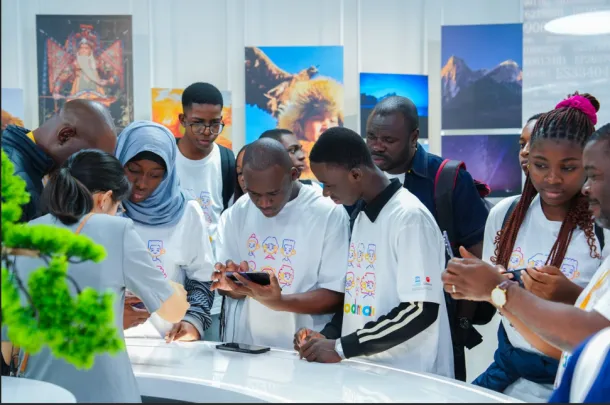
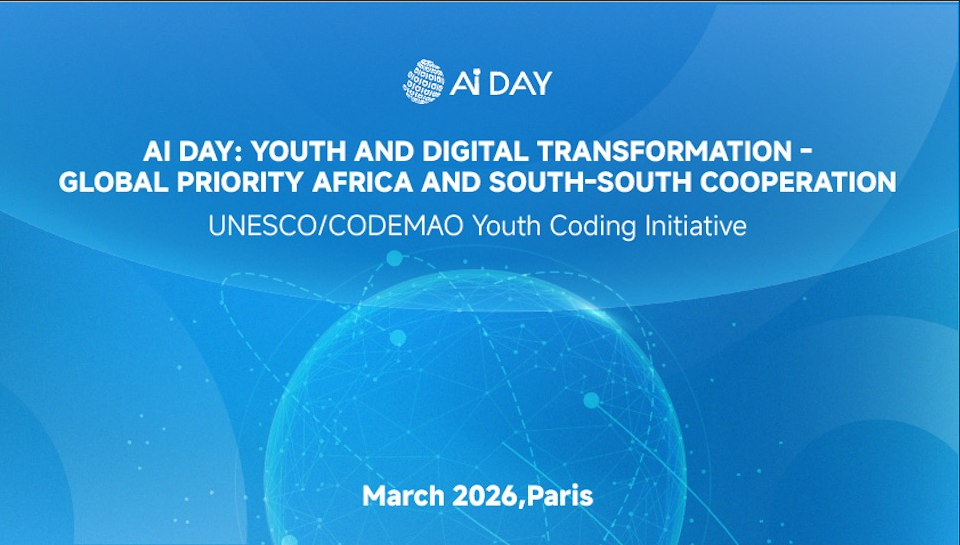
At a time when artificial intelligence is rapidly reshaping economies, education systems and everyday life, UNESCO convened global stakeholders for its 2026 AI Day, placing young people at the centre of conversations on digital transformation. Held at UNESCO Headquarters in Paris between 26 and 27 March 2026, the high-level event brought together policymakers, educators, innovators and youth representatives to explore how emerging technologies can better serve society.
The gathering, themed around youth and digital transformation with a strong focus on Africa and South South cooperation, reflects a growing recognition that the next generation will not only inherit AI driven systems but actively shape them. Across panel discussions and collaborative sessions, participants examined how young people can move beyond being passive users of technology to becoming creators, regulators and ethical stewards of digital tools.
This framing is particularly relevant for countries like Nigeria and others across Africa, where youthful populations are rapidly embracing digital platforms but often lack structured opportunities to influence how these technologies are designed and governed.
Table of Contents
AI Day 2026: Why AI and Digital Transformation Matter for Young People
Artificial intelligence is no longer a distant concept. It is already influencing how students learn, how governments deliver services and how businesses operate. According to UNESCO, digital transformation and AI adoption have become top priorities for public institutions worldwide, driven by rising expectations for efficiency and accessibility.
For young people, this transformation presents both opportunity and risk. On one hand, AI offers access to new learning tools, creative platforms and economic opportunities. On the other hand, it raises concerns about inequality, data privacy, job displacement and the ethical use of technology.
UNESCO’s broader work in AI and education highlights these tensions, stressing that the integration of AI into learning systems must prioritise human rights, inclusion and fairness. The organisation has already developed global frameworks to guide countries on ethical AI adoption, including recommendations on governance, transparency and accountability.
At AI Day 2026, these themes were brought into sharper focus through the lens of youth participation. The message was clear: if young people are excluded from decision making processes, the digital future risks becoming misaligned with their needs and realities.

Africa’s Role in the Global Digital Shift on AI Day 2026
One of the defining features of AI Day 2026 was its emphasis on Africa as a priority region. This aligns with UNESCO’s long standing commitment to supporting digital development across the continent while ensuring that technological progress does not deepen existing inequalities.
Africa’s digital landscape is evolving quickly. Mobile connectivity is expanding, startup ecosystems are growing and governments are beginning to adopt national AI strategies. Nigeria, for example, has already taken steps to integrate AI into its development plans, including initiatives that consider infrastructure challenges such as energy stability.
However, significant gaps remain. Many young Africans still face limited access to quality digital education, reliable internet and opportunities to develop advanced technical skills. AI Day 2026 addressed these challenges by promoting South South cooperation, encouraging countries in Africa, Asia and other regions to share knowledge, resources and best practices.
The event also highlighted the importance of local context in AI development. Solutions designed for high income countries may not translate effectively to environments with different socio economic realities. By empowering local youth to participate in innovation, countries can build technologies that are more relevant, inclusive and sustainable.
Building an Inclusive Digital Future Through Youth Engagement
A central outcome of the discussions at AI Day 2026 was the urgent need to rethink how young people engage with technology. Rather than treating them as end users, UNESCO advocates for a model where youth are co creators of digital systems.
This approach involves equipping young people with not just technical skills but also critical thinking abilities, ethical awareness and a clear understanding of how AI systems work. UNESCO’s initiatives in digital learning and AI education emphasise the creation of inclusive learning environments where students can explore, question and shape technological tools.
The organisation has also been pushing for global collaboration to ensure that AI development aligns with sustainable development goals. This includes efforts to make AI systems more environmentally efficient and to use technology as a tool for addressing global challenges such as climate change and education inequality.
For young people in Nigeria and across Africa, the implications are significant. With the right support, they can move from being consumers of imported technology to innovators who create solutions tailored to their communities. This shift has the potential to drive economic growth, improve public services and strengthen the continent’s position in the global digital economy.
At the same time, the conversations at AI Day 2026 served as a reminder that technology alone is not a solution. Policies, governance structures and ethical frameworks must evolve alongside innovation to ensure that the benefits of AI are shared widely and fairly.
Join Our Social Media Channels:
WhatsApp: NaijaEyes
Facebook: NaijaEyes
Twitter: NaijaEyes
Instagram: NaijaEyes
TikTok: NaijaEyes