
A new report has sparked intense debate among educators and parents globally by highlighting how the rise of artificial intelligence in classrooms is reshaping learning for high school students in ways that may be more harmful than helpful. The Brookings Institution’s yearlong investigation paints a picture of students relying heavily on AI tools to complete schoolwork and, in the process, losing essential reasoning skills and the capacity to think independently, according to Northwest Public Broadcasting.
The study brings into sharp focus the shift from effortful learning to frictionless answers and suggests that many young people may now be bypassing the critical thinking that forms the core of meaningful education. Leaders in education and policy are grappling with how AI‑enabled tools should be integrated into classrooms while ensuring that students still build great and lasting cognitive skills.
Table of Contents
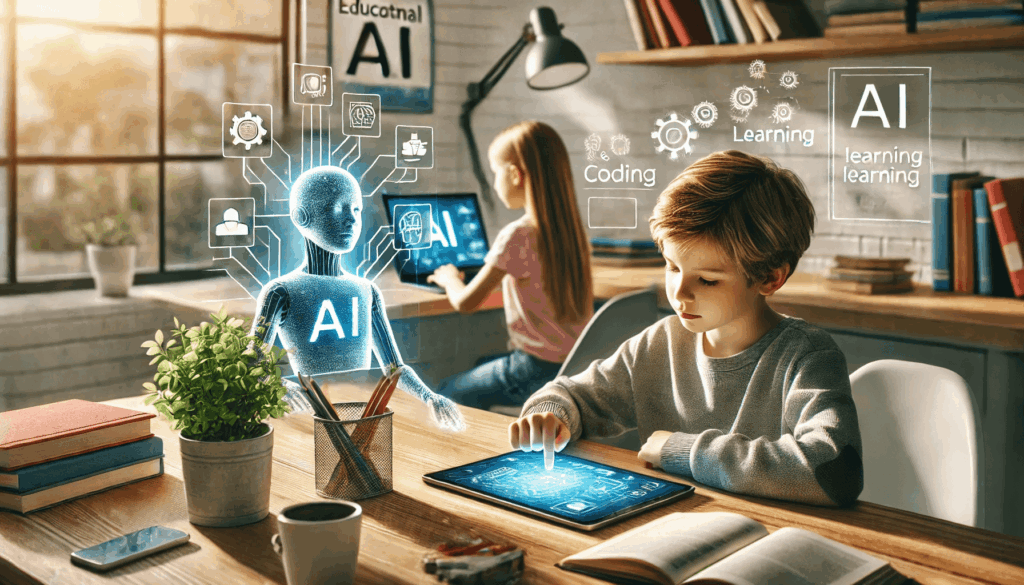
School Students Losing Ground in Critical Thinking
For decades, cheating in school required effort and strategy. Students might have relied on classmates, copied from notes hidden in a desk, or later used the internet to get hints and summaries. But today, the process for gaining an unfair advantage can be as simple as pasting a question into an AI chatbot and receiving a complete answer in seconds.
According to the Brookings report, this shift goes beyond cheating. It threatens the very way students think and learn. The ease of obtaining answers with AI means that students do not have to engage deeply with complex ideas or solve problems on their own. Over time, this can lead to a decline in critical reasoning skills and a weakening of the mental muscles that are essential for lifelong learning.
In economic terms, students are acting rationally. They want the best results for the least effort. When AI gives them that, students feel pressure to rely on it, even when they know it is undermining their own learning. Researchers describe this pattern as a “positive feedback loop” in which AI dependence grows stronger with time and reduces students’ inclination to think deeply for themselves.
Teachers involved in the study described this phenomenon poignantly. One educator lamented that students are physically present in class but mentally disengaged from learning because AI has made it too easy to get by with minimal intellectual effort.
The ‘Fast Food’ Analogy for Learning
In the Brookings report, AI is likened to fast food. It satisfies immediate hunger but offers little nutritional value in the long run. In a schooling context, this means AI tools provide quick answers that feel rewarding in the moment but fail to build the deep understanding learners need to tackle new or complex challenges on their own.
Traditionally, learning involved synthesising information from different sources, weighing arguments, and developing original ideas. That struggle was where true learning happened. But with generative AI at a student’s fingertips, much of that struggle is now removed. The technology not only answers questions; it can read passages, take notes, or even interpret class content on behalf of the student.
Researchers warn that this easy access to answers is creating what they call “cognitive debt.” Over time, students who offload mental work to AI may find that their own problem-solving, memory, and creative skills weaken. This is similar to how repeated reliance on tools like calculators has changed the way people do basic arithmetic. But AI’s capabilities go far beyond these older tools and reach into higher‑order thinking, making the potential impact far greater.
Critics of AI in education note that when students are not required to think deeply or wrestle with complex problems, they lose what may be described as cognitive patience. This is the ability to sustain attention on difficult ideas and engage with material that cannot be easily summarised or solved. One expert cited in the report observed that students used to complain that they “did not like to read,” but now they say they “cannot read because it is too long.” This shift reflects a deeper reliance on quick AI summarisation instead of sustained engagement with texts.

AI Beyond the School Classroom
The report also delves into how students are using AI outside school hours. What started as a tool for homework has grown into a companion for many teens. With some spending significant parts of their day interacting with AI chatbots, the technology begins to fill social and emotional roles that for generations were served by human interaction.
These chatbots, designed to use familiar language and personal pronouns, can simulate friendliness. Yet they do not offer the complex give‑and‑take of real human relationships, including the misunderstandings and reconciliations that help young people learn empathy and social nuance.
While some isolated situations show potential benefits – such as children in regions where girls are denied access to physical schools using AI for learning and support – these examples are exceptional. For most students, the risk is that AI becomes a substitute for human connection, eroding trust and relational skills rather than building them.
The report also raises concerns about “artificial intimacy,” where frequent AI interactions create unhealthy patterns of emotional reliance. In rare but serious cases, this dynamic has contributed to emotional distress among young people. A high‑profile legal case highlighted how intense interaction with an AI character preceded a teenager’s suicide. Scholars warn that without safeguards, these risks will grow as AI becomes more integrated into daily life.
What Educators Are Calling For
Despite the concerns, the authors of the Brookings report are not calling for a blanket ban on AI. Instead, they propose a balanced approach that focuses on reframing how the technology is used in and out of schools. Their recommendations rest on three key pillars: transforming classrooms to harness AI’s benefits while preserving human judgement, building broader AI literacy among students and educators, and protecting students’ privacy and emotional wellbeing through clear guidelines and safeguards.
This framework recognises that AI is deeply embedded in modern life and will not simply disappear. Rather than fighting every use of AI, educators want to find ways to integrate it that encourage curiosity, critical thinking, and ethical use. They also emphasise the need for policymakers and technology companies to work together in creating guidelines that prevent manipulative engagement and ensure that young users are treated responsibly by AI developers.
Some educators are already experimenting with blended approaches. In various schools, teachers have started to combine traditional methods such as handwritten work and oral tests with new AI‑augmented assignments. This kind of integration challenges students to prove they understand material not just on screen but in conversation and personal expression.
The broader goal, according to experts, is to help students view AI as a tool that supports their learning rather than a shortcut that replaces it. Schools exploring this model are encouraging learners to use AI for inspiration, research, and exploration, while still requiring them to engage deeply, think critically, and reflect on their own reasoning before submitting work.

A Turning Point for Education
The Brookings findings show that we are at a critical moment in the evolution of schooling. Artificial intelligence is not merely another educational technology. It is powerful enough to change how young people learn, how they interact with peers, and how they develop essential cognitive and social skills.
As the global conversation continues, teachers, parents, students, and policymakers must weigh the promise of AI against its potential pitfalls. The lessons from this report suggest that without thoughtful integration and clear ethical standards, the technology could reshape education in ways that leave students with high grades but weaker reasoning skills.
For many, the challenge now is to strike a balance where AI enhances education without hollowing out its core purpose. As stakeholders work toward that balance, the future of learning may depend on preserving the human element that machines cannot replicate while still embracing innovation that empowers rather than diminishes the next generation of thinkers.
Join Our Social Media Channels:
WhatsApp: NaijaEyes
Facebook: NaijaEyes
Twitter: NaijaEyes
Instagram: NaijaEyes
TikTok: NaijaEyes