
Amazon Web Services (AWS) and the National Basketball Association (NBA) are expanding an education initiative that will use basketball, artificial intelligence and cloud technology to help improve mathematics learning for 10,000 students across Africa by the end of 2027.
The initiative, announced during the AWS Summit in Johannesburg, South Africa, is expected to begin with about 1,000 learners in Johannesburg before expanding to other African countries. The wider programme is expected to include South Africa, Senegal, Nigeria, Kenya and Egypt.
At the heart of the project is NBA Math Hoops, an educational programme that uses basketball statistics and gameplay to make mathematics more engaging for children. According to the official NBA Math Hoops programme, students use real NBA and WNBA player statistics to solve mathematical problems while competing in teams.
For African learners, the new partnership could offer something particularly valuable: a way of connecting classroom mathematics with an activity many young people already understand and enjoy.
The programme is being expanded with technology that can help personalise learning according to individual student abilities. AWS says its AI and cloud capabilities will support the programme’s expansion and allow educators to obtain useful information about student progress.
Also Read: BNXN Says Nigerian Artists Don’t Match NBA Players Financially
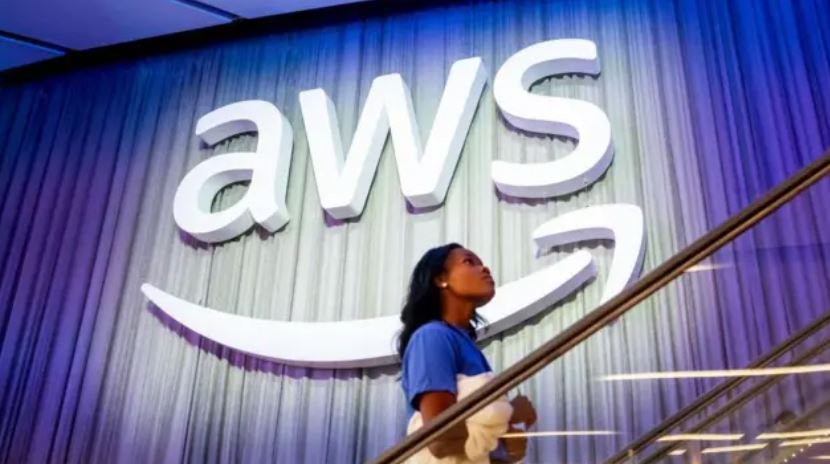
AI Brings Personalised Mathematics Learning to African Classrooms
One of the most interesting parts of the initiative is the proposed use of AI to make learning more responsive to individual students.
Rather than giving every learner exactly the same level of mathematical content, the technology is expected to help personalise activities based on a student’s ability. The programme will also be localised across English, Arabic, French and Swahili, potentially making it more accessible across different African education systems.
The approach matters because mathematics remains a major challenge for many education systems, particularly where teachers have limited resources and classrooms are overcrowded.
NBA Math Hoops already has a substantial international footprint. Its official impact figures show that the programme has served more than 1.4 million students and trained more than 12,000 educators.
The programme is not simply about getting children to calculate basketball scores. Its curriculum is designed to develop mathematical fluency, data analysis, problem-solving and social-emotional skills. Students also work together, make decisions and compete under time pressure.
That combination could make technology-supported mathematics education less intimidating for learners who may struggle with traditional classroom methods.
South Africa Starts the African Expansion
South Africa will serve as the first major testing ground for the expanded initiative, with more than 1,000 Johannesburg learners expected to benefit from the programme.
Teachers have already received training ahead of the pilot, according to Sowetan’s report on the AWS and NBA initiative.
The programme also has a social inclusion dimension. Organisers say the initiative will prioritise underserved communities where students may have fewer educational resources. More than 100 girls are also expected to receive mentorship through the initiative and its partners.
For African countries such as Nigeria, this is an important element to watch. Access to digital learning tools is growing, but technology alone does not automatically improve education. Teachers still need training, schools need reliable infrastructure, and learning platforms need to reflect the realities of local students.
The proposed expansion to Nigeria, Kenya, Senegal and Egypt therefore presents an opportunity to test whether a technology-supported model developed around basketball can work across different languages, cultures and education environments.
Back Story: How NBA Math Hoops Became an Education Tool
NBA Math Hoops began as a classroom idea before becoming an NBA-supported education programme. The model combines a basketball-themed board game with lessons that teach fundamental mathematics.
According to the NBA Math Hoops programme, the initiative was created to strengthen algebra readiness while making mathematics more relevant and engaging for students, particularly learners from underserved communities.
Its educational model uses real professional basketball statistics as the foundation for mathematical exercises. Students draft NBA and WNBA players, study their statistics and use those figures during gameplay. The programme also includes a structured 10-lesson curriculum.
The model has already produced encouraging results. NBA Math Hoops reports that 93 per cent of participating educators say their students find mathematics more accessible, relevant and engaging, while the organisation reports gains in basic mathematical fluency and higher-order skills.
The new AWS partnership takes that existing approach into a different phase by adding AI and cloud technology to the experience.
For Africa, the bigger question will be whether these tools can translate into measurable improvements in mathematics outcomes at scale. If the planned 10,000-student expansion succeeds, the partnership could become an example of how sports, education and emerging technology can work together to make STEM learning more attractive to young people.
Also Read: Nigeria’s Digital Cloud Policy Targets $750 Million Private Investment in Two Years