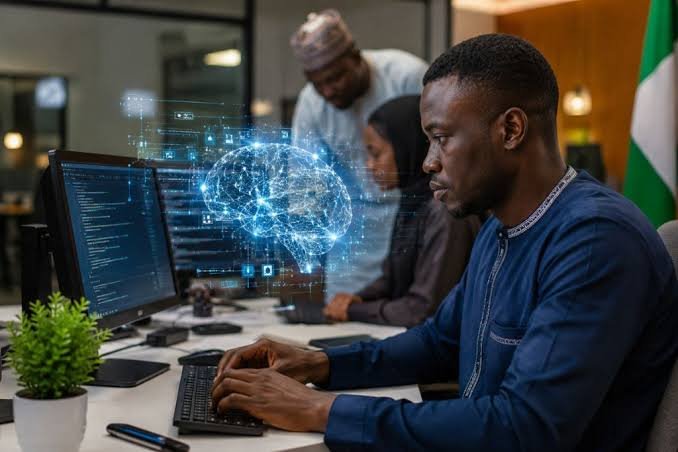

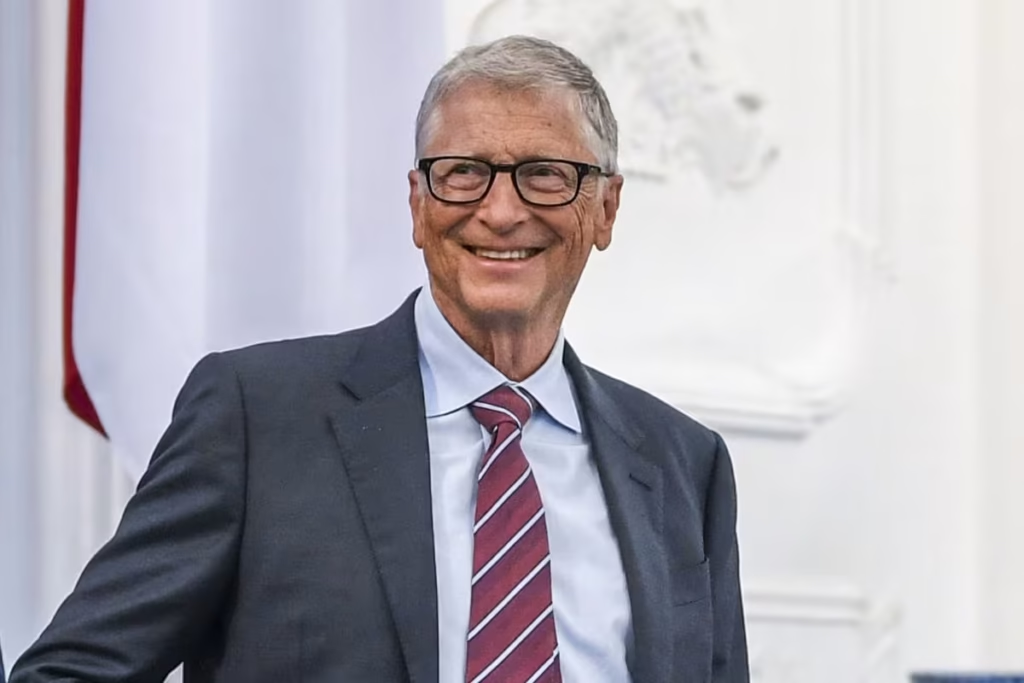
Microsoft co-founder Bill Gates has warned that artificial intelligence could permanently remove large numbers of jobs from the global economy, urging governments to prepare now for a disruption that he believes could reshape how people work and earn a living.
Gates issued the warning in a lengthy essay published on his personal website, where he described the transition into the AI era as potentially one of the most turbulent periods in modern history. He argued that unlike earlier technological revolutions, AI can be adopted rapidly because it works through devices and systems that people already use.
According to Gates, artificial intelligence is increasingly capable of performing tasks that once depended heavily on human reasoning. He believes this could affect a wide range of professions, including customer service, sales, software development, legal support, healthcare, banking and data analysis.
The Microsoft co-founder said entry-level and mid-level workers could face the greatest pressure because many of the new positions created by AI may require skills that take years to develop.
AI could change the jobs market permanently
Gates’ concern goes beyond temporary unemployment caused by an economic downturn. He believes AI-driven job displacement could become a structural change, particularly as businesses discover that automated systems can perform more tasks with fewer errors and at lower cost.
He also expects the impact to spread beyond office-based employment. As robotics improves, construction, hospitality and other physical jobs could increasingly come under pressure.
Gates warned that businesses may have strong financial incentives to adopt AI and robotics once the technology becomes sufficiently reliable. If one company reduces costs through automation, competitors could be forced to follow to remain competitive.
The result, he argued, could be an economy with fewer traditional jobs and greater concentration of wealth unless governments intervene.
Young people entering the labour market could be particularly exposed. With companies potentially needing fewer junior workers, graduates may find it harder to secure the entry-level positions traditionally used to gain experience.
The warning is significant for countries such as Nigeria, where a large and youthful population is entering a labour market already facing pressure from unemployment, underemployment and skills gaps.
Gates has also warned that AI’s consequences will extend beyond employment. He identified cybercrime, fraud, deepfakes, disinformation, surveillance and biological threats among the risks that could become easier to pursue as AI systems grow more capable.
At the same time, he has not dismissed AI as entirely harmful. Gates believes the technology could transform healthcare, education, agriculture, clean energy and public services if its benefits are deliberately shared.
He particularly highlighted agriculture in developing economies, where AI could help farmers obtain better information about weather, crops, livestock diseases and soil management. Such applications could be relevant to African countries where farmers often have limited access to agricultural experts and reliable information.
Gates proposes human-only jobs and AI taxation
Rather than simply slowing AI development, Gates wants governments to develop systems that allow society to benefit from the technology while reducing its disruption.
One proposal is the creation of what he calls “Human Reserved” jobs. These would be occupations or responsibilities deliberately kept for people because human interaction, empathy or social value remains particularly important.
Healthcare and caregiving are examples Gates has highlighted. He argues that even where a machine could technically perform a task, there may be situations where people would prefer another human being involved.
Gates has also renewed his support for taxing AI and robots. His argument is that existing tax systems can make employing machines financially more attractive than employing people, while governments could eventually face falling income-tax revenues if fewer people work.
Revenue from such taxes, he suggested, could help finance worker retraining and stronger social safety nets.
He has also called for national and international institutions capable of overseeing AI’s wider consequences. In a separate interview with Reuters, Gates said he wants countries, including the United States and China, to cooperate on managing dangerous AI applications and establishing international safeguards.
Back story: Why Gates is sounding the alarm now
Gates’ latest warning comes as AI adoption is moving from experimentation into everyday business operations. Generative AI tools are increasingly being used to write, analyse information, provide customer support, generate software and automate administrative work.
His argument is that society cannot wait until large-scale displacement has already happened before responding.
Gates acknowledges that AI could become a powerful tool for improving living standards. However, he says the benefits will not automatically reach everyone and could instead deepen inequality if governments and businesses fail to plan ahead.
For Nigeria and other African economies, the debate carries a particular weight. AI could create opportunities in education, healthcare, agriculture, software and entrepreneurship, but it could also put pressure on workers whose jobs involve repetitive or easily automated tasks.
The message from Gates is therefore not simply that people should fear artificial intelligence. It is that governments, businesses, schools and workers need to prepare for a labour market in which AI becomes a normal part of how work is done.
As the technology improves, the more important question may no longer be whether AI will change jobs. It may be whether societies are prepared to ensure that the people affected by that change are not left behind.