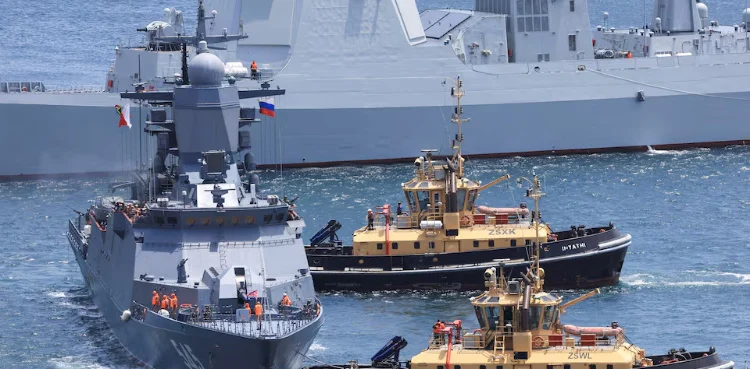
South African waters have become the scene of a significant naval event as China, Russia and Iran began a week of joint naval exercises this Saturday. The host government describes the operation as part of the expanded BRICS Plus framework aimed at strengthening cooperation on maritime safety and boosting collective naval capabilities in this strategic sea region. The drill, running for seven days, is being closely watched around the world because of its timing and the global political context, as reported by Investing.com.
The exercise has been officially named WILL FOR PEACE 2026 and brings together naval forces from the core BRICS countries and additional partner nations. South Africa says the primary goal is to ensure the safety of shipping and maritime economic activities amid rising concerns over piracy, sea lane security and global trade flows that depend on peaceful seas.
BRICS Plus is a broader configuration of the original Brazil, Russia, India, China and South Africa alliance, which now includes Egypt, Indonesia, Saudi Arabia, Ethiopia and the United Arab Emirates. South African military officials confirmed that some of these countries joined as active participants, while others took part as observers.
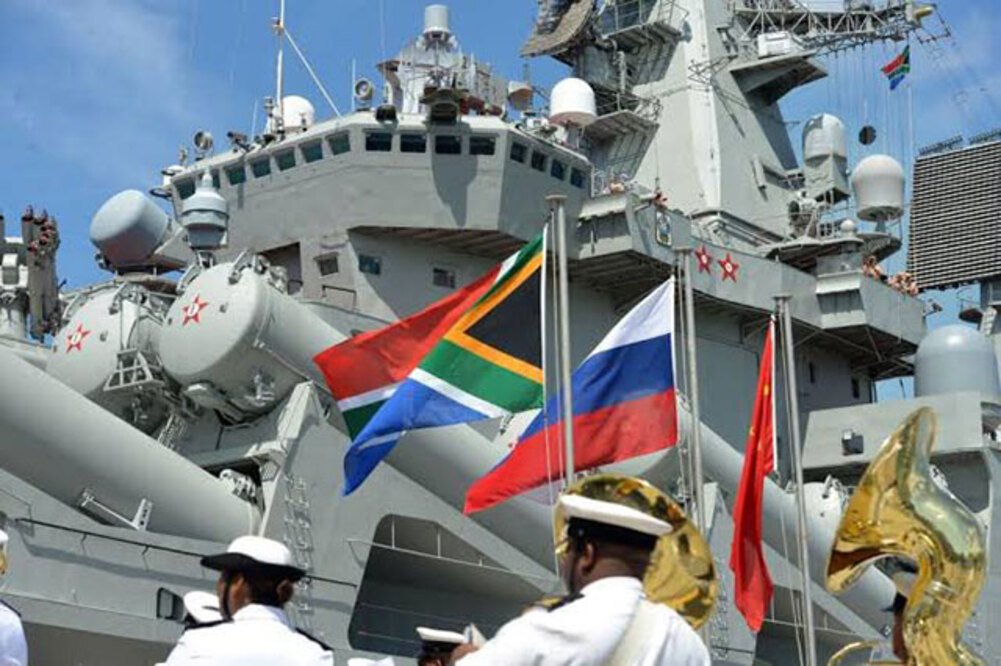
Table of Contents
What the BRICS Naval Drills Involve and Why They Matter
The drills are designed to improve joint maritime safety operations among participating navies. Activities include interoperability training and coordinated manoeuvres that help units work together more efficiently in real sea operations. South African defence sources say such exercises help navies learn from one another and build mutual understanding in challenging sea conditions.
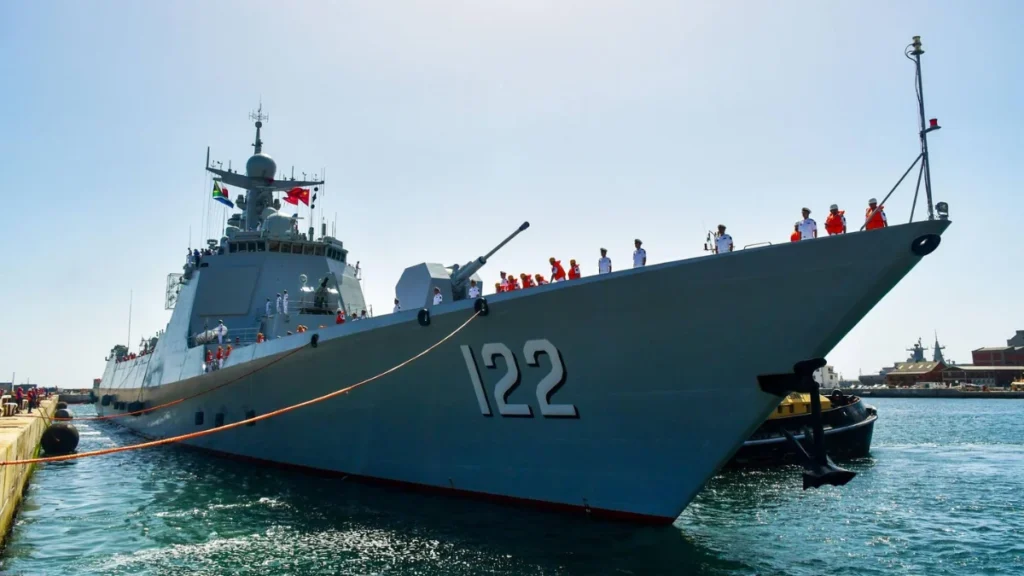
In practical terms, this means warships, support vessels and naval crews are conducting exercises off the Cape coast close to the Simon’s Town Naval Base near Cape Town. The varied geography of the region presents an ideal location for testing readiness in both deep water and coastal scenarios.
China is taking a leading role in the operations with substantial involvement from its People’s Liberation Army Navy units. Russian warships and Iranian vessels also form a core part of the assembled fleet. Observers note that each of these navies brings a different set of capabilities, which contribute to the complexity and depth of the exercise.
South Africa’s role as host reflects its strategic position at the southern tip of Africa and its longstanding interest in supporting safe global maritime routes. The waters off its coast form part of important international navigation corridors used by commercial shipping between the Atlantic and Indian Oceans.
Rising Geopolitical Significance and International Reactions
The timing and scale of the drills have sparked reactions from global capitals. The United States, under the current Trump administration, has been openly critical of the expanded BRICS grouping. Washington suggests that some BRICS Plus members pursue policies it considers unfriendly to American interests, and has on multiple occasions labelled the bloc’s actions as antagonistic. Last year, the US threatened additional trade tariffs targeting all BRICS countries, further highlighting the economic friction between the two groupings.
Inside South Africa, political debate over the exercise has intensified. The Democratic Alliance, which is a major opposition party in President Cyril Ramaphosa’s governing coalition, argues the drills contradict South Africa’s stated neutrality and risk aligning the country too closely with states that have troubled relations with the West. The party has publicly criticised Pretoria’s willingness to host navies from Iran and Russia, raising concerns about South Africa’s foreign policy direction.
South African military spokespeople have firmly rejected the notion that the naval exercise is politically driven. They emphasise that the event is technical, operational and focused on shared maritime security goals. According to military sources, South African forces have also trained with Western navies in the past, including the United States, which reflects the country’s commitment to cooperation across a broad spectrum of international partners.
Regional and Global Implications of the Drills
The BRICS Plus drills take place against a backdrop of shifting global alliances and tensions. The inclusion of nations such as Iran in these operations expands the traditional geographic range of BRICS activities beyond economic cooperation to tangible military engagement. Analysts say this reflects a broader trend where emerging powers seek to demonstrate capability and influence in important sea routes traditionally dominated by Western-led security frameworks.
For regional observers in Africa, the naval exercise is a reminder of the continent’s growing role in global geopolitics. South Africa’s hosting of the drill highlights its position as a key strategic partner in multilateral initiatives and signals new directions for defence and security cooperation on the continent. The emphasis on ensuring maritime economic activity safety draws attention to how nations increasingly view sea lanes as vital lifelines for trade and prosperity.
International coverage of the exercise has also emphasised how military drills like this are more than routine training. They are gestures of unity and power projection that send messages about cooperation and influence among nations. Observers in Europe, North America and Asia are watching closely to see how the exercise plays out, and what further impact it will have on the complex web of global relationships in the months ahead.
As the week progresses and the exercise continues, leaders and analysts will be assessing the success of the operations in both technical and diplomatic terms. Whether WILL FOR PEACE 2026 achieves its stated goals of enhancing safety and interoperability remains a pivotal question for all involved.
Join Our Social Media Channels:
WhatsApp: NaijaEyes
Facebook: NaijaEyes
Twitter: NaijaEyes
Instagram: NaijaEyes
TikTok: NaijaEyes