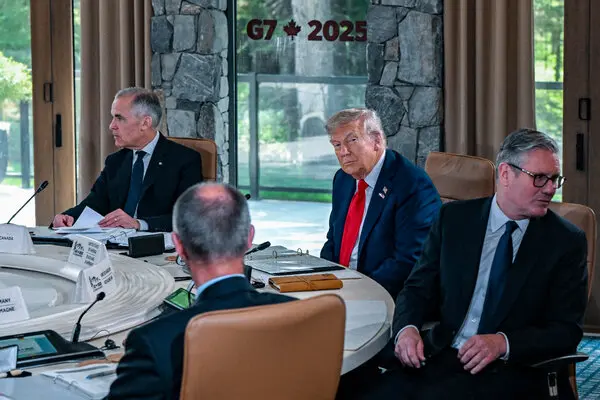
On 8 December 2025, the government of Canada formally opened the G7 Industry, Digital and Technology Ministers’ Meeting in Montréal, Quebec. The event is being co-hosted by Mélanie Joly, Canada’s Minister of Industry and the official responsible for economic development in Quebec regions, and Evan Solomon, the Minister in charge of Artificial Intelligence and Digital Innovation, who also oversees the Federal Economic Development Agency for Southern Ontario.
This gathering brings together representatives from the world’s advanced economies, including partners from across the Group of Seven (G7), to deliberate on how to build stronger industrial capacities, fortify digital infrastructure and boost innovation across participating nations.
As global economic and technological landscapes shift rapidly, the summit aims to set the tone for cooperation on everything from supply-chain resilience to the future of artificial intelligence and emerging digital technologies.

Canada Broader Agenda: Economic resilience, trusted infrastructure and digital transformation
The discussions slated for the two-day meeting focus on a few interlocking priorities:
- Strengthening supply chains to guard against shocks in a fragmented global market.
- Accelerating innovation and collaboration on digital and emerging technologies, including artificial intelligence (AI) and quantum technologies.
- Expanding trustworthy, secure digital infrastructure that can support robust economies and sustainable growth.
- Encouraging industrial competitiveness and boosting productivity across G7 nations.
- Supporting inclusive economic growth, ensuring small and medium-sized enterprises (SMEs) and workers benefit from technological advances and global economic integration.
According to the government’s media release, this minister’s meeting builds on agreements and commitments reached during the earlier 2025 G7 Summit in Kananaskis, Alberta, including the establishment of the Kananaskis Common Vision for the Future of Quantum Technologies, the G7 Critical Minerals Action Plan, and the G7 Leaders’ Statement on Artificial Intelligence (AI) for Prosperity.
In an era marked by economic uncertainty and rapid technological change, the summit underscores how essential cooperation and joint strategic investments have become for long-term growth and stability.

Canada’s commitment to innovation and shared prosperity
At the opening of the summit, Minister Joly emphasised Canada’s readiness as G7 President to steer global cooperation towards stronger supply chains and resilient industrial growth. She described Canada as a country “at the forefront of innovation and advanced manufacturing,” with the talent and ambition to help shape a future where industry remains a powerful source of opportunity.
Meanwhile, Minister Solomon spoke about a shared vision in which AI and digital innovation become engines of productivity, empowering workers, supporting small and medium businesses, and reinforcing democratic values. His message was clear: the goal is “a trusted, secure and competitive digital future that delivers prosperity for everyone.”
Looking ahead, summit participants hope to consolidate frameworks that will help industries adapt, grow and compete globally, not just in traditional manufacturing but also in cutting-edge technology and digital infrastructure.
What this meeting signals for the global economy and digital future
By convening ministers – not just heads of state – the gathering suggests a shift toward deeper, more technical cooperation among the world’s major economies. Rather than high-level diplomacy alone, the focus is on actionable policies and concrete strategies.
Given the fast pace of technological development, especially in AI and quantum computing, a forum like this presents an opportunity for G7 nations to set international standards, support research and development, and back digital infrastructure that can withstand both economic and security challenges.
The emphasis on supply-chain resilience and industrial competitiveness reflects global realities: disruptions in supply and rising geopolitical tension have made many economies more aware of fragility in their industrial base. By aligning efforts, G7 members aim to build economies that are agile, secure, and ready for the next wave of challenges and opportunities.
For countries like Nigeria and across Africa, where economic diversification, infrastructure development, and digital readiness remain crucial, the outcomes of such global conversations indirectly matter. As international trade, technology transfer, and global supply-chain shifts evolve, developing nations could be affected by changes in global industrial strategies, demand for minerals and resources, and access to emerging technologies.
Conclusion
The launch of the G7 Industry, Digital and Technology Ministers’ Meeting in Montréal Canada marks a critical moment — not just for Canada, but for all member nations. At a time when the global economy is buffeted by uncertainty, technological change, and shifting geopolitical realities, this summit offers a forum for cooperation, foresight and collective action.
Through deliberate engagement on supply-chain resilience, digital infrastructure, and advanced technology, the G7 ministers aim to build not only stronger economies at home but a more stable and inclusive global economy for the future.
As the discussions proceed over the next two days, the world will watch how pledges translate into plans — and how those plans impact the balance of innovation, trade and prosperity globally.
Join Our Social Media Channels:
WhatsApp: NaijaEyes
Facebook: NaijaEyes
Twitter: NaijaEyes
Instagram: NaijaEyes
TikTok: NaijaEyes