In a surprising turn, the Department of Government Efficiency, better known by its acronym DOGE, has effectively shut down, eight months ahead of its projected mandate. This news confirms earlier speculation: “DOGE is dead,” say multiple reports. Initially championed by Elon Musk, the initiative promised sweeping federal cost reductions, but now, key insiders say it no longer functions as a centralised body, as reported by Fortune.
According to the Office of Personnel Management (OPM), DOGE’s operations have largely been absorbed by the OPM, and it has lost the organisational structure that made it distinct. Scott Kupor, head of OPM, told Reuters that DOGE “doesn’t exist” in its original form, and many of its functions have been internalised.

Table of Contents
Promised Savings Never Fully Materialised
From its public pitch, the initiative was portrayed as a bold effort to slash tens of billions of dollars in federal spending. But that claim has come under intense scrutiny. Several of its reported cuts were later reversed, and the operation never underwent third-party verification to confirm its actual savings.
As the initiative unwinds, former team members are scattering across U.S. government agencies. Some have moved to the National Design Studio, while others now occupy senior roles in the Department of Health and Human Services, the State Department, and the Office of Naval Research
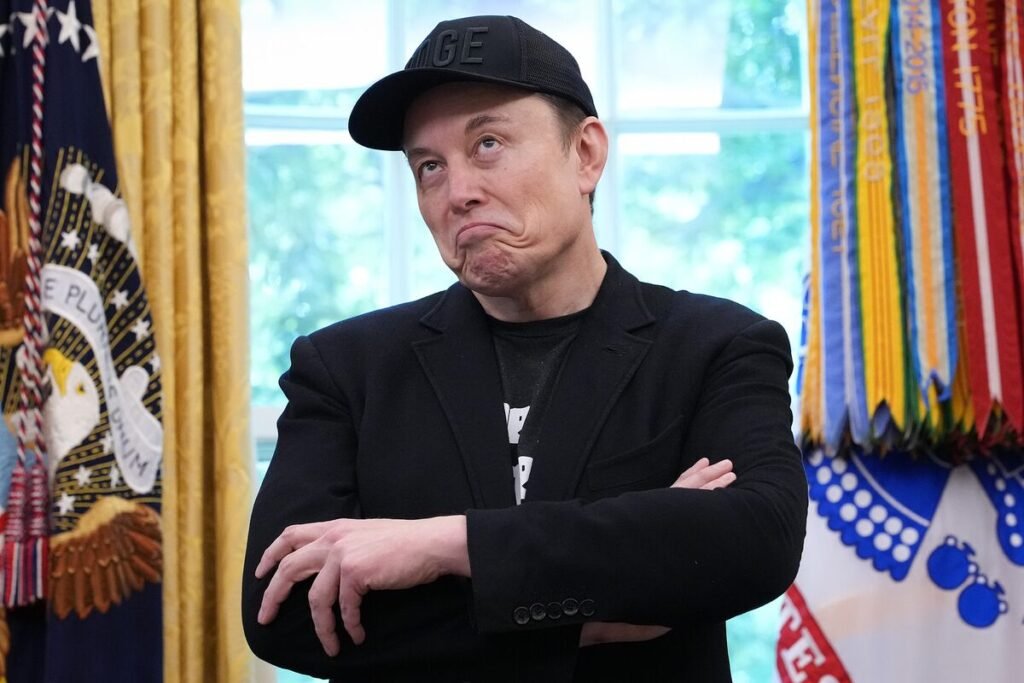
Elon Musk, who initially drove the project, has shifted his attention back to his core ventures — like Tesla — but insiders report he might reappear at a planned “reunion” for the initiative. Meanwhile, the acting head of DOGE, Amy Gleason, has transitioned into an advisory role for Health Secretary Robert F. Kennedy Jr.
Why Did It Fall Apart?
Several factors appear to have converged in bringing DOGE to its knees:
- Lack of Transparency: Without public, independent confirmation of its savings, many of the fiscal cuts promised by DOGE became controversial or were reversed entirely.
- Decentralisation of Power: OPM’s takeover meant there was no longer a distinct “DOGE body.” According to Kupor, the organisation simply ceased being a centralised agency.
- Personnel Exodus: Key figures within DOGE moved on to other government roles, weakening the institutional identity of the initiative.
- Political Rebalancing: With Musk retreating and GOP-run states forming their own variants of “efficiency” units, DOGE’s original mission seems to have fragmented.
News24 reported that despite DOGE’s termination, some of its ideals may live on: “the principles of deregulation, eliminating waste and reshaping the workforce remain alive,” a quoted OPM source said.
What it Means Going Forward
While DOGE may no longer be a standalone force, its legacy could yet shape future governance. According to media reports, states like Florida and Idaho are already establishing their own versions of efficiency units, inspired by Musk’s original blueprint.
In fact, the OPM has suggested it will “institutionalise” some of DOGE’s reforms, embedding the efficiency-first mindset into regular federal operations.
Even though many of DOGE’s members have moved on, some say Musk may not be done with the idea. Rumours of a comeback or “reunion” suggest he might re-engage, whether symbolically or more substantively, with the structure he once promoted.
Why This Moment Hits Differently
This isn’t just the fall of a government programme; it’s a symbolic collapse of something that blended meme culture with politics. DOGE began with a wink, referencing Dogecoin, the cryptocurrency Musk often backs, but it ended as a serious test of whether Silicon Valley-style efficiency could reshape bureaucracy.
For many, its winding down raises questions: Was this merely a PR stunt masquerading as reform? Or was it genuinely a fresh way to think about how government works? And now that it’s gone, will its lessons or its failures be remembered?
DOGE’s shutdown marks the end of a bold, unconventional experiment in government. What started off as a flashy, allegorical nod to meme coins has quietly dissolved into existing bureaucratic structures. While the name may be gone, some of its ambitions and debates — about efficiency, waste, and the role of innovation in the public sector — feel far from finished.
Join Our Social Media Channels:
WhatsApp: NaijaEyes
Facebook: NaijaEyes
Twitter: NaijaEyes
Instagram: NaijaEyes
TikTok: NaijaEyes