Nigeria’s education sector is entering one of its most defining moments as generative artificial intelligence continues to reshape learning, testing and academic integrity across schools and universities.
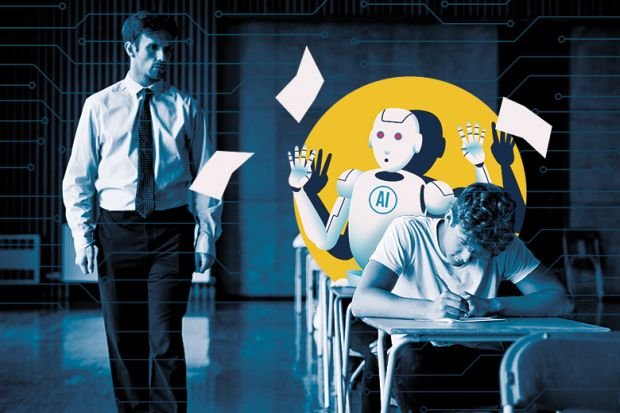
From secondary schools preparing candidates for WAEC and NECO to universities struggling with plagiarism and AI-generated assignments, educators are beginning to confront a difficult question: how can examination integrity survive in the age of artificial intelligence?
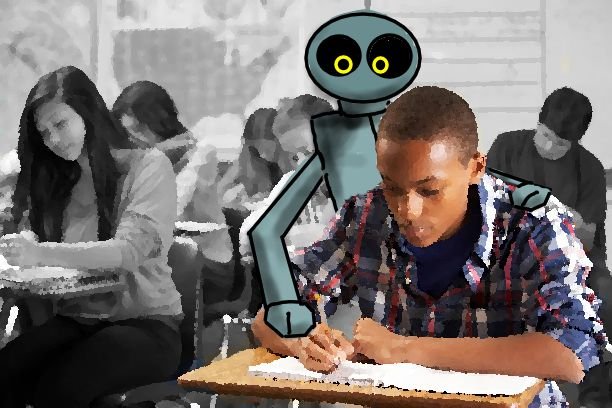
The rise of tools such as ChatGPT and other GenAI platforms has opened a new frontier in education. While many students now use AI to learn faster, conduct research and improve writing, there is growing concern that the same technology is being abused during examinations and assessments.
Across Nigeria, school administrators, lecturers and policymakers are quietly acknowledging that traditional methods of assessing students are no longer enough. The challenge is not simply about stopping cheating. It is about preserving trust in the nation’s educational system.
Recent reforms introduced by the Federal Government already show that authorities recognise the urgency of the problem. The Ministry of Education announced new anti-malpractice measures for WAEC and NECO examinations, including enhanced question randomisation and computer-based testing reforms aimed at reducing collusion among candidates.
Yet experts believe technology alone cannot solve the crisis.
Education analysts argue that Nigeria must rethink the entire culture of assessment in an era where students can generate essays, solve equations and answer theoretical questions within seconds using AI-powered tools.
Researchers studying examinations in the GenAI era warn that artificial intelligence systems are becoming increasingly capable of handling tasks that once required genuine understanding. A recent academic study found that GenAI systems performed at a first-class degree level in several university mathematics examinations, raising concerns about whether existing assessment models still reflect true student competence.
The implication for Nigeria is profound.
If schools continue relying heavily on take-home assignments, recycled questions and predictable theory examinations, the credibility of certificates could face growing public distrust. Employers are already beginning to complain that some graduates possess impressive grades but weak practical abilities.
This concern is especially serious in a country already battling examination malpractice through so-called miracle centres, impersonation and leaked questions.
Artificial intelligence may not have created Nigeria’s examination integrity problem, but it has significantly complicated it.
Why GenAI Has Changed the Examination Landscape
Unlike earlier forms of digital cheating, generative AI tools are accessible, affordable and extremely difficult to detect.
A student no longer needs to copy directly from a textbook or another candidate. With a smartphone and internet connection, AI can instantly produce essays, summaries, coding solutions and even personalised answers designed to evade plagiarism checks.
Many teachers admit privately that distinguishing between student work and AI-generated content has become increasingly difficult.
This growing uncertainty is forcing schools around the world to redesign assessments. Nigeria cannot afford to lag behind.
Experts say one of the biggest mistakes schools can make is treating AI only as an enemy. The technology itself is not inherently harmful. The real issue is the absence of clear ethical rules and modern assessment systems.
Research on assessment strategies in the GenAI era suggests that institutions must shift from memorisation-based examinations to methods that evaluate critical thinking, originality and real-world problem-solving.
For Nigeria, this could mean more oral examinations, supervised practical assessments, project-based learning, and timed in-person evaluations that test reasoning rather than repetition.
It could also require major investment in teacher training.
Many Nigerian educators still lack adequate digital literacy and AI awareness. Some teachers are only beginning to understand how GenAI works, while students are already experimenting with advanced tools daily.
Without proper teacher preparation, enforcement becomes almost impossible.
There are also concerns about inequality.
Students in urban centres with stable internet and modern devices may gain unfair advantages over learners in rural communities with limited digital access. This creates another layer of educational imbalance in an already unequal system.
At the same time, banning AI completely may not be realistic.
Globally, universities and employers increasingly expect students to understand and work with AI tools responsibly. The future workforce will likely depend heavily on digital collaboration with intelligent systems.
Nigeria, therefore, faces a delicate balancing act. Schools must discourage dishonest use of AI while still preparing students for an AI-driven economy.
Nigeria’s Growing Push for Examination Reforms
The Federal Government has already begun introducing reforms aimed at restoring public confidence in examinations.
Officials have repeatedly described examination malpractice as a major threat to national development. Recent policy discussions have focused on computer-based testing, biometric verification, improved supervision systems and question randomisation techniques.
Authorities say the transition towards full computer based examinations could significantly reduce traditional forms of malpractice.
The government also recently revealed plans targeting the near-total elimination of examination fraud by 2027, with NECO reporting major reductions in malpractice through digital examination systems.
Several Nigerian institutions are already experimenting with stronger digital safeguards.
Research involving the National Open University of Nigeria highlighted how technologies such as CCTV surveillance, e-registration systems and authentication processes can help strengthen examination integrity.
Still, technology alone cannot fix deeper ethical and institutional problems.
Education experts insist that lasting reform requires rebuilding a culture of honesty within schools, homes and society at large.
The pressure to pass at all costs remains one of the biggest drivers of malpractice in Nigeria. Parents, schools and even some communities often place overwhelming emphasis on certificates and grades rather than actual competence.
That social pressure creates fertile ground for abuse of both traditional cheating methods and emerging AI tools.
Analysts say Nigeria must begin rewarding creativity, innovation and practical knowledge more than memorised examination performance.
There are also calls for examination bodies to update question formats regularly and reduce predictability. AI systems perform best when questions are repetitive and pattern-based. More analytical and scenario-driven questions may help reduce over-reliance on automated answers.
Cybersecurity and data protection are becoming increasingly important, too.
As examination systems move online, schools face risks involving hacking, data leaks and AI manipulation. Experts globally warn that AI systems themselves can become vulnerable to misuse if poorly secured.
Nigeria’s digital education infrastructure, therefore, needs stronger protection standards, especially as millions of students depend on online testing systems.

Back Story: Nigeria’s Long Battle Against Examination Malpractice
Nigeria’s struggle with examination malpractice did not begin with artificial intelligence.
For decades, schools and examination bodies have battled leaked questions, impersonation, bribery and organised cheating syndicates. The rise of miracle centres became symbolic of how deeply compromised parts of the system had become.
Public trust suffered heavily as employers and universities increasingly questioned the credibility of some examination results.
Over the years, governments introduced different reforms ranging from stricter supervision to computer-based testing. Examination agencies also adopted biometric verification and digital monitoring systems in efforts to reduce malpractice.
The emergence of GenAI, however, has introduced a more sophisticated challenge.
Unlike traditional malpractice methods that often involve physical collaboration, AI-powered cheating can happen silently and individually. Students may generate polished assignments or examination responses without obvious evidence of misconduct.
This new reality is pushing countries worldwide to rethink education systems entirely.
For Nigeria, the moment presents both a warning and an opportunity.
If handled properly, AI could help improve learning, personalise education and strengthen digital skills among students. If ignored, it could deepen existing weaknesses and further erode confidence in academic qualifications.
The future of examination integrity in Nigeria may ultimately depend on how quickly institutions adapt to this technological shift.
What is clear is that the GenAI era has permanently changed education. The conversation is no longer about whether artificial intelligence will influence examinations. It is about whether Nigeria is prepared to respond wisely, fairly and urgently.
Join Our Social Media Channels:
WhatsApp: NaijaEyes
Facebook: NaijaEyes
Twitter: NaijaEyes
Instagram: NaijaEyes
TikTok: NaijaEyes