

The Federal Government’s 6-month 70,000 workers transport allowance for its workers could arrive at an estimated N465.7bn if all 1.1 million employee records on its payroll system qualify for the payment.
Meanwhile, economists urge the government to implement long-term solutions that permanently reduce transport costs and ease financial burdens on households.
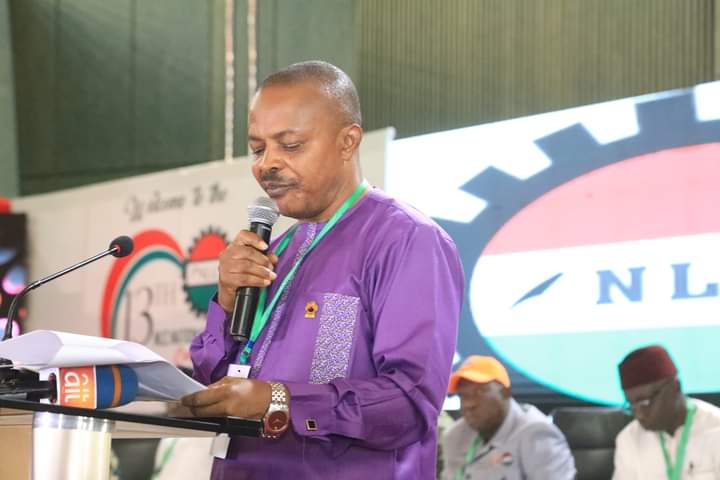
Following a Tuesday mediation meeting with the Nigeria Labour Congress in Abuja, the government approved a monthly stipend of N70,000 ($50) across all civil service levels for six months, starting in November. Although the agreement covers a six-month duration, it omits both the exact beneficiary count and the total budget allocation.
However, the Trade Union Congress of Nigeria rejected the N70,000 workers transport allowance offer.
Instead, the TUC demanded immediate salary increases and the implementation of pending agreements with Joint Health Sector Unions healthcare workers.
Utilizing July 2026 Integrated Personnel and Payroll Information System data covering 1,108,800 workers, a PUNCH analysis calculates monthly costs at N77.6 billion and total six-month expenditure at N465.7 billion.
This calculation assumes every payroll entry represents an eligible beneficiary, leaving the final expenditure dependent on confirmed worker totals and official payout structures.
The proposed intervention coincides with mounting living costs, driven largely by rising fuel prices that inflate transportation and goods distribution expenses.
At Nigerian National Petroleum Company Limited retail outlets nationwide, gasoline prices have climbed to N1,369 per liter.
Despite a slight reduction in inflation, household budgets remain under severe strain. National Bureau of Statistics data shows that Nigeria’s headline inflation rate eased to 14.63 percent in September from 15.39 percent in August, while food inflation stood at 19.59 percent year-over-year.
Agreements reached
Under the October 27 agreement, the government authorized the payment of unpaid special allowance arrears in three equal monthly installments starting in November, retroactive to May 1, 2026.
However, both sides failed to reach a consensus regarding the implementation date for the proposed national minimum wage.
To resolve the impasse, negotiators agreed to form a dedicated minimum wage committee and commence immediate meetings.
Furthermore, the government committed to settling 19 months of outstanding health worker allowances within three months starting in December, while the National Salaries, Incomes and Wages Commission assesses the financial impact of revising the Consolidated Health Salary Structure.
TUC accused the Federal Government of failing to fulfil its 2023 wage award
However, the TUC accused the Federal Government of abandoning a seven-month-old agreement to adjust the Consolidated Health Salary Structure for JOHESU health workers and defaulting on its 2023 salary award obligations to certain employees.
In a Wednesday statement signed by President Festus Osifo and Secretary-General N.A. Toro, the congress revealed that it had written to the Federal Government through the Office of the Secretary to the Government of the Federation following an October 8, 2026 National Administrative Council meeting in Abuja, demanding an immediate salary review to offset rising living costs.
Read Also: Nationwide Labour Strike Looms as Union Places Members On Alert For ‘Possible’ Action