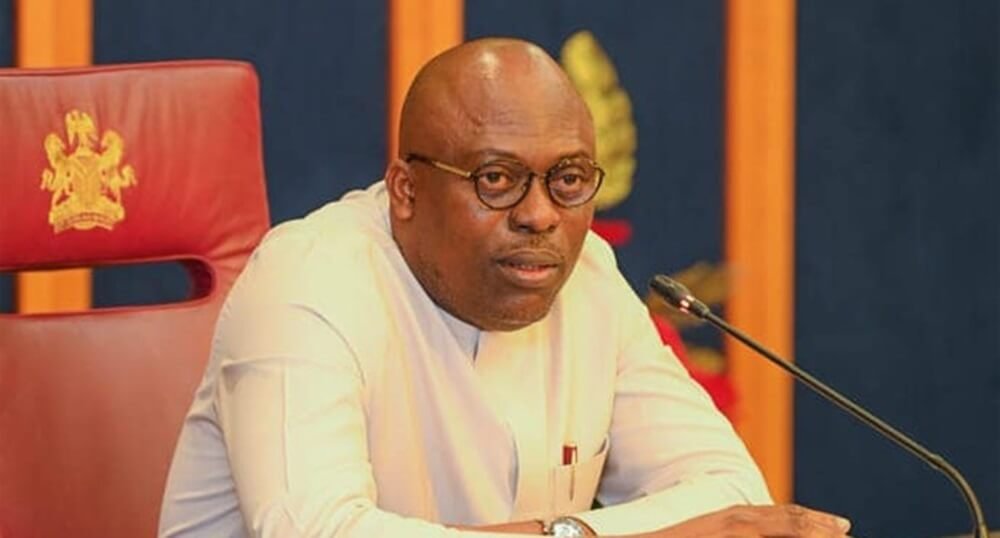

Rivers State Governor, Siminalayi Fubara, has called for a major rethink of Nigeria’s education system, arguing that greater emphasis on vocational and technical education could help tackle unemployment and prepare young Nigerians for the realities of the modern labour market.
Fubara made the call on Wednesday, August 19, 2026, while inaugurating three projects at Captain Elechi Amadi Polytechnic in Rumuola, Obio/Akpor Local Government Area of Rivers State.
The projects include an Entrepreneurship Centre, Engineering Faculty Building and Governing Council Building. According to the governor, the facilities should not simply be viewed as physical infrastructure but as platforms for developing practical skills and creating economic opportunities.
His argument is straightforward: Nigeria cannot continue to produce graduates whose qualifications do not necessarily translate into employable skills.
Fubara said the country’s continued preference for certificates over technical competence has contributed to unemployment and economic stagnation. He urged policymakers to make practical learning, vocational training and entrepreneurship a stronger part of the education curriculum.
Why Fubara Wants Nigeria to Reconsider Vocational Education
The governor pointed to Nigeria’s 6-3-3-4 education system, introduced in the 1980s, as an example of an approach that was originally intended to expose young people to vocational and technical education.
Under the system, students were expected to gain practical exposure during their secondary education before progressing to a polytechnic or university according to their abilities, interests and skills.
Fubara argued that a student who completed the first three years of secondary school should ideally have acquired a trade or practical skill that could provide a route into self-employment.
However, he said Nigeria gradually moved away from that philosophy, with academic degrees becoming the dominant measure of educational achievement.
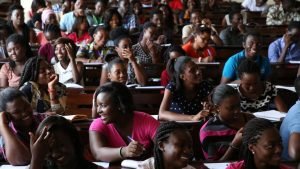
The governor’s concern reflects a familiar experience for many Nigerian families. Young people spend years pursuing qualifications, only to enter a labour market where employers increasingly demand practical experience and demonstrable competence.
Fubara believes the polytechnic system can play a more significant role in changing this situation, particularly for young people whose strengths are technical, creative or practical rather than purely academic.
The National Board for Technical Education has similarly continued to strengthen the technical and vocational education sector, with vocational, technical and skills development forming part of its institutional structure. Its recent compendium also highlights the board’s role in developing and regulating technical education in Nigeria.
Also Read: Nigeria Strengthens Polytechnic Regulation as NBTE Board Returns to Drive Technical Education Reform
Back Story: The Push for Skills Is Becoming More Important
The debate over vocational education comes as Nigeria faces the wider challenge of preparing its young population for an economy increasingly shaped by technology, automation and changing employer demands.
For years, university education has been widely regarded by Nigerian parents and students as the safest route to a successful career. Polytechnic education and skilled trades have sometimes been treated as alternatives for students who could not gain university admission.
That perception has created a serious imbalance.
Nigeria needs doctors, lawyers, engineers and other university-trained professionals, but it also needs electricians, welders, technicians, software and hardware specialists, builders, mechanics, renewable energy installers and other skilled workers.
The Federal Government has also been promoting technical and vocational education as part of its response to the country’s skills gap. The National Board for Technical Education remains responsible for regulating and supporting technical and vocational institutions across the country.
There is also evidence that Rivers State has been investing in facilities intended to strengthen practical education. A Rivers State budget performance document included funding for workshop development and equipment for an entrepreneurship centre at Captain Elechi Amadi Polytechnic.
The latest commissioning therefore fits into a broader effort to give students access to facilities where classroom knowledge can be translated into practical competence.
New Polytechnic Facilities Target Job Creation
Fubara said the Entrepreneurship Centre at Captain Elechi Amadi Polytechnic was designed to help young people acquire skills that could eventually make them employers of labour rather than remain dependent on available jobs.
This distinction is important in a country where government and private-sector employment cannot absorb every graduate entering the labour market.
The Rivers State Commissioner for Education, Peter Nwagor, said two of the commissioned buildings contain classrooms, workshops, staff offices and administrative facilities for the School of Engineering and Entrepreneurship Centre.
According to the commissioner, each building covers about 1,940 square metres and contains eight halls, 14 staff offices and 22 toilet facilities. The facilities are also air-conditioned and equipped for practical training.
The third project, the Governing Council Building, was started under the previous administration of Nyesom Wike and completed and furnished under Fubara’s administration. The polytechnic’s Rector, Moses Neebee, described the projects as major developments for the institution, noting that they represented some of the most significant improvements on the campus in almost two decades.
Fubara also urged students and the wider community to protect the new facilities from theft and vandalism, stressing that the infrastructure should be treated as a community asset rather than simply as government property.
The governor’s larger message is that Nigeria’s education debate should move beyond the question of how many people are earning degrees. It should also ask what graduates can actually do with what they have learnt.
For a country struggling with unemployment, that shift could be significant. Vocational education alone will not solve Nigeria’s employment problem, but stronger technical training, modern equipment, industry partnerships and access to finance could give more young Nigerians a realistic pathway from education to income.
The challenge now is ensuring that the renewed attention on vocational and technical education does not end with new buildings. The real measure of success will be whether those facilities produce skilled workers, entrepreneurs and businesses capable of contributing meaningfully to Nigeria’s economy.
Also Read: Nigeria Strengthens Technical Education Through Fresh Germany Partnership to Boost Skills and Jobs