
Gulf states reported on Wednesday that their defenses intercepted drones and missiles launched by Iran and its Houthi allies in Yemen, following a U.S. strike on Qeshm Island in the Strait of Hormuz that intensified hostilities despite ongoing efforts to halt the nine-month conflict.
These tit-for-tat strikes underscored the fragility of diplomatic negotiations aimed at resolving a war that has destabilized the Middle East, driven up global energy prices, and fueled voter frustration in the United States—culminating in electoral setbacks for President Donald Trump’s Republican Party during the November midterms.
Meanwhile, after Kuwait announced that its air defenses were repelling incoming hostile drones, the Iranian military stated it had targeted U.S. drone and missile installations at Kuwait’s Ali Al Salem Air Base.
Neighboring Bahrain announced that it had intercepted Iranian aerial attacks for the third time this week, accusing Tehran of maintaining a “systematic hostile approach” against the Gulf state, which hosts the U.S. Navy’s Fifth Fleet.
Meanwhile, the Saudi-led coalition fighting the Iran-backed Houthis in Yemen reported shooting down a cruise missile launched by the group toward the Saudi capital, Riyadh.
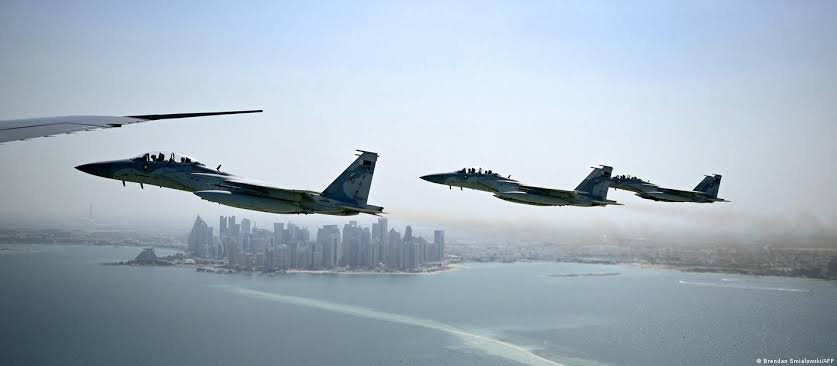
Across the Gulf on Tuesday, U.S. fighter jets struck a Revolutionary Guards missile launch site on Qeshm Island, according to a U.S. military official speaking on condition of anonymity, who noted that the operation came in response to Iranian strikes on American personnel and assets.
However, an Iranian official quoted by state media maintained that the U.S. strike caused no damage to local infrastructure.
Threat against washington
Asked on Tuesday about a CNN report citing U.S. intelligence assessments of a potential Iranian plot involving a so-called dirty bomb, President Donald Trump said the United States was taking seriously the possibility that Iran might be preparing an attack on Washington.
On Wednesday, U.S. Secretary of State Marco Rubio stated that he did not believe the American capital faced an immediate threat. Iran’s Foreign Ministry also rejected the allegations on Tuesday, dismissing them as “baseless.”
Unlike a nuclear weapon, a dirty bomb uses conventional explosives to disperse radioactive material rather than triggering a nuclear blast. However, it can spread radioactive contamination, cause major disruption, and spark widespread public panic.
Read Also: Tehran Sets Conditions for Ending War, Urges US to Comply