Foreign exchange market divergence resurfaced as the Naira parallel market exchange rate gap in November 2026 expanded to N86.50 per dollar, highlighting contrasting liquidity trends across Nigeria’s currency segments.
Also read Naira Exchange Rate Daily Decline November 2026 Hits N1,364 per Dollar
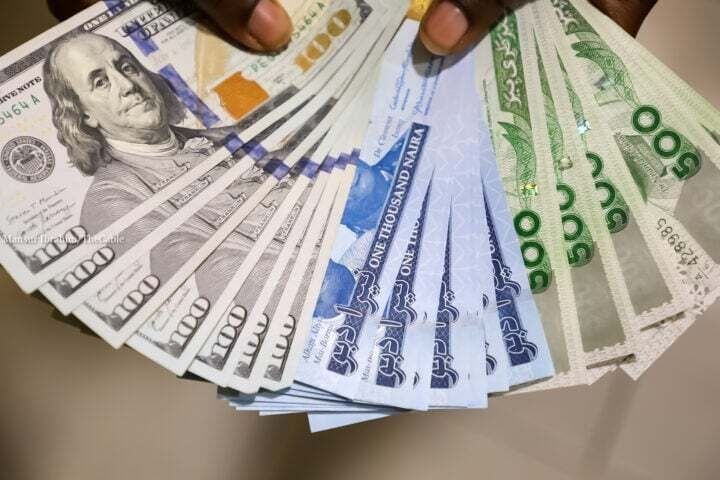
According to market disclosures published on Thursday, November 12, 2026, Bureau De Change (BDC) operators in Abuja quoted the US dollar at N1,445 in the informal window. That figure represents a N15 depreciation compared to the N1,430 rate recorded on Wednesday. Conversely, official trading at the Nigerian Foreign Exchange Market (NFEM) moved in the opposite direction. Central Bank of Nigeria (CBN) data showed the local currency appreciated by 0.37 percent to close at N1,358.50/$, recovering from Wednesday’s closing rate of N1,364/$. Consequently, the spread between formal and informal currency segments widened sharply.
Backstory: Tracing Foreign Exchange Unification and Reserve Buffers
To understand why informal market spreads still fluctuate despite stronger central bank buffers, we must examine how Nigeria’s currency framework evolved following major monetary reforms. For years, rigid administrative pegs and multiple exchange windows created deep distortions, enabling speculators to profit from wide spreads between official and street rates.
Historically, when monetary authorities unified trading windows and deployed the Electronic Foreign Exchange Matching System, market transparency improved significantly. Earlier in November 2026, the spread stood at N69 on November 9, when the parallel rate traded at N1,410/$. Meanwhile, Nigeria’s external reserve position strengthened steadily throughout the year. According to CBN reports, net foreign exchange reserves climbed to a record $46 billion, up substantially from $34.80 billion at the end of 2025. Similarly, gross reserves expanded by $295.35 million in October 2026 alone, maintaining strong year-on-year growth. However, seasonal fourth-quarter retail demand, fiscal leakages, and speculative buying continue to pressure informal cash supply. Therefore, while institutional inflows stabilize the official NFEM window, retail dollar shortages periodically widen the street spread.
- Informal Rate Dip: Parallel market operators quoted the dollar at N1,445 on Thursday, losing N15 from Wednesday’s N1,430 rate.
- Official Window Gain: The naira strengthened by 0.37 percent at the NFEM window, closing at N1,358.50/$ against N1,364/$ in the prior session.
- Reserve Cushion: Net external reserves reached $46 billion, providing monetary authorities with solid capacity to manage market liquidity.
Balancing Retail Dollar Supply and Exchange Rate Stability
As end-of-year travel and import settlements accelerate, ensuring smooth retail dollar distribution remains vital for narrowing market spreads.
“Divergence between official and parallel currency windows typically reflects localized retail liquidity bottlenecks and speculative demand rather than weak macroeconomic fundamentals,” noted currency market analysts reviewing the trading data.
In summary, evaluating how the Naira parallel market exchange rate gap November 2026 unfolded illustrates the ongoing contrast between strong institutional reserves and retail cash demand. Sustained liquidity interventions will remain essential for keeping currency spreads contained through year-end.
References & Citations
- Central Bank of Nigeria (CBN) NFEM Daily Dataset / Nairametrics (Nov 13, 2026): Naira depreciates to N1,445/$ in parallel market as gap with official rate widens to N86.50, Abuja & Lagos.
- BusinessDay Foreign Exchange Market Coverage (Nov 9, 2026): Naira gap widens to N69 as parallel market rate falls to N1,410, Lagos.